AMD EPYC 9006 成绩出炉,再度 KO 对手
就服务器 CPU 的发布而言,今天的发布在多个层面上都不同寻常。除了要审视 AMD 一个全新的服务器平台(包括插槽等所有方面)——这本身通常就是一件大事——服务器热潮已经彻底颠覆了 CPU 开发周期,而现在我们将在服务器 CPU 上看到 AMD 最新的 CPU 架构。因此,除了我们对 Venice 的首次基准测试外,今天也标志着我们首次有机会评估 Zen 6 CPU 架构,该架构将在未来两年驱动如此多的 AMD 产品——从 Venice 和 Verano 等服务器芯片,到消费级台式机、笔记本电脑等等。今天的发布有很多内容值得深入剖析。
AMD EPYC:代际对比
16x DDR5-8000 / MRDIMM-12800
要做的事情太多,而全部完成的时间太少,我们后续还会有更多内容跟进。但作为开端,在今天的发布文章中,我们不仅会让旗舰级 EPYC 9996 运行我们专注于智能体工作负载的 AgentSTH V7 基准测试套件,还会加入一些本质上是对 2027 年 AgentSTH V8 的预览内容。作为背景说明,我们回溯了大约十年的服务器架构,不是为了盲目地选取基准测试套件,而是为了在数十个平台上对工作负载进行剖析,以便将其纳入套件。
EPYC 9006 裸片图(SP7 Zen 6c、ZP7 Zen6、SP8 Zen 6c、SP8 Zen 6)
这一篇我们有不少数据,也有一些不错的对比点。最核心的亮点是:现在每个插槽最多可达 256 个核心、全新的 PCIe Gen6 I/O 子系统,以及超过两倍的内存带宽,同时搭配经过修订的 Zen 6 微架构和 SoC 设计。AMD 还按不同应用将产品线拆分为多个系列,提供两个主插槽,-X 高缓存型号以 Venice-X 回归,以及采用 LPDDR5X 的 Verano。新系列覆盖的范围大得多,是 EPYC 产品线自转向 I/O die 以来最具野心的创新——正是那次转变让 EPYC 7002 打出一记重拳。这是“重拳第二部”。
另外,我想特别感谢 Ryan、Sam 和 Vic,他们为这篇内容的快速完成做出了贡献。接下来将由 Ryan 负责 Zen 6 微架构和 SoC 部分,之后我再接手讲性能。STH 的老读者可能已经注意到,我们的很多文章比过去长得多,做这类评测已经变成了一项团队工作。
AMD EPYC 9006 “Venice”:截至目前的故事
今年夏天,AMD 在公司年度 Advancing AI 活动上为其 EPYC 9006 “Venice”服务器 CPU 平台举行了正式的发布。这场活动已成为 AMD 一年中最重磅的旗舰活动,也反映出服务器产品对其盈利的重要性;公司在此公布了 2026 年及以后的激进计划。以 Venice CPU 平台为龙头,AMD 的目标不仅是交付其迄今最强大、能力最全面的服务器平台,还要在未来一年左右持续迭代,推出覆盖从普通服务器到强大 HPC 系统、当然还有大量 AI 节点的广泛服务器芯片产品组合。
AMD Venice 发布演示材料——六代 EPYC
如今已发展到第六代 Zen 架构服务器芯片,Venice 在某些方面是 AMD 迄今最激进的设计。AMD 对小芯片(chiplet)的使用比以往任何时候都更密集,并且公司如今依靠先进封装技术将它们全部连接在一起。这使 AMD 能够最大程度地发挥台积电 N2(2nm)制程节点的能力——这是台积电首个基于 GAAFET 的制程节点——不仅借此把比以往更多的晶体管投入到 Zen CPU 核心以提升性能,还塞进了比以往更多的 CPU 核心。
AMD Venice 发布演示材料 – Venice 相较 Turin 的改进
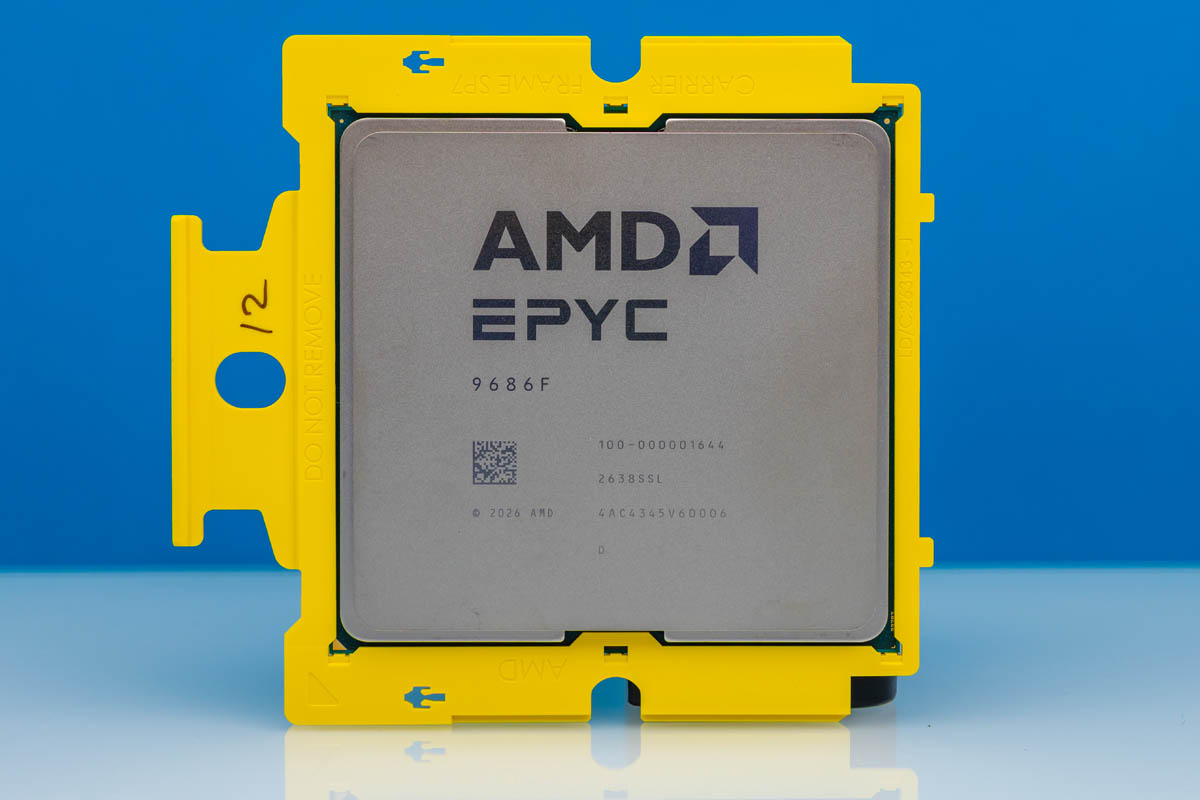
对于高吞吐负载,Venice 的亮点在于单路现已支持最多 256 个 CPU 核心,比仅隔一代的 EPYC 9005“Turin”提升 33%——并且在此基础上还有 20% 的 IPC 提升和更高的时钟频率。与此同时,对于单线程性能和延迟更为关键的工作负载,AMD 将 5.3GHz 的 EPYC 9686F 推向市场,以 EPYC 服务器芯片迄今最高的时钟频率,进一步强化 Zen 6 的 IPC 改进。
AMD 热衷于切入智能体式计算时代。Venice 和 Zen 6 CPU 架构有大量改进将帮助他们实现这一目标。但也不要低估这颗芯片在其他领域的表现;AMD 在 PCIe Gen6、新的虚拟化和安全特性等方面进行了投入,甚至在近几个月收购了一家软件工程公司,以开发用闪存替代 DRAM 的软件。AI 无疑是 Venice 故事的重点,但并不是唯一的故事。
AMD Venice 发布演示材料 – AMD 服务器 CPU 营收份额
如果一切顺利,AMD 预计在未来 12 个月内,他们终将走到拿下服务器 CPU 市场领导地位的那一步。正如我们上周从 AMD 财报中看到的,该公司的数据中心部门已经预计其营收将在今年第四季度超过 Intel。与此同时,AMD 在 x86 服务器 CPU 市场的营收份额已达 46%,公司似乎有信心 Venice 将帮助其首次突破 50%。
EPYC 9006 SP7 产品阵容:Venice HF 规格上调
在夏季首次公布 EPYC 9006 产品阵容的同时,AMD 也发布了其全系列芯片 SKU 的完整规格。这既包括今天发布的高端 SP7 平台,也包括将于明年初推出、定位更克制的 SP8 平台。
事实证明,AMD 当时有点留了余地。其旗舰高频芯片 EPYC 9686F 最初发布时宣称出货峰值频率为 5.0GHz,但如今已不再是这个数字。
AMD EPYC 9686F 频率升级
相反,9686F 现在是一颗 5.3GHz 的芯片。这让它在硬件发布前夕有了显著提升,而且不得不说,这多少是 AMD 值得骄傲(至少是可以炫耀)的一点。
在与 AMD 交流时,该公司表示他们发现大颗 Zen 6 CCD 的最终硅片表现甚至好于公司预期。因此,他们早先的 SKU 阵容略显保守,实际可以做到比 5.0GHz 更好一些——并让最快的 Venice 最终能够比最快的 Turin 运行在更高频率上。
那么,最终量产出货的 SP7 芯片阵容就是下面这样。
在这里,只有 EPYC 9686F 获得了规格提升。产品线中的其余型号与之前保持不变。值得注意的是,这意味着 64 核 EPYC 9586F 无法分享这些提升。因此,如果客户想要 AMD 主频最高的 Venice 芯片,就需要购买 96 核版本。
译文由英文原文机器翻译,术语按行业惯例统一,可在文末展开原文核对。
查看英文原文(AMD EPYC 9006 Results Are Here and AMD Delivers a Knockout Part Deux)
As far as server CPU launches go, today’s launch is remarkable on multiple levels. Besides taking a look at a wholly new server platform from AMD (socket and all), which would normally be a big event in and of itself, the server boom has turned the CPU development cycle on its head, and now it is a server CPU where we will see AMD’s latest CPU architecture. So along with our first benchmarks of Venice, today also marks our first chance to evaluate the Zen 6 CPU architecture that will be driving so many AMD products over the coming two years – everything ranging from server chips like Venice and Verano to consumer desktops, laptops, and more. There is a lot to unpack with today’s launch.
AMD EPYC: Generation on Generation
16x DDR5-8000 /
MRDIMM-12800
With so much to do and so little time to do it all, we are going to have a lot more content to follow. But to get things started, for today’s launch piece we are going to run the flagship EPYC 9996 through not only our agentic-workload focused AgentSTH V7 benchmark suite, but we are also including bits and pieces of what is essentially a preview of 2027’s AgentSTH V8. For some context, we are going back roughly a decade in server architectures to not just blindly pick up benchmark suites, but to profile workloads on dozens of platforms for inclusion in the suite.
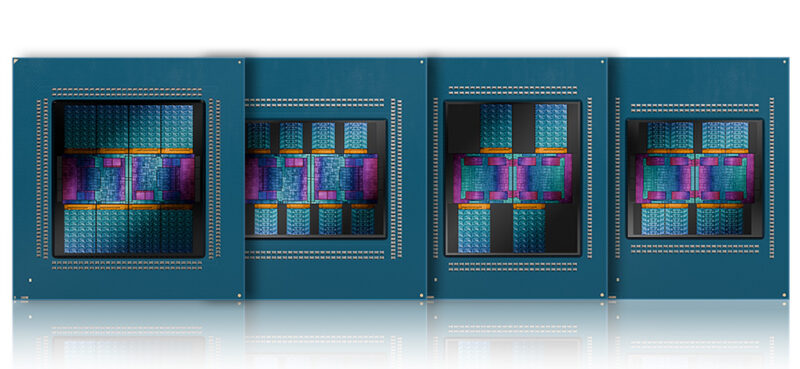 EPYC 9006 Die Shots (SP7 Zen 6c, ZP7 Zen6, SP8 Zen 6c, SP8 Zen 6)
We have lots of numbers for this one and some neat comparison points. The headline feature is that we now get up to 256 cores per socket, a new PCIe Gen6 I/O subsystem, and more than twice the memory bandwidth to go along with a revised Zen 6 microarchitecture and SoC design. AMD is also splitting its lineup into multiple families for different applications with two primary sockets, a return of the -X high-cache parts with Venice-X, and the LPDDR5X Verano. The new series covers a lot more and is by far the most ambitious innovation in the EPYC line since the switch to an I/O die, which allowed the EPYC 7002 to deliver a knockout. This is the Knockout Part Deux.
Also, I just wanted to recognize Ryan, Sam, and Vic for contributing to a quick turnaround on this one. We will have Ryan cover the Zen 6 microarchitecture and SoC portion before I take back over on performance. Regular STH readers may have noticed this, but many of our pieces are much longer than they used to be, and doing these reviews has become a team effort.
AMD EPYC 9006 “Venice”: The Story So Far
Over the summer, AMD held a proper unveiling for its EPYC 9006 “Venice” server CPU platform at the company’s annual Advancing AI event. In what has become AMD’s marquee event of the year – and a reflection of the importance of server parts to their bottom line – the company laid out an aggressive plan for 2026 and beyond. Spearheaded by the Venice CPU platform, AMD has ambitions to deliver not only their most powerful and most capable server platform to date, but to iterate on that over the next year or so to deliver a broad portfolio of server chips that covers everything from rank-and-file servers to mighty HPC systems, and of course lots of AI nodes.
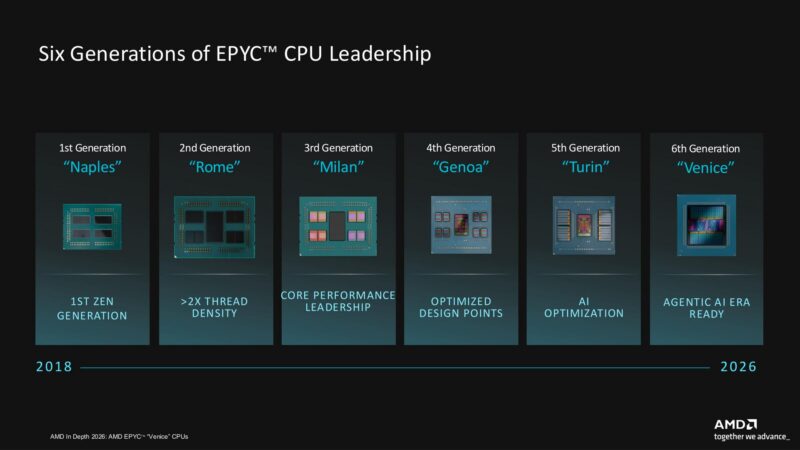 AMD Venice Launch Deck- Six Generations of EPYC
Now in its sixth generation of Zen-architecture server chips, Venice is in some respects AMD’s most aggressive design yet. AMD is making heavier use of chiplets than ever before, and the company is now relying on advanced packaging techniques to tie them all together. This has allowed AMD to fully leverage TSMC’s N2 (2nm) process node, their first GAAFET-based node, to the best of their abilities, tapping it to not only devote more transistors than ever to the Zen CPU cores to boost their performance, but to pack in more CPU cores than ever before.
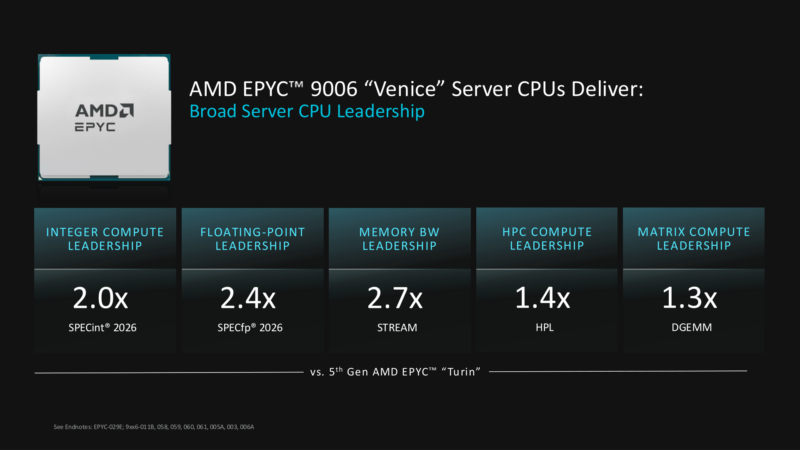 AMD Venice Launch Deck – Venice Improvements over Turin
For high-throughput workloads, the highlight of Venice is that there are now up to 256 CPU cores in a single socket, a 33% improvement over EPYC 9005 “Turin” only a generation ago – and with 20% higher IPC and higher clockspeeds on top of that. Meanwhile for workloads where single-threaded performance and latency are more critical, AMD is bringing the 5.3GHz EPYC 9686F to market to double-down on Zen 6’s IPC improvements with the highest clockspeeds yet for an EPYC server chip.
AMD is keen to tap into the agentic era of computing. And there are a lot of improvements to Venice and the Zen 6 CPU architecture that are going to help them get there. But do not underestimate the chip in other areas, either; AMD has invested in features such as PCIe Gen6, new virtualization and security features, and it has even picked up a software engineering firm in recent months to develop software to replace DRAM with flash memory. AI is certainly the highlight of the Venice story, but it is not the only story.
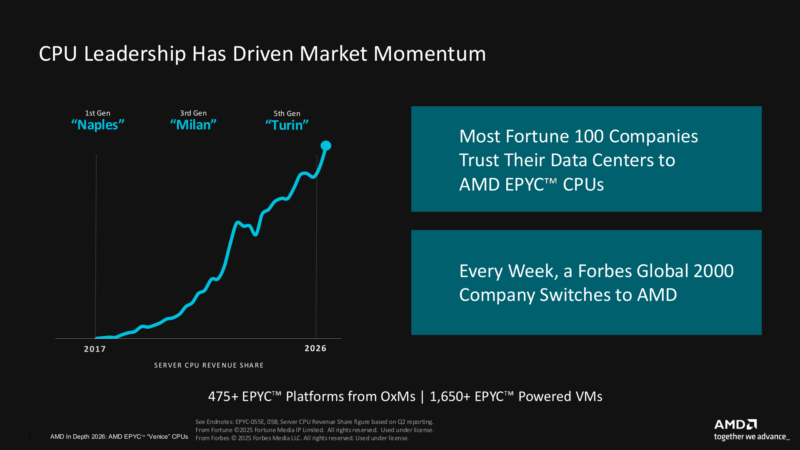 AMD Venice Launch Deck – AMD Server CPU Revenue Share
With any luck, AMD expects that over the next 12 months they will finally reach the point where they capture leadership of the server CPU market. As we saw with AMD’s earnings last week, the company’s data center division is already projecting that its revenues will surpass Intel’s in Q4 of this year. Meanwhile, AMD is already at 46% of the revenue share for the x86 server CPU market, and the company seems confident that Venice will help push them above 50% for the very first time.
EPYC 9006 SP7 Product Stack: Venice HF Gets a Spec Bump
Alongside its initial summer announcement of the EPYC 9006 lineup, AMD also published the complete specifications for its full stack of chip SKUs. This was for both the high-end SP7 platform launching today, as well as the more restrained SP8 platform that is launching early next year.
As it turns out, AMD was sandbagging things a bit. Whereas their flagship high-frequency chip, the EPYC 9686F, was originally announced to ship with a peak frequency of 5.0GHz, that is no longer the case.
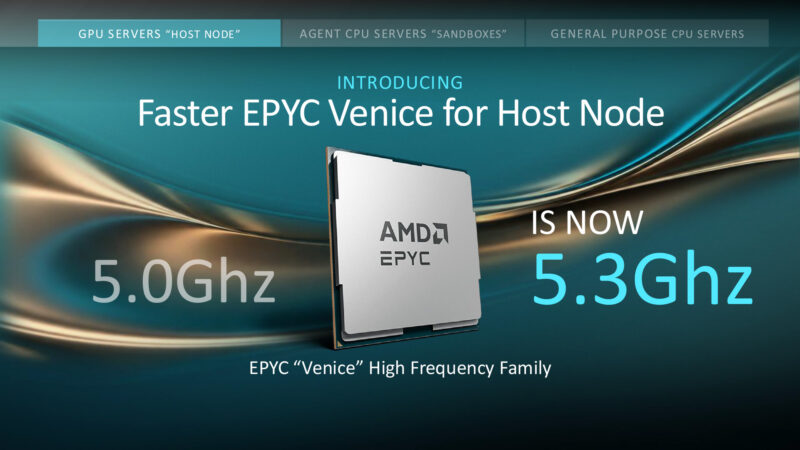 AMD EPYC 9686F Clockspeed Upgrade
Instead, the 9686F is now a 5.3GHz chip. Making this a notable improvement just ahead of the launch of the hardware, and admittedly a bit of a point of pride (or at least bragging rights) for AMD.
In talking with AMD, the company has found that the final silicon for their big Zen 6 CCD has turned out even better than the company was expecting. Consequently, their earlier SKU stack was a bit conservative, and they can do a bit better than 5.0GHz – and allow the fastest Venice to clock higher than the fastest Turin after all.
So here is what the final, shipping SP7 chip stack looks like.
Only the EPYC 9686F is getting a specification bump here. The rest of the lineup is unchanged from before. Notably, this means the 64 core EPYC 9586F does not get to share in the gains. So if customers want AMD’s highest clocked Venice chip, they will need to buy the 96 core version.
原文为英文,正文由自动抓取并保留原文。
原文发布于 ServeTheHome(AMD EPYC 9006 Results Are Here and AMD Delivers a Knockout Part Deux),标题、摘要与正文由机器翻译,术语按行业惯例统一,未经人工逐句校订。