奇葩 AI 芯片演示用黄油展示比竞品低 40 度
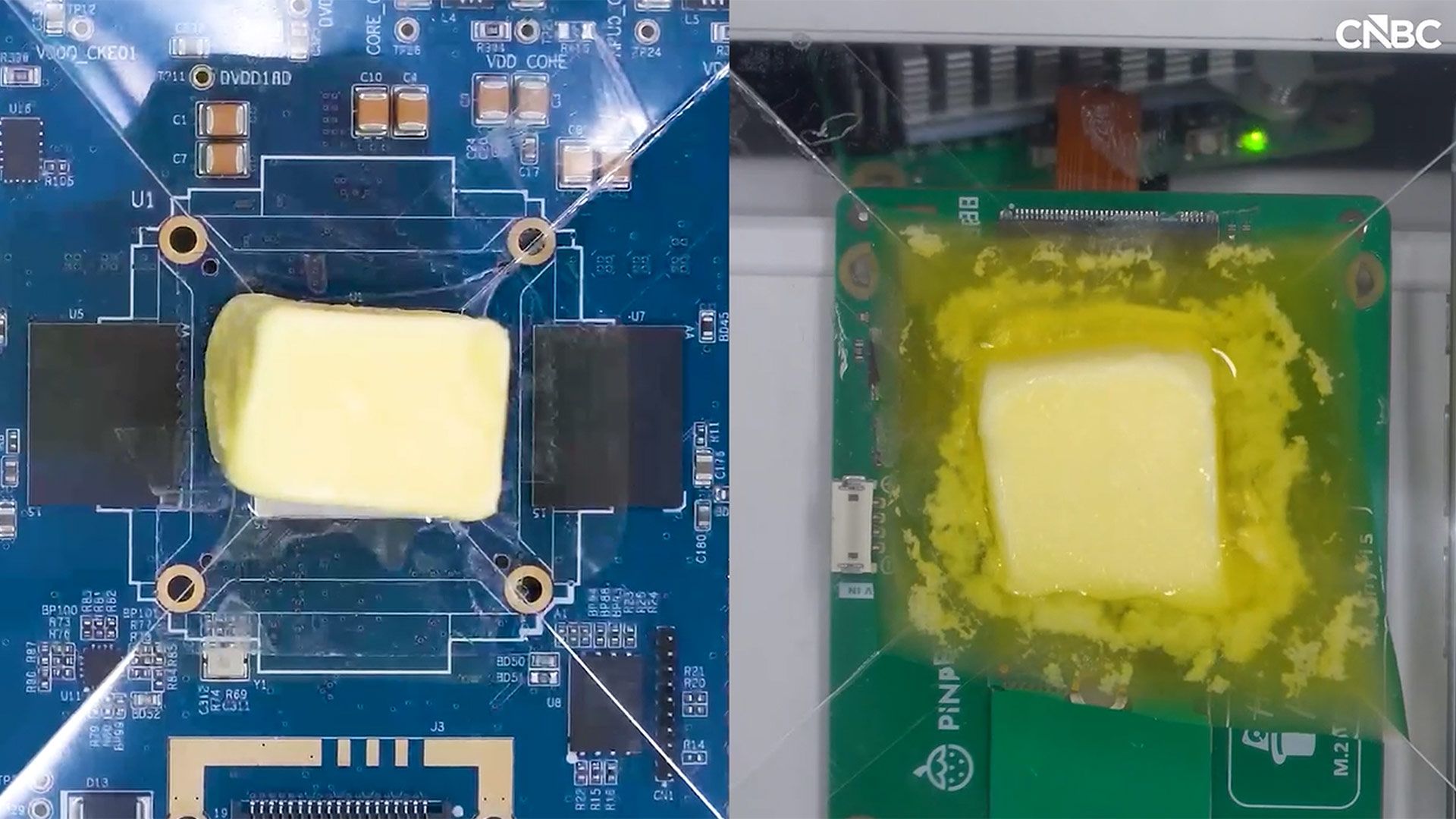
产生过多热量的处理器在当代数据中心的设计、成本和资源使用中扮演着重要角色。然而,如果 AI 芯片效率更高、运行温度低得多,情况可能会大不相同。最近被 CNBC 报道的韩国芯片初创公司 DEEPX 认为,其 AI 芯片设计就是答案。DEEPX 在一项奇特的、以乳制品为基础的新型散热基准测试中,展示了其 DX-M1 处理器的低温运行能力。竞品芯片几秒钟就能让一小块黄油滋滋作响,而在 DEEPX 的方案之上,这块黄油依然保持固态。
全球对 AI 数据中心激增的担忧正在加剧。这些发展正在塑造商业、环境和政治。一些人对它们有着非常强烈的情绪,数百人冒着被投入监狱的风险抗议数据中心。导语中链接的 CNBC 报道探讨了现代数据中心为何存在问题,并指出核心问题源于使用高发热处理器,以及它们所需的庞大供电与冷却装置。
DEEPX 表示,其简单的答案是“让 AI 芯片本身运行得更凉”。CNBC 的视频中包含超低功耗 DX-M1 处理器的演示。在与未具名的竞品 AI 芯片进行的并排测试中,可以看到 DX-M1 NPU 的温度明显更低。DEEPX CEO Kim Nok-won 声称,与竞品相比温差达 25 至 40 摄氏度以上。Kim 表示,并排测试的芯片处理了“相同的 AI 工作负载……每块芯片都熔化了黄油,只有最后一块芯片 [DX-M1] 例外。”
用乳制品来做散热挑战,确实让人大跌眼镜,但我们注意到这项对比信息中存在一些重大缺口。最突出的是,每款处理器完成测试负载的速度究竟如何。只要把功耗和频率降下来,任何芯片都能跑得很凉快。PC 发烧友一直都在给 GPU 降压和/或降频,以提升能效、改善散热、降低风扇噪音。
据 The Elec 报道,DEEPX 的 DX-M1 NPU 自 2025 年 8 月起采用三星 5nm 制程生产。凭借这一小块硅片,该公司已赢得约 1330 万美元的订单。公司计划推进下一代 AI 芯片 DX-M2,该芯片基于三星 2nm 制程,目标是在 2027 年下半年量产。
总而言之,这些 NPU 看来瞄准的是边缘计算和机器人应用,因此它们并不真正与 CNBC 报道中所展示的那些功耗惊人的 NVIDIA Blackwell 和 Rubin GPU 机架处于同一竞争领域。最终,我们或许会看到成百上千块高发热的 NVIDIA GPU 及其庞大的液冷装置,被发热更低的定制加速器所取代。这样的创新或许能平息针对 AI 数据中心的反对声浪。然而,DEEPX 的 DX-M1 乃至 DX-M2 芯片都不会在该领域参与竞争,因此这个黄油测试多少有些误导。
CNBC 的报道还重点提及 SK hynix 在 iHBM 上的工作,这是一种下一代低功耗、低发热的方案。据一位接受 CNBC 采访的高管称,“i”代表“集成冷却元件”(Integrated Cooling Element)。CoolIT 也在尝试类似思路,将水冷进一步贴近发热的硅片。
译文由英文原文机器翻译,术语按行业惯例统一,可在文末展开原文核对。
查看英文原文(Bizarre AI chip demo uses butter to highlight how new chip runs 40 degrees cooler than the competition)
Processors generating excess heat play a significant part in contemporary data center design, cost, and resource use. However, things could be vastly different if AI chips were more efficient and ran far cooler. South Korean chip startup DEEPX, recently featured by CNBC, thinks its AI chip designs are the answer. DEEPX demonstrated its DX-M1 processor’s cool-running capabilities in a bizarre new dairy-based thermal benchmark. While rival chips caused a knob of butter to sizzle in seconds, atop the DEEPX solution, the butter block remains solid.
Concerns over AI data center proliferation are growing worldwide. These developments are shaping business, the environment, and politics. Some people have very strong feelings about them, and hundreds of people have risked being thrown into jail protesting data centers. The CNBC report linked in the intro looks into why modern data centers are problematic, and indicates that the core issues stem from the use of hot-running processors and the extensive power and cooling apparatus they need.
DEEPX says its simple answer is to “make the AI chips themselves run cooler.” The CNBC video includes a demo of the ultra-low-power DX-M1 processor. In a side-by-side test against unnamed rival AI chips, you can see the DX-M1 NPU is clearly cooler. DEEPX CEO Kim Nok-won claims a temperature difference of 25 to more than 40 degrees Celsius compared with competitors. Kim said the side-by-side chips processed “the same AI workload… and every chip melted the butter except the last chip [DX-M1].”
The dairy-based thermal challenge is certainly eyebrow-raising, but we note some big gaps in the comparison information. Most notable was the question of how fast each processor tackles the test workload. Anyone can run a chip cool if the power and clocks are scaled back. PC enthusiasts undervolt and/or underclock their GPUs all the time for efficiency, better thermals, and reduced fan noise.
DEEPX’s DX-M1 NPU has been produced on Samsung 5nm since August 2025, according to The Elec reports. It has won approximately $13.3M worth of orders thanks to this sliver of silicon. The company is planning to move forward with the next-gen DX-M2 AI chip, which is based on Samsung 2nm, with its mass production aiming for H2 2027.
In conclusion, these NPUs look set for edge computing and robotics applications, so they aren’t really competing in the same space as the racks of power-gulping Nvidia Blackwell and Ruben GPUs featured in the CNBC news feature. Eventually, we might see the hundreds or thousands of hot-running Nvidia GPUs with beefy liquid cooling apparatus get replaced by cooler-running custom accelerators. Such an innovation could cool the backlash against AI data centers. However, DEEPX’s DX-M1 or even DX-M2 chips aren’t going to compete in that space, so this butter test is a bit of a red herring.
The CNBC report also highlights SK hynix’s work on iHBM, a next-gen low-power consumption, and cool-running. The ‘i’ stands for ‘Integrated Cooling Element,’ according to an exec talking to CNBC. CoolIT is also trying a similar approach by bringing water cooling even closer to the heat-generating silicon.
正文保留英文原文,标题与摘要由机器翻译。
原文发布于 Tom's Hardware(Bizarre AI chip demo uses butter to highlight how new chip runs 40 degrees cooler than the competition),标题、摘要与正文由机器翻译,术语按行业惯例统一,未经人工逐句校订。
