谷歌一年内推出四款TPU变体,加剧与NVIDIA竞争
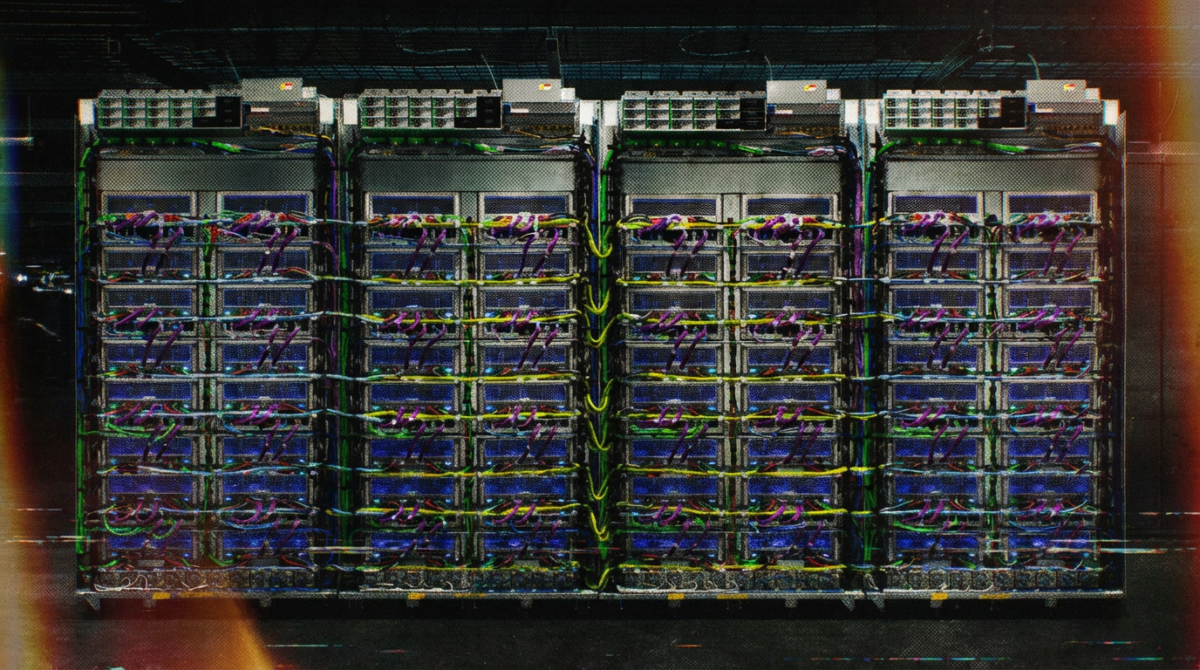
Nano Banana Pro,提示词由 THE DECODER 提供
Google 在其第八代 AI 芯片产品线中推出两款新系统——TPU 8tx 和 TPU 8i Max,二者均基于现有处理器构建。
TPU 8tx 在处理过程中对机密数据保持加密,而 TPU 8i Max 通过将两颗芯片集成在单个封装上,在同一机架内实现内存与算力翻倍。
结合 TorchTPU 等软件工具,Google 希望降低开发者的使用门槛,并越来越多地将其硬件推向外部客户,用于日常模型推理。
借助两款新的 TPU 变体,Google 瞄准机密 AI 负载和内存密集型应用。此次扩展巩固了 Google 的战略转向,即把自研 AI 芯片打造为面向外部客户的通用平台。
Google 为其第八代 AI 加速器产品线新增了两款系统:面向机密计算的 TPU 8tx 和面向内存密集型负载的 TPU 8i Max。Google 表示,凭借这两款新品,其首次在一年内出货了四款 TPU 系统。
两款新变体均基于现有芯片。Google 此次并非推出新的芯片代次,而是新的系统配置:围绕同一处理器采用不同的封装、不同的网络和不同的内存配置。该公司将这种模块化方式称为刻意的设计选择,使其能以数月而非数年的速度交付新的硬件变体。
Google 扩展后的第八代 TPU 产品组合。|图片:Google(AI 生成)
TPU 8tx 即使在处理过程中也能让敏感数据保持加密
TPU 8tx 面向处理机密数据的企业和政府机构。通常情况下,数据在存储和传输过程中是加密的,但一旦处理器要对其进行处理,就必须在内存中解密。
TPU 8tx 的设计初衷正是为了填补这一缺口。据 Google 称,数据和模型权重即使在活跃使用期间也能保持受保护且相互隔离的状态。NVIDIA 已通过其机密计算架构为 GPU 提供了类似功能。
该系统采用与 Google 为实时推理开发的相同的低延迟 Boardfly 网络,据称与 TPU 8t 相比,延迟降低幅度最高可达两倍。Google 表示,企业可以用单一系统完成模型微调、将大型模型蒸馏为更小的模型,以及通过强化学习训练 AI 智能体,而无需在不同集群之间迁移敏感数据。
TPU 8i Max 在同一机架内将算力翻倍
TPU 8i Max 解决的是另一个问题:内存瓶颈。当 AI 智能体同时处理大型代码库或数小时的视频时,内存带宽就会成为卡点。Google 的应对方式是在单个封装上放置两颗 TPU 8i 芯片。
随着这些新品的加入,Google 目前提供四款 TPUv8 变体。|图片:Google
其结果是,在相同的机架规格下,算力翻倍、内存翻倍、内存带宽翻倍,这意味着数据中心每平方米的性能显著提升。
Google 降低 TPU 的采用门槛
除硬件之外,Google 还在努力让 TPU 更易使用。该公司已将 TorchTPU 开源,因此 PyTorch 代码只需极少改动即可在 TPU 上运行。vLLM 和 SGLang 等主流推理框架同样获得支持。
推理市场正在推动定制芯片竞赛
此次扩张是对 Google 战略转变的直接回应:TPU 从纯粹的内部工具,转变为面向外部客户推广的竞争性平台。该公司目前拥有近 100 家外部 TPU 客户。
推动这一举措的是更广泛的市场趋势。随着 AI 应用普及,重心正从昂贵的训练任务转向推理,也就是模型的日常运行。TPU 这类专用芯片恰好能在这一领域发挥自身优势。这也是 Amazon、Microsoft 和 OpenAI 都在开发自有加速器的原因。
NVIDIA 的回应是,通过与 Groq 的收购式招聘(acqui-hire)和授权协议,强化自身的推理产品。
没有炒作的 AI 新闻——由人工精选
译文由英文原文机器翻译,术语按行业惯例统一,可在文末展开原文核对。
查看英文原文(Google ships four TPU variants in one year as it ramps up competition with Nvidia)
Nano Banana Pro prompted by THE DECODER
Google is introducing two new systems in its eighth-generation AI chip lineup, the TPU 8tx and TPU 8i Max, both built on existing processors.
The TPU 8tx keeps confidential data encrypted during processing, while the TPU 8i Max doubles memory and compute power within the same rack by combining two chips on a single package.
Together with software tools like TorchTPU, Google aims to lower the barrier for developers and increasingly market its hardware to external customers for day-to-day model inference.
With two new TPU variants, Google is targeting confidential AI workloads and memory-hungry applications. The expansion cements Google's strategic shift toward positioning its in-house AI chips as a broad platform for external customers.
Google has added two new systems to its eighth-generation AI accelerator lineup: the TPU 8tx for confidential computing and the TPU 8i Max for memory-intensive workloads. With these additions, Google says it has shipped four TPU systems within a single year for the first time.
Both new variants are built on existing silicon. Google isn't introducing a new chip generation here, but new system configurations: different packaging, different networking, and different memory setups around the same processor. The company frames this modular approach as a deliberate design choice that lets it deliver new hardware variants in months rather than years.
 Google's expanded eighth-generation TPU portfolio. | Image: Google (AI-generated)
TPU 8tx keeps sensitive data encrypted even during processing
The TPU 8tx targets enterprises and government agencies working with confidential data. Normally, data is encrypted during storage and transmission but has to be decrypted in memory once a processor works with it.
The TPU 8tx is designed to close that gap. According to Google, data and model weights stay protected and isolated even during active use. Nvidia already offers a comparable feature for GPUs through its confidential computing architecture.
The system uses the same low-latency Boardfly network Google developed for real-time inference and is supposed to deliver up to twice the latency reduction compared to the TPU 8t. Google says enterprises can use a single system to fine-tune models, distill large models into smaller ones, and train AI agents with reinforcement learning, all without moving sensitive data between different clusters.
TPU 8i Max doubles compute power in the same rack
The TPU 8i Max tackles a different problem: the memory bottleneck. When AI agents work simultaneously across large codebases or hours of video, memory bandwidth becomes the chokepoint. Google addressed this by placing two TPU 8i chips on a single package.
 With the new additions, Google now offers four TPUv8 variants. | Image: Google
The result is double the compute power, double the memory, and double the memory bandwidth in the same rack format, which means significantly more performance per square meter of data center space.
Google lowers the bar for TPU adoption
Beyond hardware, Google is working to make TPUs easier to use. The company has released TorchTPU as open source, so PyTorch code should run on TPUs with minimal changes. Popular inference frameworks like vLLM and SGLang are also supported.
The inference market is driving the custom chip race
The expansion is a direct response to Google's strategic shift from treating TPUs as a purely internal tool to marketing them as a competitive platform for outside customers. The company now counts nearly 100 external TPU customers.
A broader market trend is driving this push. As AI applications spread, the focus is shifting from expensive training runs to inference, meaning the day-to-day operation of models. Specialized chips like TPUs can play to their strengths in exactly this area. That's also why Amazon, Microsoft, and OpenAI are all developing their own accelerators.
Nvidia has responded by bolstering its own inference offering through its acqui-hire and licensing deal with Groq.
AI News Without the Hype – Curated by Humans
原文为英文,正文由自动抓取并保留原文。
原文发布于 The Decoder(Google ships four TPU variants in one year as it ramps up competition with Nvidia),标题、摘要与正文由机器翻译,术语按行业惯例统一,未经人工逐句校订。