中国 800 兆瓦 AI 数据中心对标 Stargate
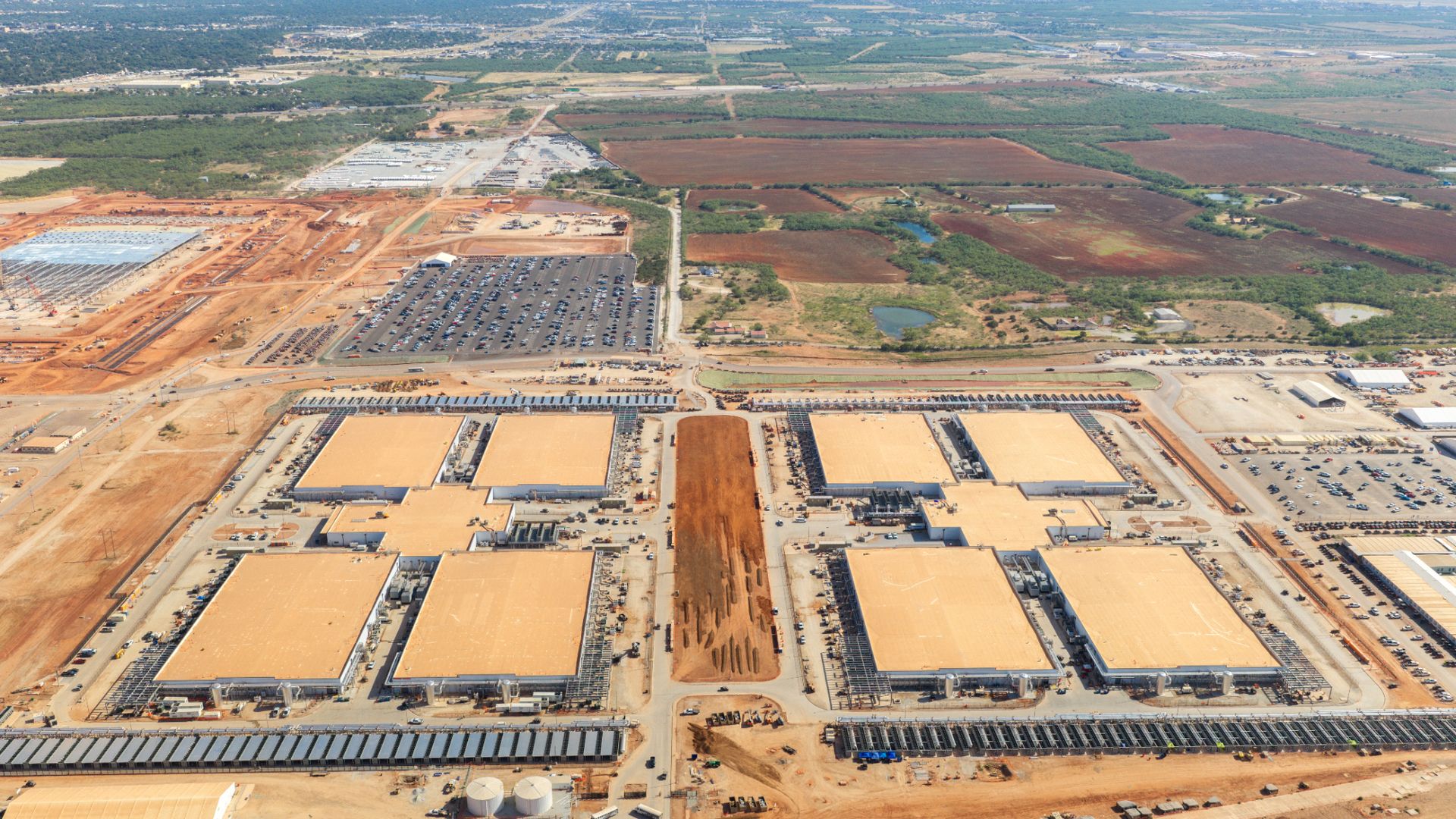
根据 SemiAnalysis 的一份新报告,中国正在内蒙古建设一座 800MW 的 AI 数据中心园区,其经济性可能对美国的 Stargate 项目构成挑战。Envision 在不到一年的时间里建成了 Galaxy AI 数据中心园区的首期 120MW,研究人员在 9 月实地走访后估算,其成本仅为美国同类项目的五分之一。
但把楼建起来只是这场战役的一半。AI 数据中心需要海量电力,而 Envision 正走一条不同寻常的路径来确保供电——在算力设施旁边自建风电场和电池储能。
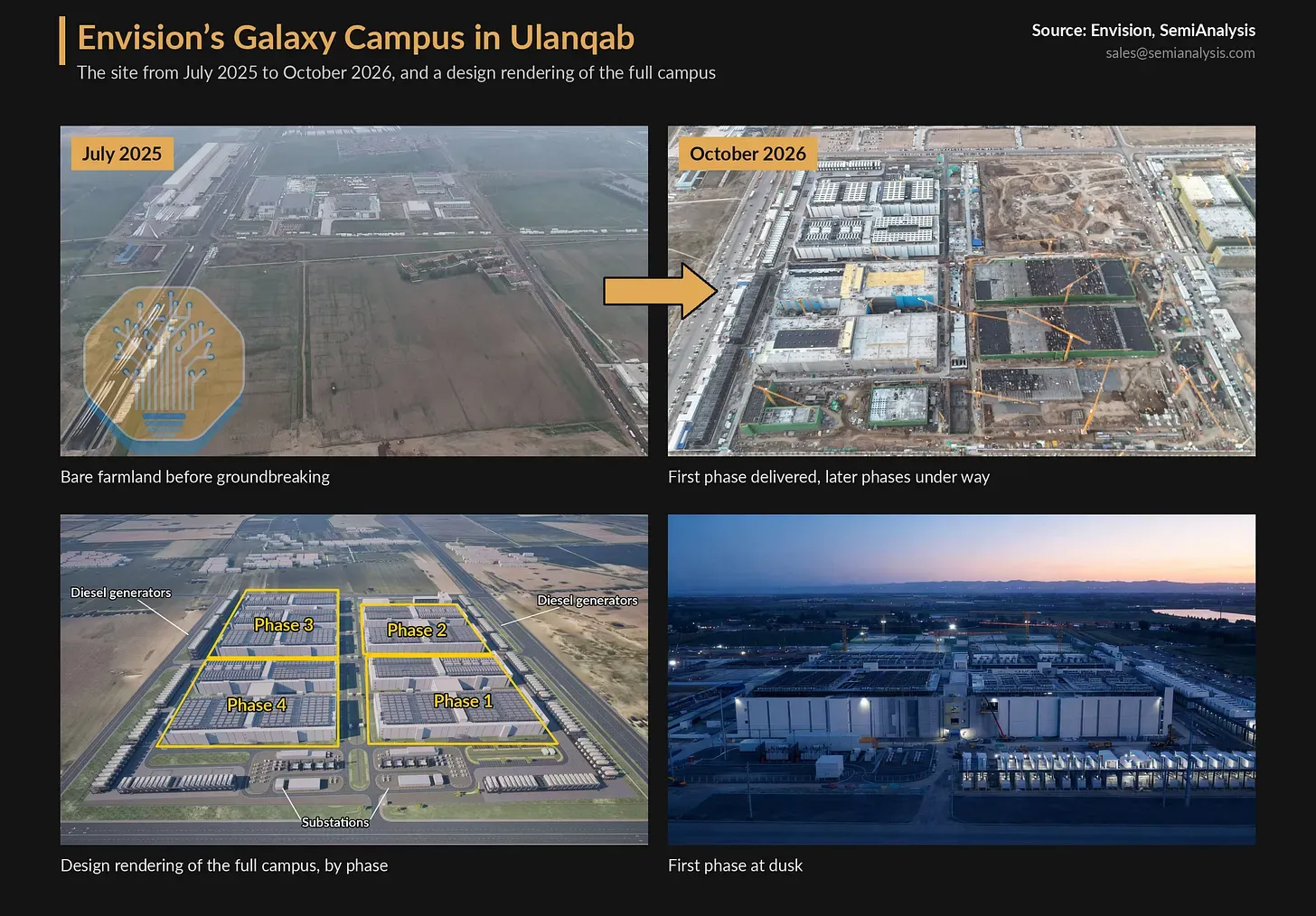
当美国开发商纷纷转向现场燃气轮机以绕开电网限制时,Envision 却把数据中心建在风电场、电池储能和专用电力基础设施旁边。Galaxy 位于内蒙古乌兰察布,分四期开发,服务于两家未具名的互联网公司。园区建成后计划到 2027 年底提供最高 800MW 的 IT 容量,这使其规模更接近位于得克萨斯州阿比林的 Stargate 园区约 820MW 的关键 IT 容量。
Envision 为 Galaxy 自建供电,而不是把所有事情都交给当地电网。到目前为止,该公司已安装超过 100GW 的风力发电机,并希望其风电场为园区前两期提供超过 60% 的所需电力。这些风电场相距约 80 公里,合计容量为 420MW,远高于前两期预计的 240MW 负载,不过风力发电机很少能满负荷运行。乌兰察布的风电容量系数在 35% 到 40% 之间,因此 Envision 正在增加四小时电池储能,以便在风力减弱时持续供电。
对部分美国数据中心建设者来说,电力设备正变得相当难以获取。我们此前曾报道过涡轮机短缺问题,这已把交付预期推迟到 2030 年;而 SpaceX 则打算为其燃气供电的 AI 设施自行制造涡轮叶片。与此同时,Envision 把风力发电和电池储能直接放在了服务器旁边。
Galaxy 内部的电力硬件同样值得一看。SemiAnalysis 走访了一个 5MW 机房,那里的固态变压器将 10kV 交流电直接转换为 800V 直流电,供给服务器机架。这与传统的数据中心配电方式有相当大的不同——后者通常要经过多个中间转换环节。“在一个 5MW 机房中,我们看到了 800V 系统在实际运行,”研究人员写道。他们解释说:“固态变压器(SST)从电网取用 10kV 交流电,并将其直接转换为 800V 直流电供给机架。”
该设计省去了传统数据中心电力系统中的若干中间部件,包括低压变压器、不间断电源和整流器。更少的转换环节可以降低设备需求和能量损耗,不过 SemiAnalysis 并未提供 Galaxy 试点项目实测的效率提升数据。这套 5MW 设施只是整个园区的一小部分,但它让该技术在真实运行的设施中投入使用。不过,Envision 计划在后续建设阶段进行更大规模的部署,此举与 NVIDIA 在未来高密度 AI 系统中推动 800V 直流配电的方向一致。
Galaxy 园区采用了一种冷却方案,让液冷服务器和风冷服务器共用同一条水循环回路,从而无需传统的中央冷水机组。这一点在 AI 服务器发热量更大、需要日益复杂冷却系统的情况下尤为重要。取消中央冷水机组可以简化基础设施,不过该设计取决于当地气候条件以及设施通过其水循环回路排热的能力。中国此前还尝试过其他非常规冷却方式,包括在上海附近海域建设的一座风力驱动的海底数据中心,利用周围海水帮助冷却服务器。
不过,Galaxy 只是 Invision 更广泛的内蒙古数据中心计划中的首个重大项目。Semianalysis 称,该计划总规模达 3GW,园区其余部分仍是一片繁忙的施工现场。研究人员援引当地报道称,周边的察哈尔高新技术开发区也在快速扩张,22 个数据中心项目上分布着近 3 万名建筑工人。
中国这一更广泛的扩张也在吸引一些全球最大的科技公司。阿里巴巴、华为和字节跳动等企业正在该地区扩建基础设施,这里拥有相对廉价的电力、可用的土地和丰富的风能资源。然而,能够获得电力和数据中心建筑,并不自动意味着拥有可用的 AI 算力。中国获取先进加速器仍是一项单独存在的制约,尤其是在美国出口限制削弱其获取 NVIDIA 最强芯片能力的情况下。
译文由英文原文机器翻译,术语按行业惯例统一,可在文末展开原文核对。
查看英文原文(China builds massive 800-megawatt AI data center campus to rival US Stargate project)
China is building an 800MW AI data center campus in Inner Mongolia that could challenge the economics of America's Stargate project, according to a new report from SemiAnalysis. Envision has built the first 120 MW of Galaxy AI data center campus in less than a year, a cost the researchers put at just one-fifth of comparable US projects, after visiting the site in September.
But getting the buildings up is only half of the battle. AI data centers need enormous amounts of electricity, and Envision is taking an unusual route to secure it— building its own wind farms and battery storage alongside the computing facility.
While US developers are turning to on-site gas turbines to work around grid constraints, Envision is building its data center alongside wind farms, battery storage, and dedicated power infrastructure. Galaxy is located in Ulanqab, Inner Mongolia, and is being developed across four phases for two unnamed internet companies. The completed campus is planned to provide up to 800MW of IT capacity by the end of 2027, putting it closer to the approximately 820MW of critical IT capacity at the Stargate campus in Abilene, Texas.
Envision is building its own power supply for Galaxy rather than leaving everything to the local grid. So far, the company has installed more than 100GW of wind turbines and wants its wind farms to provide over 60% of the electricity needed by the campus’s first two phases. Those farms, located about 80 kilometers apart, have a combined capacity of 420MW. That's well above the 240MW load expected from the first two phases, although wind turbines rarely get to run flat out. Ulanqab’s wind capacity factor is between 355 and 40%, so Envision is adding four-hour battery storage to keep the electricity coming when the wind dies down.
Power equipment is proving rather hard to come by for some US data center builders. We have previously reported on turbine shortages that have pushed delivery estimates to 2030, while SpaceX is looking to manufacture its own turbine blades for its gas-powered AI facilities. Envision, meanwhile, is putting wind generation and battery storage right alongside its servers.
The power hardware inside the Galaxy is worth a look, too. Semianalyss visited a 5MW hall where solid-state transformers take 10kV AC electricity and convert it directly into 800V DC for the server racks. That's a fairly substantial departure from conventional data-center power distribution, which typically involves several intermediate conversion stages. “In one 5MW hall, we saw the 800V system at work,” the researchers wrote. They explained that “Solid-state transformers (SSTs) take 10kV AC from the grid and convert it straight to 800V DC for the racks.”
The design removes several intermediate components found in conventional data center power systems, including low voltage transformers, uninterruptible power supplies and rectifiers. Fewer conversion stages can reduce equipment requirements and energy losses, although SemiAnalysis did not provide a measured efficiency improvement for Galaxy’s pilot. The 5MW installation is only a small part of the campus, but it puts the technology into operation at a live facility. Envision, however, plans an even larger deployment in the next construction phases, a move that aligns with Nvidia's push for 800V DC distribution in future high-density AI systems.
Galaxy's campus uses a cooling arrangement in which liquid-cooled and air-cooled servers share a single water loop, eliminating the need for conventional central chiller plants. That matters as AI servers generate more heat and require increasingly sophisticated cooling systems. Removing central chillers can simplify infrastructure, although the design depends on local climate conditions and the facility's ability to reject heat through its water loop. China has previously experimented with other unconventional cooling methods, including a wind-powered underwater datacenter off Shanghai that uses surrounding seawater to help cool its servers.
That said, Galaxy is the first major project in Invision's wider Inner Mongolia datacentre plans, which Semianalysis says add up to 3GW, with the rest of the campus still a busy construction site. The surrounding Chahar High-tech Zone is also expanding rapidly, with nearly 30,000 construction workers spread across 22 data center projects, according to a local report cited by the researchers.
The wider Chinese expansion is also attracting some of the world's largest technology companies. Alibaba, Huawei and ByteDance are among the firms expanding infrastructure in the region, which benefits from relatively cheap electricity, available land and abundant wind resources. However access to electricity and datacenter buildings does not automatically translate to available AI computing power. China's access to advanced accelerators remains a separate constraint, particularly as US export restrictions limit its ability to acquire Nvidia’s most powerful chips.
正文保留英文原文,标题与摘要由机器翻译。
原文发布于 Tom's Hardware(China builds massive 800-megawatt AI data center campus to rival US Stargate project),标题、摘要与正文由机器翻译,术语按行业惯例统一,未经人工逐句校订。
