前沿雷达 #5:AGI 将至,人才出走与新实验室押注

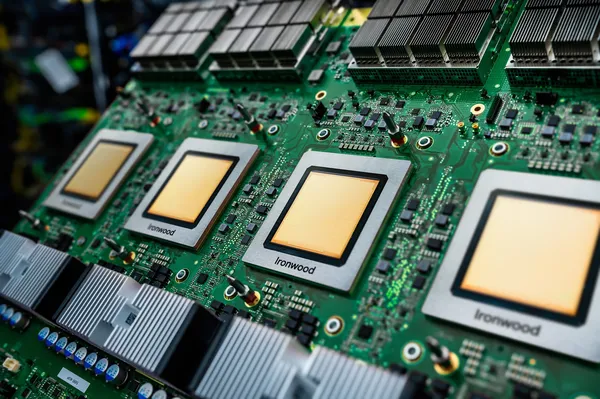
Nano Banana Pro,由 THE DECODER 提供提示词
OpenAI 在谈论 AGI 时代,NVIDIA CEO 黄仁勋则称 AGI 已经到来。与此同时,当今模型的共同创造者们正纷纷离开 OpenAI、Google DeepMind 和 Meta,创办自己的实验室,在拿不出任何产品的情况下融资数十亿美元。为什么?他们押注的是:仅靠现有的这套配方还不够。我们按研究押注方向梳理了 45 家新实验室(neolab),梳理了它们试图突破的当今 AI 的种种局限,考察了它们的工作中已经可见的成果,并解释了为什么 NVIDIA 总是赢家。
GPT-6 Astra 发布后,NVIDIA CEO 黄仁勋在 X 上宣称:“AGI 已经到来。”OpenAI 总裁 Greg Brockman 称该模型是一个转折点,并欢迎人类进入“AGI 时代”。这两人究竟想表达什么并不明确,因为 AGI 并没有公认的定义。但信息还是传达出来了:一个极其强大的 AI——可能是能自我改进的 AI——即将到来,而且路径已经规划清楚。
许多打造当今系统的人显然并不这么看。已有数十人离开大实验室,自立门户。Ilya Sutskever 是 OpenAI 的联合创始人,并曾担任其首席科学家,如今他在打造 Safe Superintelligence。Jerry Tworek 曾主导 OpenAI 推理模型的开发,现在经营 Core Automation。AlphaGo 背后的核心人物 David Silver 离开 Google DeepMind,加入 Ineffable Intelligence。Yann LeCun 在待了十二年后离开 Meta,创立了 AMI。Jeff Dean 在 Google 度过了 27 年,最近的职务是首席科学家,随后创办了 Discovery Loop。
资金随之而来:NVIDIA 于 7 月投资了 SSI,据 Bloomberg 报道金额为 50 亿美元。该实验室尚未发布任何一个模型或论文。Jeff Bezos 的工业 AI 实验室 Prometheus 在 6 月以 410 亿美元估值融资 120 亿美元。Flapping Airplanes 同样没有公开模型,却在 10 月的 A 轮融资中募得 10 亿美元。
动机各不相同,也并非都出于技术考量。在这样的估值下,创始人很快就能成为纸面上的亿万富翁。LeCun 在与 Meta 发生战略分歧后离开。Sutskever 希望在没有产品压力的情况下做研究。另一些人则想开辟一片在大实验室里只能算边角料的细分领域。有些离职甚至算不上彻底切割:Google 本身就是 Discovery Loop 的创始投资人。
许多创始人共有的是怀疑。他们怀疑的不是远为强大的 AI 是否会到来——有些人认为 AGI 已近在眼前。他们的怀疑在于,仅凭今天这套配方能否抵达那里:越来越大的语言模型,用互联网数据训练,再用强化学习精修。
没有官方定义。我们用这个词指代独立创立、以研究驱动的 AI 公司,其业务建立在长期技术押注之上。它们想改变 AI 的学习方式、感知世界的方式、解决问题的方式、被控制的方式,或计算的方式。
当前这一波在 2024 年变得清晰可见。最强模型的竞赛正进行得如火如荼,云巨头也各自有了合作伙伴:Microsoft 支持 OpenAI,Amazon 支持 Anthropic。随后 Sutskever 在 6 月创立 SSI,并在数月内为一个没有产品的研究团队募得 10 亿美元。
投资者愿意为此掏钱是有原因的。OpenAI 和 Anthropic 凭借自身的成功成长为大型企业,两家都在以创纪录的估值推进 IPO。在内部,研究团队与产品团队争夺资金和关注。成熟企业难以接纳威胁自身业务的创意,管理学者称之为“创新者的窘境”。这正是投资者押注的地方:小团队找到巨头们忽略的东西。
这有先例。Transformer 于 2017 年在 Google 诞生。DeepMind 用 AlphaGo 击败了世界顶尖围棋选手。但面向大众的 AI 助手却出自 2015 年以非营利形式成立的 OpenAI。第二次突破来自 OpenAI 的衍生公司:Dario 和 Daniela Amodei 于 2021 年创立了 Anthropic。到 2026 年 7 月底,彭博估计其年化收入已超过 650 亿美元。
neolabs 真正押注的,是那些大玩家不会填补的研究空白——要么因为没人知道路径,要么因为没人为此分配资源。大实验室拥有更多算力、成熟的数据管线和来自数亿用户的反馈。小实验室做出来的东西,往往在首个产品交付后不久就出现在市场领导者那里。
TypeSafe AI 说明领先窗口可以有多短。9 月中旬它推出了决策模型 Jev。两周后,OpenAI 宣布了其 Decisions API。但即便领先时间很短,也能体现专业能力,并可能以退出变现的方式带来回报。微软从 Inflection 挖走了核心团队。Google 拿下了 Character.ai 的创始人和 Windsurf 的管理层。AMD 想以约 82 亿美元收购 World Labs。据《金融时报》报道,Nvidia 正与 Reflection 洽谈。
对 neolabs 来说,归根结底只有一个问题:它们能否做出大厂没有的东西,做出客户或大厂自己愿意为之付费的东西?我们筛选了 27 家实验室,多数来自美国和欧洲,并按其主要押注方向分为六组。
押注方向一:擅长解决问题,未必擅长学习
如今的模型能做到很多了不起的事,但它们的学习方式与人类不同。它们需要海量数据才能掌握一项技能,而且一旦部署,通常不会更新权重。它们能在一次对话中利用新信息,但不会从每次经历中永久学习。持续学习仍是一个核心的研究空白。有六家实验室想改变这一点,并从三个角度切入:在部署过程中学习(Adaption、Core Automation)、从少量样本中学习(Flapping Airplanes、Ndea、SSI),以及从经验中学习(Ineffable)。
Adaption 押注“反规模化”
Sara Hooker 曾在 Cohere 领导研究工作,此前就职于 Google Brain。2020 年,她在《The Hardware Lottery》一文中提出,研究路线之所以胜出,往往不是因为它更好,而是因为它契合当时的硬件。今年 1 月,她又发表了《On the Slow Death of Scaling》,认为更多算力带来更好模型这件事正变得越来越不可靠。数据和训练方法是更有效的杠杆。参数规模为 80 亿或 270 亿的开放模型,如今在基准测试上已经击败了大得多的 Falcon 180B。
她与 Sudip Roy 一起创立了 Adaption。据他们称,他们押注的方向与 scaling 相反,计划构建能够持续学习的高效 AI。不是为所有人做一个大模型,而是让模型能够即时、低成本地适应用户。首批产品针对的是最明显的杠杆——数据:用于数据清洗、可视化以及通过 AutoScientist 进行自动化训练的工具。真正的目标——一个能在部署过程中学习的模型——仍然缺位。
Core Automation 内部人士对新学习方法的探索
Jerry Tworek 在 OpenAI 工作了近七年,最近的职务是研究副总裁,主导了推理模型 o1 和 o3 的开发。他对当今这套方法的批评,来自一个曾参与构建它的人。联合创始人 Rohan Anil 曾在 Google 领导 Gemini 的预训练。
重新训练一个已训练好的网络,有让它忘记已有知识的风险。研究者称之为灾难性遗忘。Transformer 同样不是为在部署期间即时学习而构建的。
ChatGPT 和 Claude 目前通过记笔记、检索早前对话作为变通方案。Tworek 认为这还不够——正如他所说,在他看来持续学习是机器学习的问题,不是 Markdown 文件的问题。Core 正在寻找超越预训练和强化学习的学习算法,以及可扩展性更好的架构。首个模型据称应在部署期间更新自身权重,并且只需当今训练数据的百分之一就能运转。到目前为止,这些还只是传闻。
Core 的第一个测试对象是它自己:一个小团队借助研究智能体,目标是达到大型实验室的产出水平,例如让智能体根据一个架构构想自动生成高效的 GPU 代码。
Tworek 在离职后表示,这类研究在 OpenAI 几乎不可能开展。当你身处争夺最佳模型的竞赛中时,你承担的风险会更少。
Flapping Airplanes 希望用更少的数据学到更多
Ben Spector 和 Asher Spector 兄弟与曾就职于 Neuralink 的 Aidan Smith 共同创立了 Flapping Airplanes。Ben 是被广泛使用的 GPU 内核库 ThunderKittens 的第一作者。
其核心论点是:如今的模型在数据充足的领域表现强劲,比如文本和图像。而在机器人或生物学等数据稀缺且昂贵的领域,它们则表现不佳。Flapping Airplanes 希望构建能从少量样本中学习的模型,而不是依赖海量数据集。创始人正在寻找受生物学原理启发、但为在 GPU 上运行而设计的学习方法。
目前还没有任何可见的成果问世。第一年的大部分时间都投入到了基础工作中:开发软件,通过削减众多小型计算步骤之间常见的开销,让 GPU 训练更高效。新的学习方法必须先能在现有硬件上运行,才有可能真正奏效。
原文较长,译文为节选;译文由英文原文机器翻译,术语按行业惯例统一,可在文末展开原文核对。
查看英文原文(Frontier Radar #5: If AGI is so close, why is everyone leaving? The neolabs and their bets)

Nano Banana Pro prompted by THE DECODER
OpenAI is talking about the AGI era, and Nvidia CEO Jensen Huang says AGI has arrived. At the same time, co-creators of today's models are leaving OpenAI, Google DeepMind, and Meta to start their own labs, raising billions with no product to show. Why? They're betting that the current recipe alone won't be enough. We've sorted 45 neolabs by their research bets, mapped the limitations of today's AI they're trying to overcome, looked at what's already visible from their work, and explain why Nvidia always wins.
Six times a year, THE DECODER's editorial team takes a deep dive into a foundational AI topic in its "Frontier Radar" series, published as a newsletter and exclusively on the site forTHE DECODER subscribers. Issue #5 profiles 27 AI labs in detail, sorted by six research bets, plus nearly 20 more in brief and an overview covering origins, valuations, and what's publicly available. Issue #1 covered the current state of agentic AI. Issue #2 examined the measurable impact of AI on productivity. Issue #3 covered the emerging token economy of generative AI.Issue #4asked what's left of the AI lead over China and where Europe stands.
After the launch of GPT-6 Astra, Nvidia CEO Jensen Huang declared on X: "AGI has arrived." OpenAI president Greg Brockman called the model a turning point and welcomed humanity to the "AGI era". What exactly the two men mean isn't clear, since there's no agreed-upon definition of AGI. The message comes through anyway: an extremely powerful AI, possibly a self-improving one, is imminent and the path is mapped out.
Many of the people who built today's systems apparently see things differently. Dozens have left the big labs to start their own. Ilya Sutskever co-founded OpenAI and served as its chief scientist; now he's building Safe Superintelligence. Jerry Tworek led the development of OpenAI's reasoning models and now runs Core Automation. David Silver, the mind behind AlphaGo, left Google DeepMind for Ineffable Intelligence. Yann LeCun left Meta after twelve years and founded AMI. Jeff Dean spent 27 years at Google, most recently as chief scientist, and started Discovery Loop.
The money follows: Nvidia invested in SSI in July, reportedly five billion dollars according to Bloomberg. The lab hasn't released a single model or paper. Prometheus, Jeff Bezos' industrial AI lab, pulled in twelve billion dollars at a 41 billion valuation in June. Flapping Airplanes has no public model either and raised one billion dollars in an October Series A.
The motives are mixed, and not all technical. At these valuations, founders become paper billionaires fast. LeCun left after a strategy dispute with Meta. Sutskever wants to do research without product pressure. Others want to carve out a niche that would be a sideshow at a big lab. Some departures aren't even a clean break: Google itself is a founding investor in Discovery Loop.
What many founders share is a doubt. Not about whether much more powerful AI is coming; some think AGI is close. Their doubt is about whether today's recipe alone gets there: ever-larger language models, trained on internet data, refined with reinforcement learning.
There's no official definition. We use the term for independently founded, research-driven AI companies that build their business around a long-term technical bet. They want to change how AI learns, perceives the world, solves problems, is controlled, or computes.
The current wave became visible in 2024. The race for the strongest models was in full swing, and the cloud giants had their partners: Microsoft backed OpenAI, Amazon backed Anthropic. Then Sutskever founded SSI in June and raised a billion dollars within months for a research team with no product.
There's a reason investors fund that. OpenAI and Anthropic have grown into corporations on the back of their success, and both are pursuing IPOs at record valuations. Internally, research teams compete with product teams for money and attention. Established companies struggle with ideas that threaten their business, management scholars call this the innovator's dilemma. That's what investors are betting on: a small team finds what the giants miss.
There are precedents. The Transformer was invented at Google in 2017. DeepMind beat the world's best Go players with AlphaGo. Yet the AI assistant for the masses came from OpenAI, founded as a nonprofit in 2015. The second breakout came from an OpenAI spinoff: Dario and Daniela Amodei founded Anthropic in 2021. By the end of July 2026, Bloomberg pegged its annualized revenue at over 65 billion dollars.
The real bet neolabs are making is on research gaps the big players don't fill, either because nobody knows the path or because nobody allocates resources for it. The big labs have more compute, established data pipelines, and feedback from hundreds of millions of users. What a small lab builds can show up at the market leader shortly after the first product ships.
TypeSafe AI shows how short a lead can be. In mid-September it launched Jev, a decision model. Two weeks later, OpenAI announced its Decisions API. But even a brief lead shows expertise and can pay off as an exit. Microsoft hired the core team from Inflection. Google grabbed the founders of Character.ai and the leadership of Windsurf. AMD wants to acquire World Labs for about 8.2 billion dollars. Nvidia is in talks with Reflection, according to the Financial Times.
For neolabs, it all comes down to one question: can they deliver something the big players don't have, something customers or the big players themselves will pay for? We selected 27 labs, most from the US and Europe, and sorted them into six groups by their primary bet.
Bet 1: A good problem solver isn't necessarily a good learner
Today's models can do remarkable things, but they learn differently from humans. They need massive amounts of data to pick up a skill, and once deployed, they typically don't update their weights. They can use new information within a conversation but don't permanently learn from every experience. Continual learning remains a central research gap. Six labs want to change that and attack the problem from three angles: learning during deployment (Adaption, Core Automation), learning from few examples (Flapping Airplanes, Ndea, SSI), and learning from experience (Ineffable).
Adaption bets against scaling
Sara Hooker led research at Cohere and previously worked at Google Brain. In 2020, she argued in "The Hardware Lottery" that research approaches often win not because they're better but because they fit the available hardware. In January she followed up with "On the Slow Death of Scaling", arguing that more compute leads to better models less and less reliably. Data and training methods are more effective levers. Open models with 8 or 27 billion parameters now beat the much larger Falcon 180B on benchmarks.
With Sudip Roy, she founded Adaption. According to them, they are betting against scaling and plan to build efficient AI that continuously learns instead. Rather than one big model for everyone, models should adapt to their users on the fly and cheaply. The first products tackle the most obvious lever, data: tools for cleaning, visualizing, and automated training via AutoScientist. The actual goal, a model that learns during deployment, is still missing.
Core Automation's insider search for new learning methods
Jerry Tworek spent almost seven years at OpenAI, most recently as vice president of research, leading the development of the reasoning models o1 and o3. His critique of today's recipe comes from someone who helped build it. Co-founder Rohan Anil led Gemini's pre-training at Google.
Retraining a trained network risks making it forget what it already knew. Researchers call this catastrophic forgetting. The Transformer wasn't built to learn on the fly during deployment either.
ChatGPT and Claude now take notes and retrieve earlier conversations as a workaround. Tworek doesn't think that's enough, as for him continual learning is a problem for machine learning, not for Markdown files, as he said. Core is looking for learning algorithms beyond pre-training and reinforcement learning, plus architectures that scale better. The first model is supposed to update its weights during deployment and get by with one hundredth of today's training data. So far, nothing more than rumors.
Core's first test is on itself: a small team with research agents aims to match the output of a large lab, for instance by having agents automatically generate efficient GPU code from an architecture idea.
This kind of research was barely possible at OpenAI, Tworek said after leaving. When you're in a race for the best model, you take fewer risks.
Flapping Airplanes wants to learn more from less data
Brothers Ben and Asher Spector founded Flapping Airplanes with Aidan Smith, previously at Neuralink. Ben is the lead author of ThunderKittens, a widely used GPU kernel library.
The thesis: today's models are strong where data is plentiful, like text and images. In fields like robotics or biology, where data is scarce and expensive, they fall short. Flapping Airplanes wants to build models that learn from few examples instead of needing massive datasets. The founders are looking for learning methods inspired by biological principles but designed to run on GPUs.
Nothing visible has come out yet. Most of the first year went into foundations: software that makes GPU training more efficient by cutting the usual overhead between many small compute steps. New learning methods have to run on existing hardware before they can work.
Investors don't mind the missing model. After 180 million dollars in January, an October Series A brought one billion at a six billion valuation.
Ineffable Intelligence wants to learn without human examples
David Silver isn't going after less data. He's going after different data. At Google DeepMind, he led the development of AlphaGo and its successors. The original AlphaGo still learned from human games. AlphaGo Zero and AlphaZero learned only from self-play and surpassed all predecessors.
In spring 2025, Silver and Richard Sutton turned that insight into a program. In "Welcome to the Era of Experience", they argue that systems that only imitate humans can barely get past human-level performance on many important tasks. The next systems need to learn from their own experience, with rewards from the environment rather than from human judgment. Silver later founded Ineffable Intelligence. His goal is a "Superlearner" that learns from experience in both digital and physical environments.
The hardest question is where the feedback comes from. In Go, wins and losses decide. In science or the physical world, success is often unclear or shows up late. Reinforcement learning has always been strongest where the environment gives a clear signal. Ineffable has to prove it works for open-ended, changing tasks too. In April, the company announced a 1.1 billion dollar seed round at a 5.1 billion post-money valuation, the largest in Europe. There's no usable system.
Ndea wants to find rules from few examples
François Chollet developed Keras, a deep learning library, and designed the ARC benchmark, which measures how well systems figure out new tasks from just a few examples. After years at Google, Chollet is building Ndea with Zapier co-founder Mike Knoop. The team has about 15 people.
Chollet draws a line between ability and learning: a system can solve a task brilliantly because of extensive training and still be unable to pick up a new skill efficiently. Ndea uses program synthesis. The system searches for a program that explains the observed examples, with a neural model steering the search toward promising candidates. A few examples should yield rules that hold for new cases too.
Chollet's own benchmark is falling even without Ndea. On ARC-AGI-3, launched in March, GPT-6 Astra scored up to 99.9 percent in September, and 62.7 percent in the standard setup. The path there is telling: Astra translated unfamiliar game environments into compact rules and its own shorthand notation, roughly what Ndea is aiming for. Ndea hasn't posted its own ARC-AGI-3 result yet.
Safe Superintelligence has credibility but nothing to show
Ilya Sutskever co-founded OpenAI and served as its chief scientist, co-authoring some of the most important papers in deep learning. He left in 2024 and founded SSI, where he's now CEO. The founding manifesto describes the goal: safe superintelligence, free from product distractions. About 50 employees in Palo Alto and Tel Aviv have published neither a model nor a paper.
Sutskever described his focus in late 2025 in a conversation with Dwarkesh Patel. Humans transfer what they've learned after a few examples, while models need massive datasets - and he plans to change that. He expects a system that learns as well as a human in five to twenty years.
In July, SSI and Nvidia announced a partnership to increase compute capacity tenfold. Bloomberg reported five billion dollars. SSI had research that deserved to be scaled up, Sutskever said in the joint announcement. Combined with the three billion raised earlier, that's roughly eight billion dollars. The last known valuation is 32 billion dollars. It rests mainly on Sutskever's reputation and the expectation that he sees a path others don't.
Other labs with a similar goal
Pathway in Palo Alto has already published an architecture for what Core Automation is targeting. Its BDH model adapts during processing, forming a kind of working memory. So far, this has only been shown with small models of up to one billion parameters.
Symbolica, founded in 2022, combines neural learning with program synthesis like Ndea but uses its own math-based architecture rather than language models. The founders themselves call the long-term goal, a general machine for program synthesis, unsolved. Symbolica earns money in the meantime with Agentica, a tool for building AI agents.
Founders / early team from:
Cohere, Google
Products / access:
Data tools, AutoScientist via API
Funding:
50M seed (02/2026)
Valuation:
n/a
Founders / early team from:
OpenAI, Google DeepMind, Anthropic
Products / access:
No public product confirmed
Founders / early team from:
Stanford, Neuralink
Products / access:
No public product confirmed
Funding:
1B Series A (10/2026)
Valuation:
6B (10/2026)
Founders / early team from:
Google DeepMind, UCL
Products / access:
No public product confirmed
Funding:
1.1B seed (04/2026)
Valuation:
5.1B (04/2026)
Founders / early team from:
Google, Zapier
Products / access:
No public product confirmed
Funding:
30M per The Information (2025)
Valuation:
450M per The Information (2025)
Founders / early team from:
OpenAI, Apple, Y Combinator
Products / access:
No public product confirmed
Funding:
5B Nvidia investment reported (07/2026)
Valuation:
32B (04/2025), new valuation n/a
Founders / early team from:
Google Brain, MILA, Inria, École Polytechnique
Products / access:
BDH research code, Live Data Framework
Funding:
Seed extended to 30M total (08/2026)
Valuation:
500M (08/2026)
Founders / early team from:
Tesla
Products / access:
Agentica, open SDKs
Funding:
~33M total (04/2024)
Valuation:
n/a
Bet 2: Language alone isn't enough
The first group wants to change how models learn. The second wants to change what they learn from. These founders doubt that language is the best path to intelligence. They want systems that understand spatial relationships, predict physical consequences, and act in the world. AMI predicts abstract states, Black Forest Labs predicts video frames and robot movements, General Intuition learns from video games, World Labs generates 3D worlds, and Physical Intelligence learns control directly on the robot.
AMI is Yann LeCun's counter-program
Yann LeCun received the Turing Award and built Meta's research lab FAIR. For years, he has argued against the idea that language models lead to human-like intelligence. He left Meta in late 2025 after strategic disagreements: the company wanted to focus on language models it could commercialize quickly. At AMI, LeCun is executive chairman. CEO is Alexandre LeBrun, founder of Nabla, a medical AI startup.
Technically, AMI builds on JEPA (Joint Embedding Predictive Architecture), which LeCun proposed in 2022 as an alternative to generative language and video models. Instead of predicting outputs token by token, JEPA works with abstract internal representations. It learns what matters when predicting what comes next in a video or a robot's movement, without getting lost in pixel-level details. V-JEPA 2 showed the approach can work at Meta in 2025. After pre-training on video, just 62 hours of robot data was enough for robotic arms to handle simple pick-and-place tasks in unfamiliar labs, planning much faster than pixel-level approaches.
AMI is targeting industry, robotics, and healthcare, with Nabla as its first partner. In March, the lab raised 1.03 billion dollars at a 3.5 billion pre-money valuation with about a dozen employees. LeBrun says openly that a product could be years away. Research and most of the code are planned to be open.
Black Forest Labs goes from image generator to robot controller
Black Forest Labs from Freiburg is known for its FLUX image models, which already generate revenue. The founders, led by Robin Rombach, co-developed the method behind Stable Diffusion.
Since this fall, the lab is making a bet that goes beyond image generation. An image model has learned how images change, which means it can also learn what change a given action causes.
The first step is FLUX 3 Action, released in September. It builds on FLUX 3, a base model trained mainly on video, and was fine-tuned on data where the action behind each video is known: gameplay footage, first-person videos, teleoperated robots. The model takes a camera image, the robot's state, and a text instruction and predicts the next two seconds: how the robot should move and what the scene looks like afterward. It's an image generator that learned to control robots. The weights are on Hugging Face.
On RoboLab-120, a robotics benchmark from Nvidia, FLUX 3 Action ranked second behind Lakeside on October 22 and has since dropped to fourth. The testing is done in simulation, not on a real robot.
General Intuition turns gameplay into training data
General Intuition grew out of Medal, a platform for game clips. Medal CEO Pim de Witte founded it in 2025 with three researchers from the University of Geneva who had worked on world models for games.
The idea: record players' inputs alongside game video. The result shows not just what changed but what action caused the change. Medal provides billions of video frames paired with keyboard and mouse inputs. From these, the lab trains two types of models: world models that predict what happens next and action models that decide what to do.
The approach isn't entirely new. OpenAI trained a Minecraft agent on gameplay video with VPT in 2022. DeepMind connects Gemini with a 3D game agent through SIMA 2.
General Intuition plans to make money as a platform with API access to its models, for game studios and robotics companies alike. As proof, it showed a model trained solely on games controlling a quadruped robot after just eight minutes of fine-tuning with real robotics data.
Physical Intelligence builds a general model for robots
Physical Intelligence learns directly on the robot. The lab was founded by some of the biggest names in learned robotics, including Sergey Levine from Berkeley and Chelsea Finn from Stanford. Levine, previously at Google, describes the goal as a general robot model: a single system that works across many robots and many tasks. Nobody should have to program a separate controller for each task.
The π model family combines vision, language, and action. The lab collects most of its training data itself: humans teleoperate robots, and the model learns from the recordings. In April, π0.7 shipped with about five billion parameters. It combines learned skills into new tasks and matched individually trained specialist models in the lab's own tests. Since October 13, the Pi API is in beta: developers upload their own robot data, fine-tune the models, and run them from the cloud.
In March, reports surfaced about funding talks at more than eleven billion dollars in valuation. Competition comes from Google DeepMind's Gemini Robotics 2, from other robotics startups, and potentially from generalists like Astra that already control robotic arms. More on that below.
World Labs builds spatial intelligence, soon under AMD's roof
Fei-Fei Li is a Stanford professor known for the ImageNet dataset. In 2024, she founded World Labs with three researchers from Meta and Google, including NeRF co-inventor Ben Mildenhall. Her topic is spatial intelligence: AI that understands and generates the three-dimensional world. 3D is the language of nature, according to Li.
Since November 2025, World Labs has been selling Marble. It creates editable 3D worlds from text, images, video, or sketches, and since January also via API. Game developers use it for prototyping, robotics researchers for training environments. Marble provides the stage; what happens when a robot bumps into a chair is still handled by the simulator. Atlas is meant to close that gap and has been available to select partners since September. Atlas generates, reconstructs, and simulates in one step: a few photos become a walkable space, plus up to one minute of video with controlled camera movement.
In late September, AMD announced plans to buy World Labs for about 8.2 billion dollars in stock. The deal is expected to close by end of 2026, with Li becoming AMD's chief scientist. AMD's official reason is gaining insight into applications, but there's likely more to it. Nvidia has a complete platform for physical AI with Omniverse, Isaac, and the Cosmos models. World Labs lets AMD close part of that gap.
Other labs with a similar goal
Odyssey in San Francisco shares the bet of World Labs and General Intuition: a world model that learns motion and physics from video should teach agents to act. Since September, up to 20 humans and AI agents can operate in the same simulated world in Agora-2, with no traditional game engine running underneath. Runway, known for video generators and older than the current wave, took the same path as Black Forest Labs in December 2025 with GWM-1: from video model to action-responsive simulation, all the way to robotics.
In robot control, Physical Intelligence has two close relatives. Skild AI in Pittsburgh also wants one model for many robots but learns first from simulations and internet video. At over 14 billion dollars in valuation, it's among the highest-valued companies in this space. Generalist collects its own robot data like Physical Intelligence and showed in August with GEN-1.5 how a robot learns short manual tasks from just a few demonstrations.
The generalists are catching up
General-purpose models are gaining ground fast, however. Their spatial understanding is growing: GPT-6 Astra models a house in Blender and makes it walkable in Unreal Engine. Gemini 4 Carbon reaches human-level performance on the 3D understanding benchmark Blueprint-Bench 2.
On real robots, some limits still show up. In the AA-Robotics benchmark, Astra controls a robotic arm through self-written code and leads with 69 out of 100 points but takes half an hour per task and costs over 16 dollars. A human takes 20 seconds. With even more compute, Astra surpassed the specialist models Lakeside and FLUX 3 Action in an Nvidia study, at about 36 dollars per task.
But there is a pattern: generalists can already beat specialists on certain tasks but need much more time and money to do it. Robotics researcher Georgia Chalvatzaki sees this as a real change in capabilities but not proof that scaling alone solves robotics. The most impressive results don't come from the model alone: Astra uses simulators, motion planners, existing control software, and reinforcement learning as tools.
Chalvatzaki's conclusion: generalists are getting better at using and combining existing robotics tools. But the tools themselves, fast controllers, physics models, safety layers, still need to be built. Whether that's good news for the specialists will become clear in the coming months.
Founders / early team from:
Meta, Nabla, Google DeepMind, NYU
Products / access:
No public product confirmed
Funding:
1.03B seed (03/2026)
Valuation:
3.5B pre-money (03/2026)
Founders / early team from:
Stability AI, Heidelberg University, LMU Munich
Products / access:
FLUX 3 via API, FLUX 3 Action with open weights
Funding:
300M Series B (12/2025)
Valuation:
3.25B (12/2025)
Founders / early team from:
Medal, University of Geneva, University of Edinburgh
Products / access:
MIRA demo, open code, additional models for partners
Funding:
220M (09/2026)
Valuation:
6.2B (09/2026)
Founders / early team from:
Google DeepMind, Berkeley, Stanford, Stripe
Products / access:
π0 and π0.5 with open weights, Pi API with beta waitlist
Funding:
1.05B Series C per Forge (05/2026)
Valuation:
11.19B per Forge (05/2026), 20B under discussion
Founders / early team from:
Stanford, Google, Meta, University of Michigan, Epic Games
Products / access:
Marble, World API, Atlas on request
Founders / early team from:
Cruise, Voyage, Wayve, Oxford
Products / access:
Odyssey-3 via web and API, Agora-2 demo
Funding:
310M Series B (06/2026)
Valuation:
1.45B (06/2026)
Founders / early team from:
NYU Tisch
Products / access:
Video app and API, GWM-1 for enterprise customers, Praxis-1 initially for partners
Founders / early team from:
Carnegie Mellon, Meta AI, Berkeley
Products / access:
Skild Brain for enterprise customers
Funding:
1.4B Series C (01/2026)
Valuation:
Over 14B (01/2026)
Founders / early team from:
Google DeepMind, Boston Dynamics, Broad Institute
Products / access:
GEN-1.5 with waitlist
Bet 3: The most valuable data isn't on the internet
The third group bets on data that doesn't exist online: measurements from laboratories, samples from nature, engineering data from factories. Better general models don't hurt them; they serve as building blocks. The edge is supposed to come from exclusive access. Three questions matter: who generates the data, who gets to use it, and how hard is it to replicate? Basecamp and Periodic already have parts of their datasets in place. Prometheus says it's building its own.
Basecamp Research mines genes from volcanoes and the deep sea
Basecamp Research in London was founded in 2019, making it older than the current wave. But it shows with particular clarity what's at stake, when there is no internet-scale data yet. This is the case for biology, according to Basecamp Co-founder Glen Gowers. Public gene databases mostly cover well-studied organisms. Basecamp collects its own samples with local partners in more than 30 countries: from rainforest soils, volcanic rock, and the deep sea. The dataset reportedly contains more than 100 billion previously unknown genes, and Basecamp controls access. The Trillion Gene Atlas, announced in March, is meant to massively expand the data, with Nvidia and Anthropic as partners.
On this data, Basecamp trains its EDEN model family. EDEN designs long DNA sequences along with the enzymes that insert them into the genome. Some features are available to researchers through Claude. The first application is cell therapies: six programs are in early research and development before clinical trials. Basecamp hasn't given a timeline for clinical trials.
Periodic Labs uses nature as a learning environment
Periodic Labs generates its own data. Liam Fedus led post-training at OpenAI. Ekin Dogus Cubuk ran the GNoME project at Google DeepMind, which predicted millions of new crystal structures in 2023. Only a few hundred have been confirmed in the lab so far. Their motto: Intelligence is necessary, but not sufficient. Scientific progress needs to be checked against reality.
That's why Periodic runs largely automated labs in Menlo Park. Robots mix powders, furnaces bake them, X-ray machines check the results around the clock. This produces data that's in no textbook, especially negative results. Journals publish the crystals that worked and they almost never publish the failures. Fedus considers these series of failures the most valuable type of data. The long-term goal is a superconductor that works at higher temperatures. Closer to revenue are materials for the semiconductor industry. The first named customer is a chipmaker with a heat problem.
On September 15, Periodic unveiled its model Neon: an existing trillion-parameter model fine-tuned with scientific literature and the lab's own data. For analyzing X-ray measurements, it beats GPT-6 Astra and Claude Fable 5.1 at lower cost, according to the company.
Prometheus is Bezos' artificial engineer
At Prometheus, Jeff Bezos is taking an operational role for the first time since stepping down as Amazon CEO in 2021. He runs the lab as co-CEO alongside Vik Bajaj, who led moonshot projects at Google X. About 150 employees come from OpenAI, Google DeepMind, Meta, xAI, and Nvidia, according to GeekWire.
The bet is called "artificial general engineer." It has nothing to do with robotics, Bezos told CNBC. Prometheus is building tools that let engineers design physical objects much more easily: a fundamentally modernized version of CAD software. The long-term goal is software that takes an engine or a drug compound from concept to manufacturing. The data for that doesn't exist yet and has to be created, Bezos said, from physical laws and test results, for instance.
How Prometheus plans to get that data is hinted at by a second venture. According to the Wall Street Journal, Bezos held talks in March about a fund of roughly 100 billion dollars to buy and retool industrial companies in aerospace, chip manufacturing, and defense with AI. The biggest stores of engineering data sit in decades of CAD and simulation files at exactly these kinds of companies. Licensing that data is nearly impossible, since no company gives away its digital institutional knowledge willingly. Buying the companies could mean gaining access to their data too. That creates a possible strategic link: the fund wouldn't just be an industrial play but also a way to acquire training data for Prometheus' artificial engineer. This interpretation hasn't been confirmed.
From the reported rounds of 6.2 billion and twelve billion dollars, the total comes to more than 18 billion dollars. That makes Prometheus the most heavily funded lab in this issue, with no product and no published research.
Other labs with a similar goal
Lila Sciences in Cambridge, Massachusetts, is the closest relative of Periodic. In an "AI Science Factory," AI generates hypotheses, robots run the experiments, and the results feed back into training, across chemistry and biology. The edge is supposed to come from this loop, not from the robots. It doesn't run entirely without human oversight yet.
PhysicsX in London generates its data through simulation. A proprietary data factory has computed more than 20,000 aerodynamic simulations for car bodies. The more varied the data, the better the models handle new shapes, according to PhysicsX. Competitors with enough compute could replicate this.
Simile simulates humans instead of nature. The startup, founded by the Stanford researchers behind "Generative Agents," builds a behavioral model from interviews, purchase data, and controlled experiments with real people. Companies use it to test how customers react to prices or products. Investors valued Simile at two billion dollars in July. A general model can't get this kind of access to human behavior just by being smarter.
Enveda in Colorado is older than the current wave and applies the same recipe to natural products from plants. Its model PRISM learned from 1.2 billion chemical fingerprints. Half were measured in Enveda's own labs; the other half came from public sources.
The big players are building their own labs too
Anthropic is building its own biology lab in the San Francisco area where Claude will steer robots through experiments. The company acquired Coefficient Bio in April for about 400 million dollars. In October, Google described how its agents design, test, and learn from protein binders in its own wet lab. As early as August, DeepMind's Co-Scientist planned experiments for two-dimensional materials, close to Periodic's core business.
The specialists sometimes have a multi-year head start in building samples, labs, and partnerships. Whether that lead holds depends on how hard the infrastructure is to replicate and whether the data stays exclusive.
Founders / early team from:
GSK, Oxford, Imperial College London
Products / access:
Two EDEN features via Claude connector
Funding:
140M Series C (09/2026)
Valuation:
800M (09/2026)
Founders / early team from:
OpenAI, Google DeepMind
Products / access:
Neon announced, no public model access confirmed
Funding:
750M Series A per Forge (06/2026)
Valuation:
7.5B per Forge (06/2026)
Founders / early team from:
Amazon, Google X / Verily, Foresite Labs
Products / access:
No public product confirmed
Funding:
12B Series B (06/2026)
Valuation:
41B (06/2026)
Lila Sciences (also Bet 5)
Founders / early team from:
Flagship Pioneering, Generate:Biomedicines, MIT
Products / access:
L
原文为英文,正文由自动抓取并保留原文。
原文发布于 The Decoder(Frontier Radar #5: If AGI is so close, why is everyone leaving? The neolabs and their bets),标题、摘要与正文由机器翻译,术语按行业惯例统一,未经人工逐句校订。