AI 会接手你的工作,这该是好消息
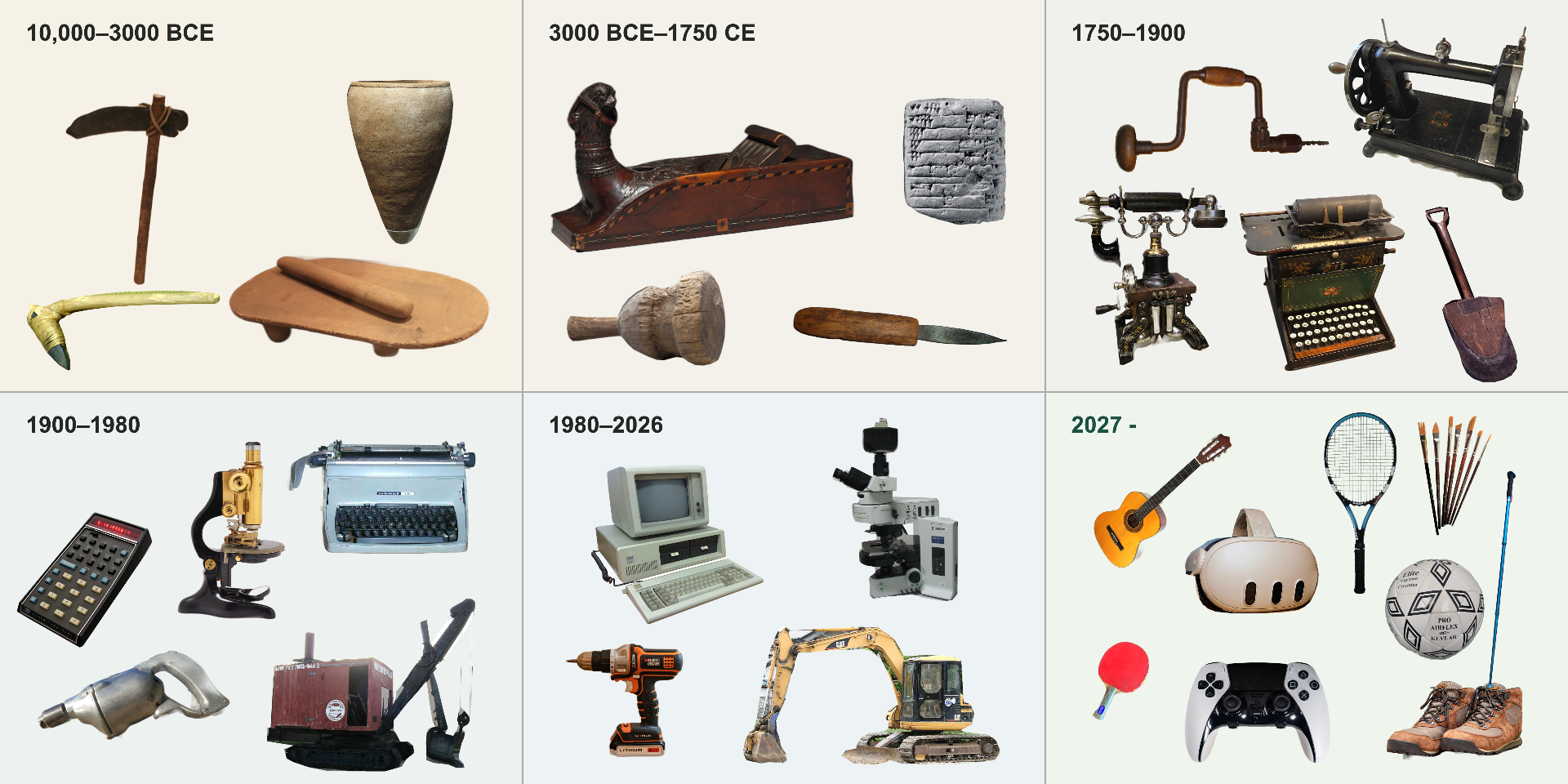
现代经济在本质上依赖于一项或许无法在自动化中存续的契约。
大多数人工作。他们通过工作赚取收入,再用这些钱购买自己所需之物。工作既是社会完成任务的方式,也是收入分配的主要途径。美国政府同样主要依赖与个人收入挂钩的税收。对大多数人而言,在经济中生存的权利源自其出卖劳动力的能力。
人工智能与机器人技术最终将打破这一安排。我们或许可以质疑当前关于 AI 的每一种说法是否成立,某个具体预测是否会如期发生,或者某些预测究竟会不会发生。不过,我预计机器最终将在大多数具有经济价值的任务上变得比人类更好、更便宜。当这一天到来时,我们能建立什么样的新经济关系来取代旧有的关系?
当机器能够胜任大多数具有经济价值的任务时,失业的含义将不再等同于早先经济危机中的失业。过去,大规模失业意味着工人闲置、生产萎缩。但当机器承担工作时,即便人类就业崩塌,生产仍可能继续增长。问题将不再是稀缺——至少不是我们熟悉意义上的稀缺。问题将是分配。
这种区别指向一个令人不安的讽刺。一个遍布机器人工厂、自动化农场、AI 医生、AI 律师、AI 程序员和 AI 教师的社会,将在物质上极为富足。它将生产出比历史上任何社会都多的商品和服务。但除非人们拥有机器、掌控平台,或获得一部分剩余产出,否则他们将没有常规途径去参与这份丰裕。
机器替我们工作,本应让我们更富有、更自由。危险在于,我们始终把就业当作获取机器所创造财富的代价。
全民基本收入(UBI)是最为人熟知的答案。如果财富由机器创造,那么 UBI 的思路就是对机器或其所有者征税,再向人们发放支票。但由税收支撑的 UBI 有一个前提:政府能在技术和经济遭遇极端冲击的条件下,成功推行一项规模庞大、政治上可持续的再分配计划。这或许会发生,甚至可能是必要的。但若假定它一定足够,或一定能及时落地,那就不明智了。
还有一个更深层的问题。每月一张支票或许能解决生存问题,却解决不了人该做什么的问题。
工作提供的不只是收入。它构建结构,带来身份、日常节奏、目标、社会角色、成就感,以及施展抱负的出口。有些人或许能在财务无忧、休闲无边的世界里如鱼得水,但更多人不会。一个只用支票取代工作的社会,风险在于解决了物质问题,却让人本身的问题原封未动。
正因如此,社会需要思考一种看似奇怪的可能:在一个机器不再需要人类劳动来从事生产的世界里,专门设计有报酬、有结构的人类活动。这就是 Omni-Game 经济。
让所有玩家都能获得报酬的游戏
这个名字是刻意取得古怪的,但背后的想法很直白。所谓 Omni-Game(全域游戏),将是一个庞大的活动体系,付钱让人参与其中。这些活动不限于电子游戏、虚拟现实或娱乐,还可以包括体能竞赛、解谜、探索、体育、市场、创意挑战、社交任务、寻宝、锻炼、亲近自然的活动,以及几乎所有其他形式的结构化人类活动。它们的共同点在于:为人类设计、免受机器竞争、与真实收入挂钩,并且不依赖产出有经济价值的成果。有些活动或许会顺带产生一些益处,但报酬奖励的是人的参与,而不是这些益处的市场价值。
乍一听,这似乎很无聊。但已经有许多体系存在,在其中玩耍、竞赛或游戏式的活动能够产生收入。
长期以来,玩家一直在从虚拟经济中赚取真金白银,从网络游戏里的打金到虚拟地产交易市场。休闲游戏平台会为用户的参与支付少量现金或礼品卡。赌博,无论是在线上还是线下,都按游戏设定的规则向赢家付钱。锦标赛把结构化的竞赛转化为奖金。预测市场让参与者就能验证的结果交易合约。许多金融市场虽然部分与真实经济活动挂钩,却同样具有游戏般的特性:投机、计分、承担风险以及集体信念。
这里的关键不在于这些体系是好的范本。事实上,大多数都是糟糕的范本。
几乎所有现有的付费游戏,其设计目的都是从参与者身上榨取价值。赌场总是赢家。平台收取费用。靠广告支撑的游戏之所以付钱给玩家,只是因为广告主期望从玩家身上收回的比付出的更多。即便是那些看似奖励参与的系统,通常也依赖于大多数参与者输钱、花钱,或以某种方式被变现。
Omni-Game 将颠覆这一逻辑。它的目的不是从玩家身上榨取金钱,而是付钱给他们。
在「能让玩家赚钱的游戏」与「专门为向玩家分配金钱而存在的游戏」之间,还存在进一步的区分。少数参与者能赚钱的游戏已经存在。这里所提议的,是一套专门为通过人类参与来广泛分配收入而构建的游戏系统。
为什么是游戏,而非工作?
一个可行运转的 Omni-Game 需要满足若干条件。
第一,全职参与所带来的收入,无论是单独计算,还是与 UBI(全民基本收入)或类似支持相结合,都必须足以维持基本体面的生活。否则,这一系统就会在其首要目标上失败。
第二,收入必须取决于时间、努力、技能、坚持与运气等若干因素的某种组合。如果回报与活动在很大程度上脱节,这一系统就会沦为一笔伪装的转移支付,就像多此一举的 UBI。那或许仍然有用,但它无法取代工作的激励结构。人类受到强烈激励,正是因为努力、技能、坚持乃至运气都有可能起作用。
第三,这些活动需要提供挑战、成长空间以及安全的竞争出口。付钱让人们点击毫无意义的按钮,比单纯为制造工作而设的差事好不了多少,其效果与毫无意义的官僚任务一样令人麻木。
第四,报酬绝不能取决于是否产生具有经济价值的产出。该体系奖励的是人的参与本身,而不论这项活动是否产出别人愿意为之付费的东西。
这种组合构成了根本性的设计约束:这些活动既能提供足以维持生活的收入,又在心理和社会层面具有意义,同时与具有经济价值的产出相脱钩。
这正是它们是游戏而非工作的原因。工作之所以存在,是因为有人需要其产出。如果产出具有经济价值,就会有将其自动化的动力。当机器人能够以比人类更好、更便宜的方式建造房屋、烹饪饭菜、诊断疾病、编写软件、教授课程或创作音乐时,大多数从事这些工作的人将无法与之竞争。奖励产出的市场必然奖励机器。一旦产出具有内在的经济价值,禁止机器从事这些工作就无异于以立法制造低效,而这种低效必然会遭到为产出付费者的抵制。
Omni-Game 避免了这一问题,因为其付酬奖励的是人类参与,而非有用的产出。控制该系统的人没有动力去把这项活动自动化,而将参与资格保留给人类,也不会降低资源生产的效率。让机器人在其服务器上屠龙、参加寻宝游戏、在它的市场中互相交易,或是完成它的解谜任务,他们从中得不到任何好处。玩家仍然可能试图作弊,把参与过程自动化以领取报酬,但将这类机器人排除在外,并不会降低商品和服务的生产效率。事实上,排除机器人将是它最核心的技术与制度要求之一。
这使得它与职业体育、直播、网红营销或娱乐业截然不同。篮球运动员获得报酬,是因为观众看重其表现。主播获得报酬,是因为有观众观看。演员获得报酬,是因为演出产出了他人想要消费的东西。这些或许都是令人愉悦的劳动形式,但它们仍然是劳动。它们仍然容易受到合成表演者、AI 生成的娱乐内容以及机器优化的注意力系统的竞争冲击。
原文较长,译文为节选;译文由英文原文机器翻译,术语按行业惯例统一,可在文末展开原文核对。
查看英文原文(AI Will Do Your Job. That Should Be Good News.)
AI Will Do Your Job. That Should Be Good News. | Towards Data Science
The modern economy depends intrinsically on a bargain that may not survive automation.
Most people work. They earn money from the work. They use that money to buy what they need. Work is how society gets tasks done and it is also the main way income is distributed. The U.S. government likewise relies primarily on taxes tied to individual income. For most people, the right to survive in the economy is derived from their ability to sell their labor.
Artificial intelligence and robotics will eventually break that arrangement. We might question if every current claim about AI is true, whether any particular forecast will happen on schedule, or if some forecasts will ever happen at all. However, I expect that machines will eventually become better and cheaper than humans at most economically useful tasks. When it happens, what new economic relationship can we build to replace the old one?
When machines are capable of most economically useful tasks, unemployment will no longer mean what it meant in earlier economic crises. In the past, mass unemployment meant idle workers and reduced production. But when machines are doing the work, production can continue to rise even as human employment collapses. The problem will not be scarcity, at least not in the familiar sense. The problem will be distribution.
That distinction points to a distressing irony. A society full of robot factories, automated farms, AI doctors, AI lawyers, AI programmers, and AI teachers will be materially rich. It will produce more goods and services than any society in history. But unless people own the machines, control the platforms, or receive some share of the surplus, they will have no ordinary way to participate in that abundance.
Machines doing our work should make us wealthier and freer. The danger is that we keep treating employment as the price of access to the wealth they produce.
Universal Basic Income (UBI) is the most familiar answer. If machines produce the wealth, then the UBI solution is to tax the machines or their owners and send people checks. But tax-funded UBI assumes that governments will successfully execute a large and politically durable redistribution program under conditions of extreme technological and economic disruption. That may happen, and it may even be necessary. But it would be unwise to assume that it will be enough or that it will happen in a timely way.
There is also a deeper problem. A monthly check may solve the problem of survival, but it does not solve the problem of what people are supposed to do.
Work does more than provide income. It creates structure. It offers status, routines, goals, social roles, achievement, and outlets for ambition. Some people might thrive in a world of financial security and open-ended leisure. Many others would not. A society that replaces work only with checks risks solving the material problem while leaving the human problem untouched.
That is why society needs to consider a strange possibility: paid, structured human activity designed for a world where machines no longer require human labor for production. This is the Omni-Game economy.
Games That Pay All Players
The name is intentionally odd, but the idea is straightforward. An Omni-Game would be a large system of activities that pay people to participate. These activities would not be limited to video games, virtual reality, or entertainment. They could include physical contests, puzzles, exploration, sports, markets, creative challenges, social tasks, scavenger hunts, exercise, nature activities, and nearly any other form of structured human activity. What they would have in common is that they would be designed for humans, protected from machine competition, connected to real income, and not dependent on producing economically useful output. Some activities might produce incidental benefits, but payment would reward human participation rather than the market value of those benefits.
This sounds frivolous at first. But many systems already exist in which play, competition, or game-like activity produces income.
Players have long earned real money from virtual economies, from gold farming in online games to virtual property markets. Casual game platforms pay small amounts of cash or gift cards for engagement. Gambling, both online and in person, pays winners according to rules set by the game. Tournaments convert structured competition into prizes. Prediction markets let participants trade contracts on verifiable outcomes. Many financial markets, while tied in part to real economic activity, also have game-like properties: speculation, scoring, risk-taking, and collective belief.
The important point here is not that these systems are good models. In fact, most are bad models.
Nearly all existing paying games are designed to extract value from participants. Casinos come out ahead. Platforms take fees. Advertising-funded games pay players only because advertisers expect to recover more from the players than they give away. Even systems that seem to reward participation usually depend on most participants losing, spending, or being monetized in some way.
The Omni-Game would reverse that logic. Its purpose would not be to extract money from players. Its purpose would be to pay them.
There is a further distinction between a game that could make money for a player and a game that exists specifically to distribute money to players. Games in which a few participants make money already exist. What is proposed here is a system of games built specifically to distribute income broadly through human participation.
Why Games Rather Than Jobs?
A working Omni-Game would need to satisfy several conditions.
First, income from full-time participation, either on its own or in conjunction with UBI or similar support, would need to be enough to live reasonably. Otherwise the system would fail at its primary purpose.
Second, earnings would need to depend on some combination of time, effort, skill, persistence, and luck. If rewards were substantially disconnected from activity, the system would become only a disguised transfer payment, like UBI with needless extra steps. That may still be useful, but it would not replace the motivational structure of work. Humans are strongly motivated by the possibility that effort, skill, persistence, and even luck can matter.
Third, the activities would need to provide challenge, growth, and safe outlets for competition. Paying people to click meaningless buttons would be little better than make-work and would have the same deadening effect as pointless bureaucratic tasks.
Fourth, payment must not depend on producing economically useful output. The system would reward human participation itself, regardless of whether the activity produces anything that someone else would pay for.
This combination is the defining design constraint: activities that provide a livable income and are psychologically and socially meaningful, detached from economically useful output.
This is why they are games rather than jobs. A job exists because someone wants the output. If the output has economic value, then there will be an incentive to automate it. When robots can build houses, cook meals, diagnose diseases, write software, teach classes, or compose music better and cheaper than humans, most people performing those jobs will be unable to compete. A market that rewards output will reward the machine. Once output has intrinsic economic value, barring machines from the work would simply be legislating inefficiency, and the inefficiency would inevitably be resisted by the people paying for the output.
An Omni-Game avoids that problem because payment rewards human participation rather than useful output. There is no incentive for the people controlling the system to automate the activity, and reserving participation for humans does not make resource production less efficient. They would gain nothing by letting bots slay dragons on its servers, run its scavenger hunts, trade against each other in its markets, or complete its puzzles. Players could still try to cheat and automate their participation to collect payments, but excluding those bots would not make the production of goods and services less efficient. In fact, excluding bots would be one of its core technical and institutional requirements.
That makes it very different from professional sports, streaming, influencing, or entertainment. A basketball player is paid because spectators value the performance. A streamer is paid because an audience watches. An actor is paid because the performance produces something others want to consume. Those may be enjoyable forms of labor, but they are still labor. They are still vulnerable to competition from synthetic performers, AI-generated entertainment, and machine-optimized attention systems.
The Omni-Game is different because the human activity is intrinsically valued, rather than being valued only as a means to produce an economically valuable output. The human activity is the point.
This does not mean that ordinary work would disappear entirely. Some people would still make things other people value precisely because they were made by humans. Handmade objects, human-generated art, teaching, caregiving, performance, craft, and entrepreneurship may retain markets. Some people will always find ways to create value. But realistically, those opportunities would be limited, and they would exist alongside machine competition. The Omni-Game would be isolated from machine competition. Anyone could use it as a structured way to earn income without having to outperform machines.
What an Omni-Game Could Be
Picture not one giant video game, but a broad and expanding network of human activities connected by a common payment system. A participant might earn through a chess tournament, a neighborhood challenge, a hiking route, a language puzzle, a team sport, a virtual expedition, a market simulation, or a creative contest. Some activities would be competitive, while others would be cooperative or solitary. Some would require intense skill, while others would reward patience, consistency, or exploration.
The games could be digital, physical, or mixed. They could happen in homes, parks, schools, community centers, and purpose-built spaces. A person who dislikes fantasy games might prefer gardening challenges or long-distance walking. Someone who cannot participate physically might choose puzzles, social strategy, or virtual exploration. A successful system would need enough variety that people could choose activities compatible with their abilities, interests, and temperaments.
Someone relying on the Omni-Game for income would still need to participate to pay the bills. It would free people from having to produce something someone else wants to buy, but not from every obligation associated with earning a living. Its appeal would depend on a broad set of options such that most people could find choices well aligned with their interests and skills.
The payout design would matter as much as the activities. There would need to be a reliable floor so that ordinary participation could support an ordinary life. Above that floor, variable rewards could recognize skill, effort, persistence, or luck. The system should permit ambition without requiring a permanent class of losers. Existing games usually create excitement by concentrating rewards at the top. An Omni-Game would need to create excitement while remaining a net payer to the population as a whole.
Modern game designers already wrestle with fairness, cheating, accessibility, addiction, ranking, moderation, and participant retention. Many successful games show that workable balances are possible. An Omni-Game would apply that accumulated experience to a different purpose.
Some activities might incidentally produce useful results. A walking game might improve a player's health. A neighborhood exploration game might identify broken streetlights for a city. A nature challenge might generate observations useful to researchers. Those benefits would be welcome. But they could not be the economic reason for the payment. The moment the system pays primarily for useful output, the activity becomes work again, and the pressure to automate returns.
Where the Money Comes From
The obvious objection is sustainability. If the system pays people more than it takes from them, where does the money come from?
The answer is that it must come from the surplus generated by automation. In a world where machines perform most economically valuable work, the owners or operators of those machines will control enormous productive capacity. Robot factories, automated farms, AI service platforms, autonomous construction systems, and machine-run logistics networks will produce wealth at scales that make today's labor economy look tiny by comparison. The Omni-Game would be a mechanism for distributing some of that surplus without the charade of pretending that humans would still be needed for production.
From one perspective, this looks bizarre. Machines produce goods and services. Humans play structured games. The people who own the machines give purchasing power to the players, who then use it to buy the goods and services the machines produce. Why would the machine owners short-circuit capitalism so that people no longer need to be the source of productive value in order to receive income?
When machines building machines are capable of nearly exponential increases in production, they will either be left idle or produce a growing surplus that has to go somewhere.
It can be hoarded by the owners of capital, redistributed by states, shared through broad ownership, or distributed through public and private systems that give people claims on machine-produced abundance. The Omni-Game is one possible form of that last category.
Why would anyone build such a system? One answer is power.
The sponsor's return would be goodwill rather than net revenue extracted from players. A system that reliably pays people and improves their lives could earn loyalty, legitimacy, and influence. In an economy where machines make it easy to expand production, the support of millions of people could be more valuable than another increment of productive capacity.
That same relationship could create dependence and give sponsors power over participants' lives. A badly designed Omni-Game could lead to a corporate welfare state, a ubiquitous surveillance platform, an addictive attention trap, or a softer version of the dystopias imagined in Ready Player One and Black Mirror.
But power is also one reason a socially positive, benevolent system might actually be built. Ultra-wealthy people and institutions often seek more than consumption. They seek legitimacy, recognition, influence, gratitude, and historical importance. They fund museums, hospitals, universities, foundations, and public works. Some do this from altruism, some from vanity, some from a sense of duty, and some from a desire for control. Usually it is a mixture.
An Omni-Game would be a public good of a very unusual kind: a way to provide income, structure, and social connection in an automated economy. It would not require pure altruism. It could serve the interests of its builders while also serving the needs of its participants. The goal is to align those interests in a mutually constructive way.
Competition from multiple systems could help, although it would not be sufficient. A single Omni-Game would carry obvious risks of domination. Several systems could offer different cultures, activities, rules, payout structures, and governance models, and people might move among them or participate in multiple ones. Governments could regulate them. Cooperatives could run some of them. Philanthropists, companies, religious organizations, universities, cities, or states might sponsor others.
Small versions could be tested before mass automation arrives. A city, university, cooperative, or foundation could sponsor a limited network of activities and study whether the system provides income, structure, connection, and well-being without becoming exploitative. These experiments could show how to balance baseline payments with variable rewards, how to verify human participation without invasive monitoring, and how people respond when an activity is explicitly meaningful to them but economically unnecessary.
Important questions remain about long-term funding, governance, and whether people would find participation rewarding.
Regardless, the logic has to be followed even when it leads somewhere that initially seems implausible. Frontier AI agents already perform tasks that recently appeared to require uniquely human judgment, and their capabilities continue to improve. My expectation remains that it is a question of when, not if, machines will outcompete most people in the job market.
That is frightening, but disliking the conclusion will not prevent it from arriving. Society will need an answer or bear the consequences. An economy can produce abundance and still fail the people who live inside it.
The deepest challenge of automation will not be teaching machines to do everything. It will be building institutions for a world in which productive necessity no longer organizes human life. When machines no longer require human labor, society will still need ways to distribute its surplus and reasons for people to get up in the morning. The Omni-Game is one attempt to imagine both at once.
James F. O'Brien, Ph.D., is a Professor of Computer Science at the University of California, Berkeley. His research interests include computer graphics and animation, simulation of physical systems, human perception, rendering, artificial intelligence, computer vision, virtual reality, digital privacy and security, and image and video forensics. He has also worked with film and game companies to integrate advanced simulation physics into games and special effects. His destruction-modeling methods have been used in more than 200 feature films and game titles. In 2015, the Academy of Motion Picture Arts and Sciences recognized that work with an Academy Award for Technical Achievement.
You can also find me on LinkedIn, Instagram, and at OBJF.ai.
Any opinions expressed in this article are only those of the author as a private individual. Nothing in this article should be interpreted as a statement made in relation to the author's professional position with any institution.
This article and all embedded images are Copyright 2026 by James F. O'Brien. This article was written by a human, and both an LLM and other humans were used for proofreading and editorial suggestions.
Image layout Copyright 2026 by James F. O'Brien. Collage: CC BY-SA 4.0. Adapted photos: Wolfgang Sauber, Eirik Irgens Johnsen/Kulturhistorisk Museum, Roy.wonder.cohen, Swathysuren/Hohum (CC BY-SA 4.0); Dolev, Panjigally/Hohum, Holger Ellgaard, Art Anderson, Ruben de Rijcke/Gwolf, Masur, Tiia Monto (CC BY-SA 3.0); Science History Institute, R. Henrik Nilsson (CC BY 4.0); Seth Morabito, Tony Webster, ajay_suresh (CC BY 2.0). Other photos: public domain/CC0.

In this article we'll explore two powerful features of python present in the standard library yet almost always missed through a lack of...
August 28, 20206 min read
The Python package with the highest number of integrated state-of-the-art topic models.
September 2, 20218 min read
Rethinking AI alignment and safety in the age of deep scheming
March 4, 202517 min read
An end-to-end tutorial to learn how to create value from data. All the steps of a project that makes Data Science an incredible playground...
September 19, 20209 min read
Where to spend your precious time to stay in-demand
Matching messy text, choosing representative examples, and generating comparison data.
October 15, 202623 min read
I've been a data scientist for over 3 years. This is what most people want to know about the field.
November 9, 20246 min read
How to build simple Data Science Windows/GUI apps following a minimal learning curve?
January 14, 20217 min read
A great resource for all scientists.
August 6, 20203 min read
原文为英文,正文由自动抓取并保留原文。
原文发布于 Towards Data Science(AI Will Do Your Job. That Should Be Good News.),标题、摘要与正文由机器翻译,术语按行业惯例统一,未经人工逐句校订。