MIT 讲座:Martha Minow 谈用 AI 与超越 AI 维护民主
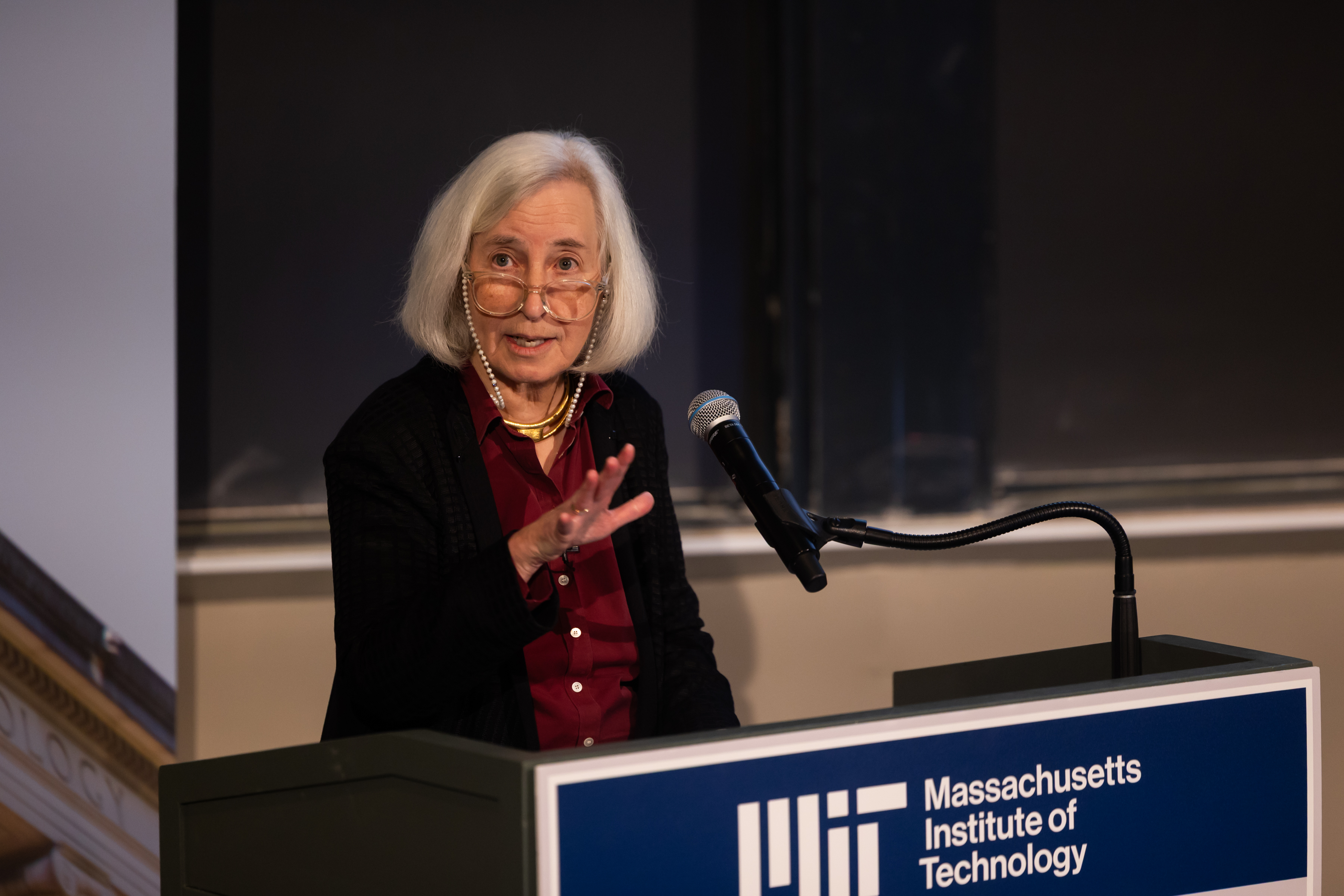
法律学者 Martha Minow 周四在 MIT 发表今年秋季的 Compton Lecture,审视民主的公民基础——并阐述人工智能如何正在侵蚀民主,但也可以被用来帮助巩固美国传统治理。
“现在不是民主或宪政的好时候,”Minow 说。她是哈佛大学 300 周年大学讲席教授(300th Anniversary University Professor),也是宪法与人权领域的知名专家。她列举了近年来民主遭遇的一连串挑战,包括违反法律与规范、压制言论自由、国会权威被削弱、无视司法裁决、社会中普遍存在的对他人污名化,等等。
Minow 指出,盖洛普(Gallup)近期民调显示,77% 的人认为美国的建国先贤会对该国当下的状况感到失望。
“许多人真心怀疑,这个国家 250 年前点燃的政府体制与法治是否还能存续,”Minow 说。
她在演讲中以她所称的民主四大关键“要素”来评估美国的状况:教育、可靠且可获取的信息、免于暴力的安全,以及公平。Minow 评估了 AI 如何影响这些生活领域——但也提出了人们可以利用当代技术提供帮助的途径。
“把责任归咎于数字技术和各路专家,这种说法早已耳熟能详,但我相信,如果 MIT 及其他地方的人们把时间和才智投入到真正且迫切需要的解决方案上,扭转局面是完全可能的,”Minow 说。
她相当一部分发言聚焦于 AI 在教育领域的隐患。这一问题与其他一些令人不安的趋势相互叠加:Minow 指出,美国在教育经费上本就存在巨大的地方和区域差异,而过去三十年间,学校在经济和族裔层面的隔离实际上已显著加剧。
Minow 认为,在此背景下,AI 有可能进一步削弱独立思考能力,而恰恰此时,加深对公共议题的理解至关重要。
“随着 AI 迅猛发展,我认为我们必须学会更明智地使用它、监管它,并真正让人们认识到盲目使用 AI 的代价,”Minow 说。她还补充道:“主流 AI 平台会放大社交媒体公司所采用的策略,使人变得被动……领先的 AI 模型、界面以及其中的谄媚元素,会危害——尤其是年轻人的——思考、记忆和批判性思维的能力发展。”
她认为,这种远离认知努力的趋势是可以改变的——或许可以通过更像导师、旨在增强人们深度思考的 AI 工具来实现。
“现有的 LLM、模型训练和界面设计可以提供提示、提问和暗示,而不是代替学生完成功课,但还有更多的东西可以开发,而且可以更有效地开发,使其值得信赖,并深化人类的活动与好奇心,而不是取代人,”Minow 说。
她接着对听众说:“AI 工具在这方面可以做得更多……我相信,在座的各位能够开发出比现有工具更好的工具。并做出更好的评估——更有意义,也更难作弊。”
米诺的演讲“在 AI 时代构建民主”在 MIT 校园内的亨廷顿厅 10-250 室向众多听众发表。
MIT 校长萨莉·A·科恩布鲁斯向听众致开场辞。卡尔·泰勒·康普顿讲座系列于 1957 年设立,是 MIT 同类活动中最受瞩目的活动。卡尔·泰勒·康普顿是 MIT 第九任校长,1930 年至 1948 年任职,随后于 1948 年至 1954 年担任 MIT 校董会主席。
“他带领 MIT 度过了大萧条和第二次世界大战,”科恩布鲁斯说,“将这所学院从一所培养可立即上岗的工程师的杰出学校,转变为伟大的全球研究型大学。”
她补充说:“他也是一位坚定爱国的志士,在第二次世界大战期间帮助汇聚美国研究型大学的智力资源,为服务国家所用。”
科恩布鲁斯称米诺是“一位学识视野非凡的法律学者”,也是一位“敬业的教育者,她的工作塑造了我们作为个人和社会对法律与自身人性的思考方式。”
米诺自 1981 年起担任哈佛法学院教员,并于 2009 年至 2017 年担任该院院长。米诺在密歇根大学获得历史学学士学位,在哈佛大学获得教育学硕士学位,在耶鲁大学获得法学博士学位。
米诺的著作包括《Making All the Difference》(1990)、《Partners Not Rivals》(2002)和《When Should Law Forgive?》(2020)。
在演讲中,Minow 还讨论了虚假信息对公民生活的影响、暴力威胁以及社会公平的多个维度。Minow 指出,现代媒体技术导致近几十年来记者人数减少了 75%,而在没有本地媒体的地方,腐败随之加剧。她建议,具有公民意识的技术人员应致力于建立一个被广泛使用的“信息公域”,或者说多种形式的信息公域,以帮助人们获取更可靠的信息。
与此同时,Minow 警告说,就社会的基本安全而言,“我们此刻正处在悬崖边上。我认识很多法官,他们每一个人都面临着可信的暴力威胁。这是在美国。这是不可接受的。”
然而,尽管民主制度和传统公民规范面临诸多挑战,Minow 在整场发言中也传递了积极的信号,指出存在许多机会来创造新形式的可靠信息、教育和社区关系。
“我们必须真正去创造我们想要生活的世界,”她说。
Minow 发言之后是问答环节,Kornbluth 朗读了观众提交的问题,并请她描述自己对当前趋势的担忧。
“我担心启蒙运动的失落,”Minow 说。“我担心这样一种信念的失落:相信理性、相信检验假设、相信在证据面前摒弃迷思,以及伴随启蒙运动而来的宽容、权利和参与范围的扩大——这是我最担心的。这就是为什么虚假信息问题对我来说如此重要,这就是为什么学校里批判性思维的丧失如此重要。”
她补充说:“我自己职业生涯的大部分时间都在思考大规模暴力。当人们彼此不理解、心生恐惧时会发生什么。那很可怕,我们不想走到那一步。我确实把启蒙运动视为这样一个时期:人们认识到,进行大规模战争其实是坏事,而提出宽容是好事,并且根据他人能够共享的证据来检验我们的想法,可以为每个人带来更好的生活。我担心我们此刻正在抛弃这一点。”
译文由英文原文机器翻译,术语按行业惯例统一,可在文末展开原文核对。
查看英文原文(At MIT, Martha Minow speaks on sustaining democracy, both by using and overcoming AI)
Legal scholar Martha Minow delivered this fall’s Compton Lecture at MIT on Thursday, examining the civic foundations of democracy — and describing how artificial intelligence is undermining it, but could be used to help reinforce traditional U.S. governance.
“It’s not a good time for democracy or constitutionalism,” said Minow, who is the 300th Anniversary University Professor at Harvard University, and a prominent expert in constitutional law and human rights. She noted a litany of challenges to democracy in recent years, including violations of laws and norms, the stifling of free speech, a diminution of congressional authority, disregard of legal rulings, the common vilification of others in society, and more.
Recent Gallup polling, Minow observed, shows 77 percent of people saying that the founders of the U.S. would be disappointed in the contemporary condition of the country.
“Many people genuinely wonder whether this nation’s system of government and rule of law, ignited 250 years ago, will survive,” Minow said.
Her remarks assessed the state of the U.S. in terms of what she called four key “ingredients” of democracy: education, reliable and accessible information, security from violence, and fairness. Minow evaluated how AI has, among other things, influenced these areas of life — but also suggested ways people could use contemporary technology to help.
“It’s very familiar to hear blame attributed to digital technologies and experts of all stripes, but a turnaround, I believe, is genuinely possible if people at MIT and elsewhere pour time and talent towards real and much-needed solutions,” Minow said.
A substantial portion of her remarks focused on the pitfalls of AI in education. That issue compounds some other troubling trends: The U.S. already has large local and regional disparities in educational funding, Minow noted, while schools have actually become significantly more segregated in economic and ethnic terms over the last three decades.
In this context, AI threatens to further weaken independent-thinking skills, Minow suggested, just when greater understanding of civic issues is absolutely vital.
“As AI surges, I think we have to learn to be smarter about how to use it, how to regulate it, and how to actually educate people about the costs of mindless using,” Minow said. She added: “Dominant AI platforms supercharge the strategies that are deployed by social media companies, inducing passivity in people … Leading AI models and interfaces and sycophantic elements endanger the development particularly of young people’s capabilities to think, to remember, and to engage in critical thinking.”
That trend away from cognitive effort, she suggested, can be changed — perhaps through AI tools that act more like tutors and are designed to enhance people’s deep thinking.
“Existing LLMs, model training, and interface design can offer nudges and questions and hints rather than replacing student work, but there’s so much more that could be developed, and more effectively, to be trustworthy, and to deepen human activities and curiosity, rather than replacing people,” Minow said.
To the audience, she added, “AI tools could do much more of that … And I believe that you, the people here, could develop better tools than the ones that are out there. And make better assessments, more meaningful and cheating-resistant.”
Minow’s talk, “Constituting Democracy in the Era of AI,” was delivered to a large audience in MIT’s Huntington Hall, Room 10-250 on campus.
MIT President Sally A. Kornbluth delivered introductory remarks to the audience. The Karl Taylor Compton Lecture Series, introduced in 1957, is the highest-profile event of its kind at MIT. Karl Taylor Compton was MIT’s ninth president, serving from 1930 to 1948, and then becoming chair of the MIT Corporation from 1948 to 1954.
“He guided MIT through the Great Depression and World War II,” Kornbluth said, “transforming the Institute from an outstanding school for training job-ready engineers to a great global research university.”
She added: “He was also a deeply committed patriot who helped harness the intellectual power of America’s research universities to serve the nation during World War II.”
Kornbluth called Minow “a legal scholar of extraordinary intellectual scope,” and a “dedicated educator whose work has shaped how we think about the law and our own humanity, as individuals and as a society.”
Minow has been a faculty member at Harvard Law School since 1981, and served as dean of the school from 2009 through 2017. Minow earned her BA in history from the University of Michigan, an MA in education from Harvard, and a JD from Yale University.
Minow’s books include “Making All the Difference” (1990), “Partners Not Rivals” (2002), and “When Should Law Forgive?” (2020).
In her talk, Minow also discussed the civic effects of misinformation, threats of violence, and multiple dimension of societal fairness. Modern media technology has led to a 75 percent reduction in journalists in recent decades, Minow observed, with an attendant rise in corruption in places without local media. Civic-minded technologists, she proposed, should work towards establishing a widely-used “information commons,” or many forms of them, to help people access more reliable information.
Meanwhile, when it comes to basic security in society, Minow warned, “We’re on the brink right now. I know a lot of judges, and every one of them has a credible threat of violence against them. In America. This is not acceptable.”
For all the challenges to democracy and traditional civic norms, however, Minow sounded positive notes throughout her remarks, pointing out that there are many opportunities to create new forms of reliable information, education, and community relations.
“We have to actually invent the world that we want to live in,” she offered.
Minow’s remarks were followed by a Q&A session in which Kornbluth read aloud questions submitted by the audience — and asked her to characterize her concerns about present trends.
“I worry about the loss of the Enlightenment,” Minow said. “I worry about the loss of the belief that reason, and testing hypotheses, and rejecting myths in the face of evidence, and the toleration and rights and expansion of participation that came along with the Enlightenment, that’s what concerns me the most. That’s why the disinformation issue for me is so important, that’s why the loss of critical thinking in schools is so important.”
She added: “I’ve spent much of my own career thinking about mass violence. What happens when people don’t understand each other, and are afraid. And it’s terrible, and we don’t want to be there. And I do view the Enlightenment as a time when people learned that actually having mass wars is a bad thing, and coming up with toleration is a good thing, and testing our ideas in light of evidence other people can share can produce a better life for everybody. I worry we’re abandoning that right now.”
正文保留英文原文,标题与摘要由机器翻译。
原文发布于 MIT News AI(At MIT, Martha Minow speaks on sustaining democracy, both by using and overcoming AI),标题、摘要与正文由机器翻译,术语按行业惯例统一,未经人工逐句校订。