爆料称 Nova Lake 桌面芯片超 90°C 限频 5.1 GHz
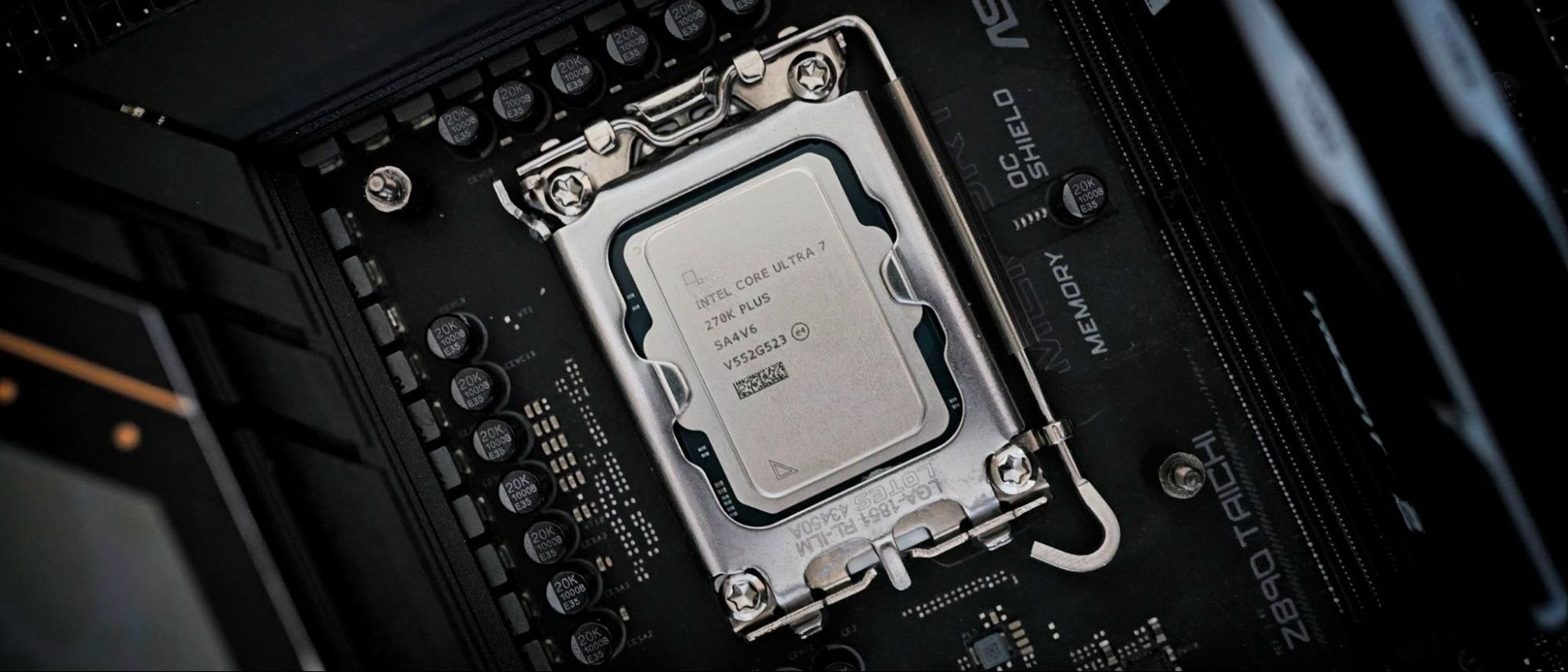
根据相当可靠的 Intel 爆料者 Jaykihn 的新消息,Intel 即将推出的 Nova Lake 台式机 CPU 将应用一个不寻常的限制。他声称,Intel 的下一代台式机部件将“在温度超过 90°C 时,统一将最大核心频率限制在 5.1 GHz”。这并不意味着这些部件最高只能达到 5.1 GHz——那将是灾难性的——但这确实意味着,你需要相当好的散热才能在 Nova Lake 台式机 CPU 上达到高时钟频率。
译文由英文原文机器翻译,术语按行业惯例统一,可在文末展开原文核对。
查看英文原文(Intel leaker claims Nova Lake desktop chips have 5.1 GHz clock limit beyond 90°C)
According to new information from reasonably reliable Intel leaker Jaykihn, Intel's upcoming Nova Lake desktop CPUs will have an unusual limiter applied. He claims that the next-gen desktop parts from Intel will "universally limit the maximum core frequency to 5.1 GHz when above 90°C." That doesn't mean the parts will top out at 5.1 GHz, which would be disastrous, but it does mean that you're going to need some darn good cooling to reach high clock rates on Nova Lake desktop CPUs.
- Intel VP Robert Hallock sets Nova Lake expectations, teases return to Raptor Lake for DDR4 platforms
- CPU scaling with DLSS
- Intel's one-two punch plan in desktop CPUs is taking shape
- Benchmarking AMD's BC-250, offering Steam Machine-like performance at half the price
- AMD splits Zen 7 into three EPYC families for 2028 and starts selling server CPUs by the agent
Let's be clear about what he's saying. He's not saying that Nova Lake CPUs can't go above 5.1 GHz. He's also not saying that Nova Lake CPUs have their thermal limit at 90°C. While Jaykihn doesn't provide any clock rate information, he does imply that the chips will go above that, possibly quite significantly, as long as the thermals are kept in check, and he does say that the "Tjmax" value of Nova Lake is 100°C. Notably, that's a drop from 105°C in Arrow Lake, although prior-gen Raptor Lake CPUs had the same 100°C peak.
Preliminary.Nova Lake -S desktop processors will universally limit the maximum core frequency to 5.1GHz when above 90C.This is separate behavior from traditional TJMax thermal throttling at 100C.Alike TJMax, this temperature threshold cannot be shifted upwards.November 4, 2026
The mechanism that this most clearly resembles is Intel's own Thermal Velocity Boost. TVB, if you're not familiar, is the feature that allows high-end Intel CPUs to hit their highest clock rates. Put simply, TVB simply says that if the chip isn't overheating, it can go 100-300 MHz higher than its rated Turbo Boost Max speed. It's a little confusing, because these TVB clock rates are often quoted as the "Max Turbo Frequency"; Intel even does this itself. But TVB clocks are not the same as standard turbo clocks, and a lot of users who don't have exotic cooling probably never actually see these speeds in practice since they do require optimal conditions.
Does this mean that the practical limit of Nova Lake desktop CPU clocks is 5.1 GHz? Well, that depends on how hard these parts are to cool. Remember, we're dealing with chips fabricated on a 2nm-class process; in this case, it's reportedly TSMC's N2P for the compute tiles, while the peripheral chiplets are all on Intel's own 18A or 18A-P. This has consequences, as N2P is reportedly much denser than 18A, but it also lacks back-side power delivery, which means that the thermal resistance of the individual dies is considerably lower. Combined with much lower power consumption from a real node step, it may turn out that Nova Lake is actually quite easy to keep cool.
Ultimately, that is going to depend in part on how much Intel decides to push the "fMax", or maximum frequency. Rumors have put AMD's Zen 6 desktop Ryzen processors above 6 GHz for peak clock rates; if that's true, Intel could be looking at as much as a 20% clock rate disadvantage at 5.1 GHz. Obviously, as noted above, the chips are expected to have a higher fMax than that, but it remains to be seen how easily users can keep the parts cool enough to make use of the extra clock rate headroom given this new limit. Both Intel's flagship Core Ultra 9 285K and the Red Team's extant Zen 5-based Ryzen 9 9950X can reach 5.7 GHz before overclocking.
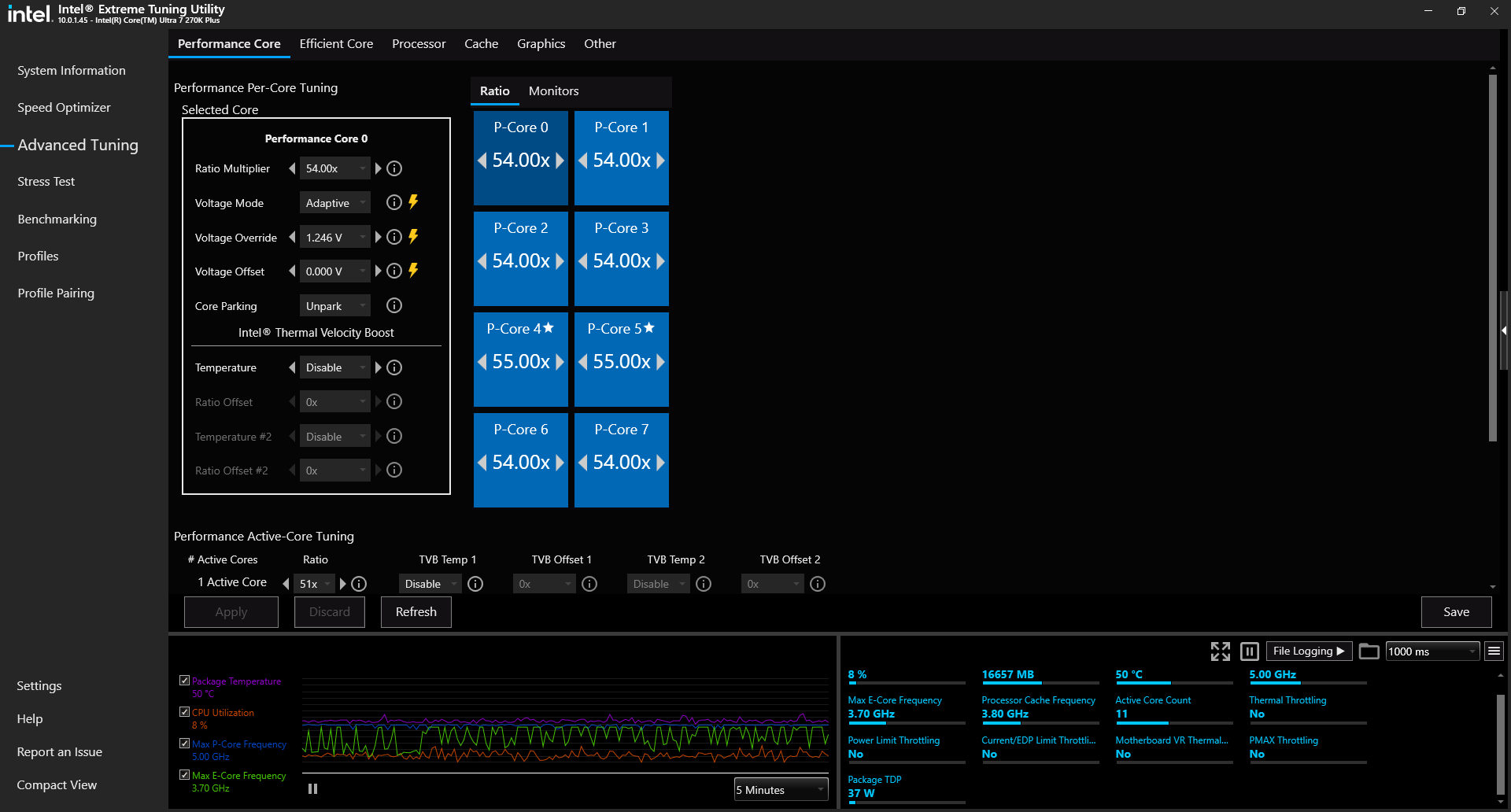
For tuners, a frustrating detail is that this 5.1 GHz hard clock limit apparently "cannot be raised." That means folks doing system tuning on Nova Lake will be strongly encouraged to undervolt to reduce the thermal output of their processors and help them maintain high performance. That's unusual, as historically Intel allows users to adjust the thermal throttle point of their processors when overclocking. That may potentially still be the case on processors unlocked for overclocking, of course; Jaykihn is reporting based on leaks and engineering samples rather than final released products.
Even if Nova Lake doesn't scale clocks much over Arrow Lake, it could still be quite a bit faster than the previous generation. Recall that the new chips will come with new core architectures and new technologies, including APX core extensions and bLLC, Intel's long-awaited response to AMD's 3D V-Cache. Forecasts are indicating that gaming performance could be as much as 33% faster than Arrow Lake, which would be huge. However, this 5.1 GHz limit could be a downer for people who are interested in the rumored 52-core version of Nova Lake. We'll find out how much it matters when the Core Ultra 4000 series launches either very late this year or very early next year, although we wouldn't expect the 52-core flagship or bLLC versions until next summer.
正文保留英文原文,标题与摘要由机器翻译。
原文发布于 Tom's Hardware(Intel leaker claims Nova Lake desktop chips have 5.1 GHz clock limit beyond 90°C),标题、摘要与正文由机器翻译,术语按行业惯例统一,未经人工逐句校订。