Barzilay 与 Collins 因 AI 抗生素发现获 Pritzker 奖
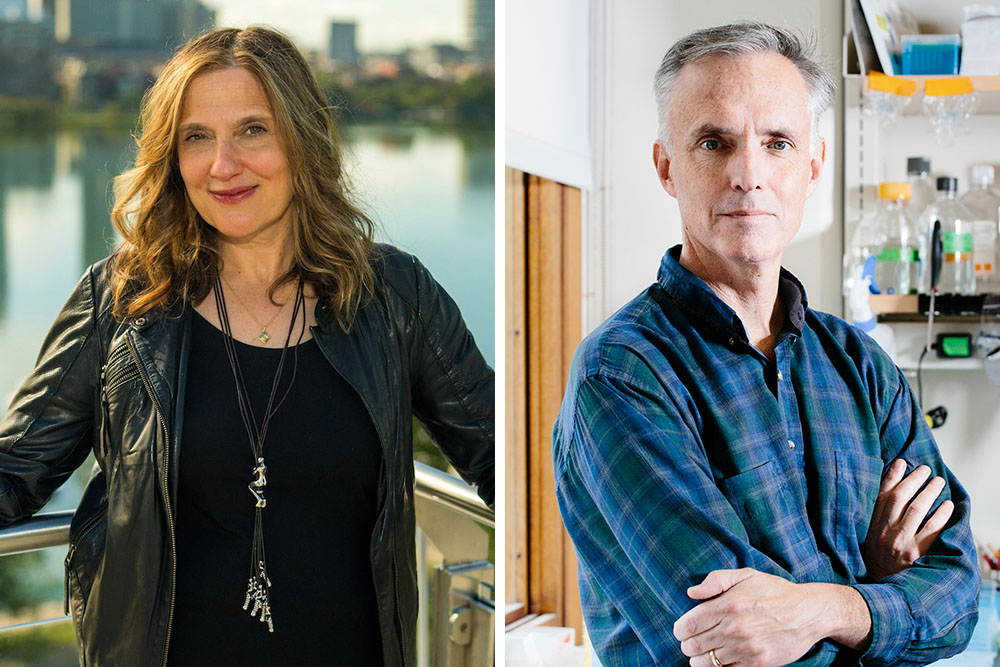
MIT 工程学院 AI 与健康杰出教授 Regina Barzilay 和 MIT 医学工程与科学 Termeer 教授 James Collins 获得 2026 年 Pritzker Prize for AI in Science Research Excellence(普利兹克 AI 科学研究卓越奖)。
该奖项表彰他们在“开创 AI 驱动的抗生素发现——整合深度学习、生物工程与实验验证,以识别针对耐药病原体的新型抗菌候选物”方面的共同研究。
Pritzker Prize for AI in Science Research Excellence 由芝加哥大学与加州理工学院合作于 2024 年设立,旨在表彰同时推动 AI 与自然科学或工程学发展的贡献。
Barzilay 和 Collins 是 Abdul Latif Jameel Clinic for Machine Learning in Health(Jameel Clinic)的教师共同负责人,并隶属 MIT Schwarzman College of Computing 和 MIT 工程学院。两人与当时在 MIT 做博士后、也是论文第一作者的 Jonathan Stokes(2017 至 2021 年在 Collins 实验室工作)于 2020 年在《Cell》上发表了他们的第一篇突破性论文。该论文描述了首个由人工智能发现的抗生素,命名为 halicin,其名取自斯坦利·库布里克 1968 年电影《2001:太空漫游》中虚构的 AI 系统 HAL 9000。
halicin 最初是作为潜在的糖尿病药物被研究的广谱抗生素,它由一个在 2,500 个分子上训练的深度学习模型识别出来。经测试,研究团队发现 halicin 能够杀死耐抗生素细菌(即“超级细菌”),如艰难梭菌(Clostridium difficile)、鲍曼不动杆菌(Acinetobacter baumannii)和结核分枝杆菌(Mycobacterium tuberculosis)。曾经需要数年的发现过程,如今仅用几周就完成了。在全球抗微生物药物耐药性危机日益引发警惕的背景下,这一结果表明,AI 有望成为快速识别新型有效抗生素的有效工具。
继 halicin 之后,Barzilay 和 Collins 与 Stokes(现任麦克马斯特大学助理教授)合作,利用机器学习在 2023 年识别出 abaucin——一种窄谱抗生素,对鲍曼不动杆菌(A. baumannii)显示出有效性,这种耐抗生素细菌常见于医院门把手以及驻伊拉克和阿富汗美军的伤口中。值得注意的是,abaucin 针对单一耐药菌种的“窄谱”效力正是其主要优势,可最大限度降低细菌产生耐药性的可能性,并减少对肠道有益菌的伤害。
“从历史上看,抗生素发现一直依赖费力、试错式的策略,”Collins 说。“这一过程缓慢、昂贵且不可预测,往往只能得到很少可行的候选抗生素。借助生成式 AI,我们现在看到一种转变:AI 从被用作发现工具,转向被用作设计工具。这一转变开辟了抗生素发现的新前沿,可能为我们带来下一代救命药物。”
在 Barzilay 看来,“尽管分子建模取得了重大进展,我们仍处于药物发现的早期阶段。借助 AI,我们只能自动化流程中的部分环节,而无法彻底改变发现过程。要实现这一点,我们需要付出巨大努力,构建逼真的人类生物学 AI 模型。”
译文由英文原文机器翻译,术语按行业惯例统一,可在文末展开原文核对。
查看英文原文(Regina Barzilay and Jim Collins win Pritzker Prize for AI and Science Research Excellence for work in AI-enabled antibiotic discovery)
Regina Barzilay, MIT’s School of Engineering Distinguished Professor of AI and Health, and James Collins, MIT’s Termeer Professor of Medical Engineering and Science, are the recipients of the 2026 Pritzker Prize for AI in Science Research Excellence.
The award recognizes their joint work in “pioneering AI-enabled antibiotic discovery, integrating deep learning, bioengineering, and experimental validation to identify novel antibacterial candidates against drug-resistant pathogens.”
Established in 2024 by the University of Chicago in partnership with Caltech, the Pritzker Prize for AI in Science Research Excellence recognizes contributions that jointly advance AI and the natural sciences or engineering.
Barzilay and Collins, who are faculty co-leads of the Abdul Latif Jameel Clinic for Machine Learning in Health (Jameel Clinic) and affiliates of the MIT Schwarzman College of Computing and the MIT School of Engineering, published their first breakthrough paper together in 2020 with then-MIT postdoc and first author Jonathan Stokes (who worked in the Collins lab from 2017 to 2021) in Cell. The paper described the first artificial intelligence-discovered antibiotic, called halicin, named for the fictional AI system HAL 9000 in Stanley Kubrick’s 1968 film 2001: A Space Odyssey.
A broad-spectrum antibiotic that was originally studied as a potential diabetes drug, halicin was identified by a deep learning model trained on 2,500 molecules. Upon testing, the research team found that halicin was able to kill antibiotic-resistant bacteria (i.e., “superbugs”) such as Clostridium difficile, Acinetobacter baumannii, and Mycobacterium tuberculosis. A discovery process that once took years was completed in just a few weeks. Amidst the growing alarm around the global antimicrobial resistance crisis, the results demonstrated that AI could prove to be an effective tool for rapidly identifying new and effective antibiotics.
Following halicin, Barzilay and Collins worked with Stokes (now an assistant professor at McMaster University) to use machine learning to identify abaucin in 2023, a narrow-spectrum antibiotic demonstrating effectiveness against A. baumannii, an antibiotic-resistant bacteria commonly found on hospital doorknobs and in the wounds of U.S. soldiers stationed in Iraq and Afghanistan. Notably, abaucin’s “narrow spectrum” efficacy against a single species of treatment-resistant bacteria is its main advantage, minimizing the likelihood of bacteria developing resistance and harming beneficial bacteria in the gut.
“Historically, antibiotic discovery has depended on laborious, trial-and-error strategies,” says Collins. “This process is slow, costly, and unpredictable, often yielding few viable antibiotic candidates. With generative AI, we're now seeing a shift from AI being used as a tool for discovery to AI being used as a design tool. This shift opens new frontiers in antibiotic discovery that could bring us the next generation of lifesaving drugs.”
In Barzilay’s view, “despite significant progress in molecular modeling, we are still in early stages of drug discovery. With AI, we can only automate parts of the pipeline, rather than totally transforming the discovery process. To make it happen, we need to work really hard to build realistic AI models of human biology.”
正文保留英文原文,标题与摘要由机器翻译。
原文发布于 MIT News AI(Regina Barzilay and Jim Collins win Pritzker Prize for AI and Science Research Excellence for work in AI-enabled antibiotic discovery),标题、摘要与正文由机器翻译,术语按行业惯例统一,未经人工逐句校订。