打通研究基础设施间的连接
运营一座现代研究实验室,所需的远不止维护那些精密仪器。研究人员需要完成培训、获得准入权限、预约并操作设备、处理账单结算等等。对于大型共享设施而言,要在数百台仪器和数千名用户之间协调这些事务,可能是一项相当繁重的工作。而随着研究日益跨学科化,另一个挑战也正在浮现:首先得找到合适的能力/资源。
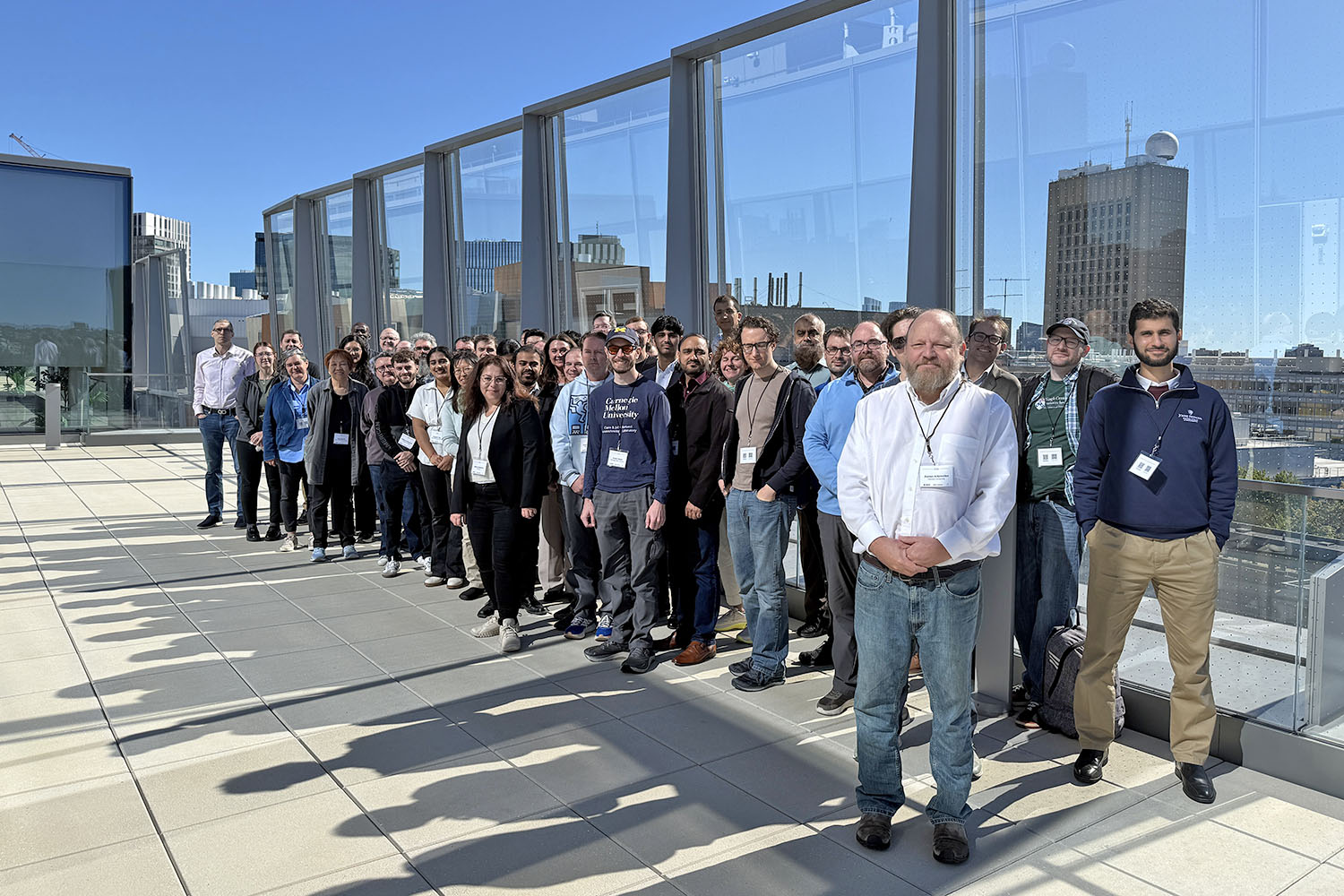
应对这些挑战是 2026 年 NEMO 用户会议的核心主题,该会议由 MIT.nano 于 10 月 5 日至 6 日主办。会议汇聚了来自 25 个实验室和机构的 65 名代表,包括设施主管、实验室经理、技术人员、软件开发人员、行业代表和政府研究人员。本次会议由东北微电子联盟(NEMC)中心赞助,重点在于分享实验室管理方法,并在各设施之间建立联系。
会议的核心是 NanoFab 设备管理与运营(NEMO)系统,这是一个开源平台,提供用于管理共享研究设施的工具,同时允许各个实验室根据自身需求对系统进行调整。会议凸显了 NEMO 社区的一个重要特征:同一个平台可以服务于差异极大的各类设施,尽管这些设施的规模或科研使命可能不同,但它们面临的核心运营挑战往往惊人地相似。
对于 Characterization.nano 副主任、本次会议组织者 Anna Osherov 来说,这种协作模式是 NEMO 最吸引人的方面之一。
“开源改变了我们思考技术开发的方式,”她说。“我们可以在他人的成果之上继续开发,把改进回馈给社区,并共同打造出一个比任何单一设施独立开发都更强大的平台。”
NEMO 最初由美国国家标准与技术研究院(NIST)于 2018 年以开源软件形式发布。其社区版(NEMO-CE)于 2023 年推出,允许各设施开发并共享该平台的扩展功能。在 10 月的会议上,来自 MIT、斯坦福大学、哥伦比亚大学、普林斯顿大学、宾夕法尼亚大学、NIST、NASA 喷气推进实验室以及 Atlantis Labs 等机构的参会者展示了各类工具,用于应对从化学品管理、用户管理到设备状态、培训和流程自动化等一系列挑战。
这些展示的广度体现出,配置各不相同的设施正在如何让同一个通用平台适配自身需求。例如,斯坦福大学展示了设备状态与预约的实时显示功能,哥伦比亚大学则分享了迁移到 NEMO 并为计费和设施工作流扩展该系统的经验。普林斯顿大学演示了用于监控设备性能的自动化工艺图表,宾夕法尼亚大学介绍了化学品管理的多种做法。
总体来看,这些项目印证了 NEMO 社区背后的理念:为解决某一设施的问题而开发的方案,可以成为其他设施的资源。
“我们齐心协力所能做到的,远超任何一个人单打独斗,”MIT.nano 主任 Vladimir Bulović 在开场致辞中表示。“NEMO 这个平台终于让我们有了一条精简高效的协作途径。”
从单个设施到互联的研究生态
随着 NEMO 社区的壮大,另一个机遇也浮现出来。大学和科研机构运营着各类专业设施,每一处都拥有独特的设备、专业知识和能力。但研究人员无法使用自己不知道、或难以找到的能力。
这对微电子研发尤为重要,因为该领域的进展往往取决于能否在各类专业能力之间快速切换。一位研究人员可能需要在某处设施完成制造,在另一处进行先进表征,再到别的地方做专业显微分析,而某项工艺或分析能力可能只存在于少数几家机构。
找到这些能力,并了解在何处、何时可以使用它们,本身就可能成为瓶颈。传统上,设施网络依赖静态网页或数据库来描述可用资源。但随着设施不断演进,这些信息可能很快就过时了。
在会上,MIT.nano 展示了 Hydra——一个正在开发中的新开源平台,由 NEMC 提供支持,是 NEMC Technical Concierge 的关键组成部分。该项目旨在帮助研究人员在网络中的各类设施间发现并获取专业能力。Hydra 的设计目标是连接多个 NEMO 部署实例,并直接从设施已在使用的系统中提取信息,而无需人工手动更新一个单独的数据库。其结果是基于正在使用的设施管理系统真实数据汇成的一份汇编。“Hydra 不取代任何实验室管理系统,”Osherov 解释说,“它负责连接、同步,并实时保持所有已连接系统的数据为最新状态。”
在这一模式下,NEMO 提供单个设施内部的运行信息来源,而 Hydra 则让这些信息能够在各设施之间被检索发现。
对研究人员而言,这意味着无需事先知道哪个实验室可能拥有相关设备,就能找到所需的专门能力。
“重点在于让支撑研究的分布式基础设施更容易被发现、更便于使用,”Osherov 说。
构建能够变化的基础设施
这一做法体现了一种更广泛的理念:研究基础设施需要随着研究本身的变化而演进。“我们需要构建一个灵活的研究空间和一个面向社区的空间,让人们感到有动力走进它、使用它,并在未来岁月中重新定义它,使其适应下一代研究人员的需求,”Bulović 说。
这种灵活性既适用于运行系统,也适用于实体实验室。新的仪器和研究方法不断涌现,用户群体发生变化,设施也会产生新的需求。开源平台让各个设施能够应对这些变化,同时提供了一种共享改进成果的机制。
仅 MIT.nano 一处,NEMO 就支撑着 1,600 多名活跃研究人员使用 200 多种工具,每年工具使用时长约 160,000 小时。对于 Fab.nano 副主任 Jorg Scholvin 而言,在如此规模下运行,使得日常流程的效率以及快速适应和调整的能力变得尤为重要。
“行政流程中的一点小改进,都可能在数千名用户和数万次设备交互中被放大,”他说。
NEMO 浪潮
在为期两天的会议中,社群意识以及对共享设施未来的积极展望始终清晰可见。闭幕讨论展望了数据集成、自动化和人工智能在实验室运营中所扮演的角色。
“这个社群正在形成自己的生命力,”Atlantis Labs 首席执行官兼联合创始人 Mathieu Rampant 说,他描述的是一种设施管理者可以共同交流想法、共同解决问题的模式。“这更具可持续性,”他补充道,谈到自己作为 NEMO-CE 管理者需要做的事变少了,因为设施管理者们正在彼此交流——作为一个网络分享想法、解决问题:纽约城市大学纳米制造设施主任 Samantha Roberts 称之为“NEMO 浪潮”。“每个人都投入其中、关心它。改变实验室管理系统需要付出大量努力,如果我们坚持下去,就能构建出真正酷且行之有效的东西。”
对 Osherov 而言,目的依然简单明确。
“归根结底,这是为了赋能研究。我们越能管理好设施的运营层面,就越能有效地让研究社群用上我们的仪器、专业知识和能力。”
在微电子领域,创新日益依赖能否获取专业且分散的能力,因此这种可用性至关重要。借助直接从实际运行系统中提取的信息,在合适的设施找到合适的能力,可以帮助研究人员更快地从想法走向实验,再走向现实应用与影响。
译文由英文原文机器翻译,术语按行业惯例统一,可在文末展开原文核对。
查看英文原文(Building connections across the research infrastructure)
Running a modern research laboratory requires more than maintaining sophisticated instruments. Researchers need to complete training, obtain access, schedule and operate equipment, navigate billing, and more. For large, shared facilities, coordinating these activities across hundreds of instruments and thousands of users can be a significant undertaking. As research becomes increasingly interdisciplinary, another challenge is emerging: finding the right capability in the first place.
Addressing these challenges was a central theme of the 2026 NEMO User Meeting, hosted by MIT.nano Oct. 5–6. The meeting brought together 65 representatives from 25 laboratories and organizations, including facility directors, laboratory managers, technical staff, software developers, industry representatives, and government researchers. Sponsored by the Northeast Microelectronics Coalition (NEMC) hub, the meeting focused on sharing approaches to lab management and building connections among facilities.
At the center of the meeting was the NanoFab Equipment Management and Operations (NEMO) system, an open-source platform that provides tools for managing shared research facilities while allowing individual laboratories to adapt the system to their own needs. The meeting highlighted an important characteristic of the NEMO community: The same platform can serve a very diverse set of facilities, and while the scale or the scientific missions of the facilities may differ, their core operational challenges are often remarkably similar.
For Anna Osherov, associate director of Characterization.nano and organizer of the meeting, the collaborative model is one of the most compelling aspects of NEMO.
“Open source changes the way we think about technology development,” she says. “We can build on what others have already developed, contribute improvements back to the community, and collectively create a platform that is more capable than what any one facility could develop on its own.”
NEMO was originally released as open-source software by the National Institute of Standards and Technology (NIST) in 2018. Its community edition (NEMO-CE), launched in 2023, allows facilities to develop and share extensions to the platform. At the October meeting, participants from organizations including MIT; Stanford, Columbia, and Princeton universities; the University of Pennsylvania; NIST; NASA’s Jet Propulsion Laboratory; and Atlantis Labs presented tools to address challenges ranging from chemical management and user administration to equipment status, training, and workflow automation.
The range of presentations illustrated how differently configured facilities are adapting a common platform to their own needs. Stanford, for example, presented real-time displays for equipment status and reservations, while Columbia shared its experience migrating to NEMO and extending the system for billing and facility workflows. Princeton demonstrated automated process charts for monitoring tool performance, and the University of Pennsylvania presented approaches to chemical management.
Overall, the projects demonstrated the premise behind the NEMO community: a solution developed to address a problem at one facility can become a resource for others.
“Together we can do way more than any one of us individually can,” said Vladimir Bulović, director of MIT.nano, during his opening remarks. “NEMO is the platform that gave us, finally, a streamlined way to do so.”
From individual facilities to a connected research ecosystem
As the NEMO community grows, another opportunity emerges. Universities and research organizations operate specialized facilities, each with unique equipment, expertise, and capabilities. But researchers cannot use a capability they are unaware of or cannot easily find.
This is particularly important for microelectronics R&D, where progress often depends on moving quickly between specialized capabilities. A researcher may need fabrication at one facility, advanced characterization at another, specialized microscopy somewhere else, and a process or analysis capability available at only a handful of institutions.
Finding those capabilities, and knowing where and when they can be accessed, can itself become a bottleneck.Traditionally, networks of facilities have relied on static webpages or databases to describe available resources. But as facilities evolve, this information can quickly become outdated.
At the meeting, MIT.nano presented Hydra, a new open-source platform being developed with support from NEMC as a key component of the NEMC Technical Concierge, a program that aims to help researchers identify and access specialized capabilities across a network of facilities. Hydra is designed to connect multiple NEMO installations and draw information directly from the systems that facilities already use, rather than requiring someone to manually update a separate database. The result is a compilation built from the ground truths of actively-used facility management systems. “Hydra does not replace any lab management system,” Osherov explained. “It connects, synchronizes, and keeps data up to date across all connected systems in real time.”
In this model, NEMO provides the operational source of information within an individual facility, while Hydra makes that information discoverable across facilities.
For a researcher, that could mean finding a specialized capability without first needing to know which laboratory might have the relevant equipment.
“The focus is to make the distributed infrastructure supporting research more discoverable and usable,” Osherov said.
Building infrastructure that can change
The approach reflects a broader philosophy: Research infrastructure needs to evolve as research itself changes. “We need to build a flexible research space and a community-oriented space so that people feel empowered to go to it, use it, and then redefine it as the years progress, adapting it to the needs of the next generation of researchers,” said Bulović.
That flexibility applies to operational systems as well as physical laboratories. New instruments and research methods emerge, user communities change, and facilities develop new requirements. An open-source platform allows individual facilities to respond to those changes while providing a mechanism for improvements to be shared.
At MIT.nano alone, NEMO supports more than 1,600 active researchers using more than 200 tools, with approximately 160,000 hours of tool usage each year. For Jorg Scholvin, associate director of Fab.nano, operating at that scale makes the efficiency of everyday processes, and the ability to adapt and change quickly, important.
“A small improvement in an administrative workflow can be multiplied across thousands of users and tens of thousands of equipment interactions,” he said.
The NEMO wave
The sense of community and positive outlook for the future of shared facilities was apparent throughout the two-day meeting. Closing discussions looked ahead to the role of data integration, automation, and artificial intelligence in lab operations.
“The community is taking on a life of its own,” said Mathieu Rampant, CEO and co-founder of Atlantis Labs, describing a model in which facility managers can share ideas and solve problems together. “It’s more sustainable,” he added as he talked about having to do less as the NEMO-CE manager because the facilities managers are talking to each other — sharing ideas and solving problems as a network: “the NEMO wave,” Samantha Roberts, director of the City University of New York nanofabrication facility, called it. “Everyone is invested in it and cares about it. It takes a lot of effort to change your lab management system and if we keep this going, we can build out something that’s really cool and that works.”
For Osherov, the purpose remains straightforward.
“Ultimately, this is about enabling research. The better we can manage the operational side of our facilities, the more effectively we can make our instruments, expertise, and capabilities available to the research community.”
In microelectronics, where innovation increasingly depends on access to specialized and distributed capabilities, that availability matters. The ability to find the right capability at the right facility, using information drawn directly from actively used systems, can help researchers move more quickly from an idea to an experiment to real-world application and impact.
正文保留英文原文,标题与摘要由机器翻译。
原文发布于 MIT News AI(Building connections across the research infrastructure),标题、摘要与正文由机器翻译,术语按行业惯例统一,未经人工逐句校订。