AI 能表现得和人一模一样,我们仍不认为它有意识
来自研究机构
AI 可以表现得和人类一模一样,但我们仍然不认为它有意识
日期:2026年10月13日 来源:Ludwig-Maximilians-Universität München 摘要:一项新研究揭示,人们会在人类意识与人工智能之间划出一条令人惊讶的鲜明界限,即使二者行为完全一致。研究人员发现,参与者认为,即便反应最灵敏的 AI 也不如反应最迟钝的人类有意识。然而,当改问“觉知”时,人们对人类和 AI 的判断则相似得多。分享:
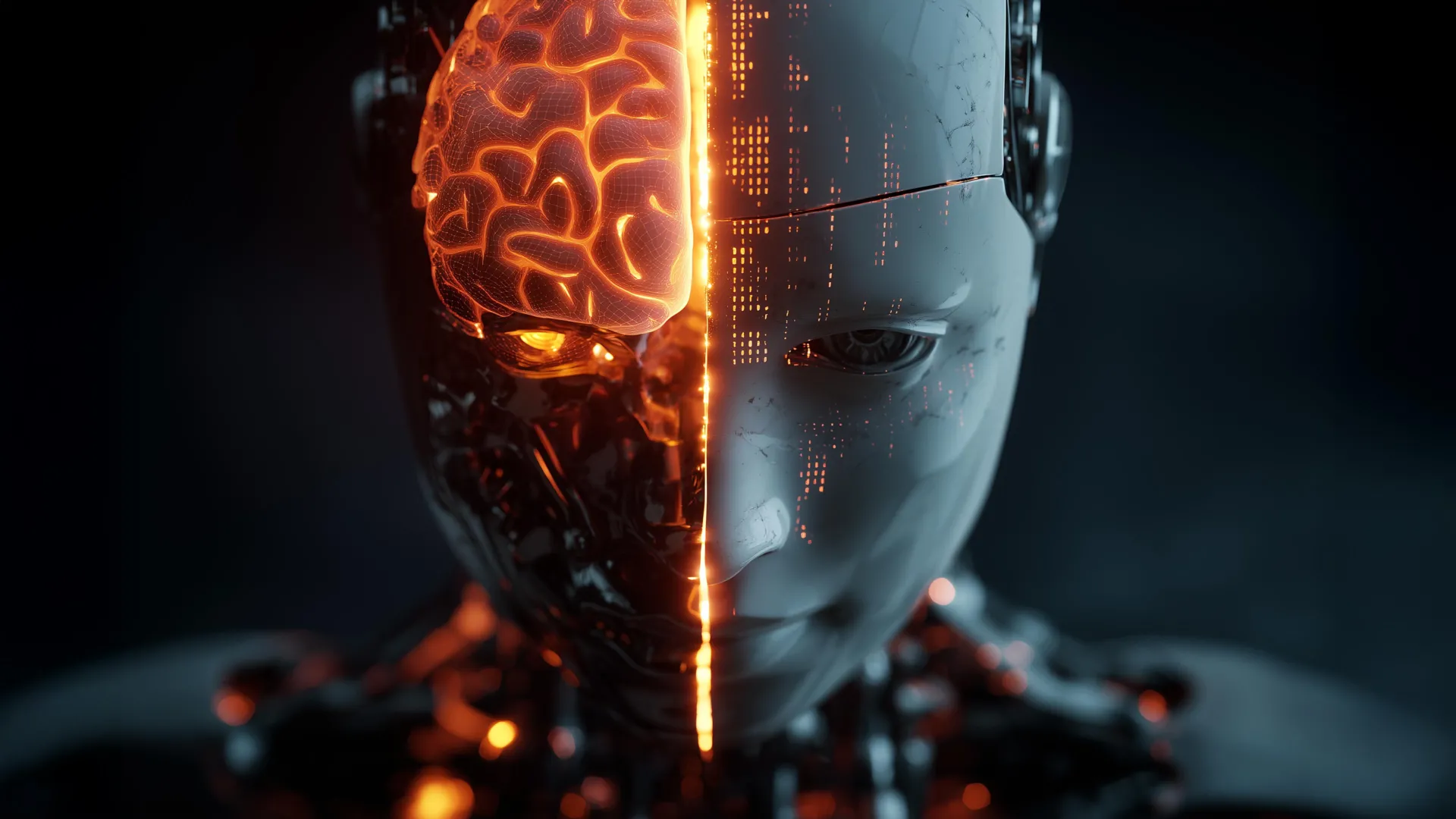
即使 AI 的行为与人类完全一致,人们也拒绝承认它同样有意识,但仅仅改变一个措辞,就能几乎抹平这一鸿沟。图片来源:AI/ScienceDaily.com
根据慕尼黑大学(LMU)的一项新研究,即使人工智能的行为与人类完全一致,人们也不愿认为它有意识。
随着人工智能变得越来越先进,有关 AI 系统误导用户、协同运作,或似乎追求独立目标的报道正变得越来越常见。这些行为常常使人们把 AI 描述成仿佛能思考、有感觉,或能自行做决定。但是,像人类一样行事,真的能让人们相信机器拥有意识吗?
LMU 的新研究表明,人们会明确区分表现出智能行为与拥有有意识的心智,即使人类和 AI 的行为完全相同时也是如此。
科学家如何测试人们对 AI 意识的感知
这项研究发表在《Cognition》期刊上,由 LMU 心灵哲学讲席的 Louis Longin 博士领衔,与 Bahador Bahrami 博士、Ophelia Deroy 教授及其他研究人员共同完成。
Longin 表示:“以往的研究通常只提出笼统的问题,即 AI 是否真的拥有心理状态;而我们的研究首次直接在完全相同的情境下,比较人们如何把同样的心理状态归因于行为方式完全一致的 AI 和人类。”
“我们也许会用心理学术语来指代 AI,但这可能只是因为我们找不到更合适的词,”该研究的资深作者之一、哲学家 Ophelia Deroy 说。“毕竟,AI 被训练得像人一样行动和说话,所以这些描述看起来顺理成章。”
为了探究人们如何判断意识,研究人员开展了涉及近 1,100 名参与者的实验。其中一组阅读了对人工智能体的简短描述,这些智能体对其环境表现出不同程度的响应能力。例如,有些智能体会对声音作出反应,或识别他人的情绪状态。
另一组面对的是相同的情境,只是其中的角色被描述为人类而非 AI 系统。随后,参与者评估每个角色对其周围环境的意识或觉察程度。
人类与 AI 意识之间令人意外的差距
实验显示,响应能力会影响参与者对人和 AI 的判断。对周围环境反应更积极的角色,通常被认为更有意识、觉察力更强。
然而,当参与者专门评估意识时,一个显著的差异浮现出来。即便是反应最灵敏的 AI,其被评定的意识水平也低于反应最迟钝的人类。换言之,相同的行为并没有让人们对人类和机器赋予同等程度的意识。
而当参与者被问及觉知时,结果发生了明显变化。在这一特征上,对人类和 AI 的判断大体遵循相似的模式,这表明人们对觉知和意识的理解方式存在根本差异。
"在公共讨论中,人们越来越担心,人们看到 AI 表现出类人的行为,就会开始把这些系统当作拥有类人心理状态的存在来对待,"该研究的第一作者 Longin 说。"我们发现的其实要微妙得多:人们很愿意说 AI 能注意到事物、能觉知周围环境。但一涉及'意识'这个词,他们就会明确划清界限。即便行为完全相同,人们也始终认为 AI 的意识低于人类。"
尽管人们在讨论 AI 的行为时,有时会将其描述为有意识的,但研究结果表明,他们仍然会区分人工系统与人类心智。
为什么一个词会改变我们感知 AI 的方式
研究人员认为,意识与觉知之间的差异,为理解人们如何认识人工智能提供了重要洞见。
觉知是一个相对中性的词,可以描述一个智能体检测并响应其环境中信息的能力。而意识则承载着关于主观体验,以及拥有内在精神生活意味着什么的更深层含义。
由于「觉察」更直接地指向可观察的行为,人们似乎乐于将这一概念同时用于人类和 AI。而「意识」承载着不同的含义,这使得人们对两者的判断远没有那么相似。
这些发现也凸显了讨论人工智能时所用措辞为何重要,尤其是在 AI 系统越来越能做出逼真的人类行为之时。
「我们的研究为如何就 AI 进行沟通提供了启示,」该研究的资深作者之一、社会神经科学专家 Bahador Bahrami 说。「公司和记者常常用夸张的说法描述 AI 模型,赋予它们意图、计划,甚至道德良知和犹豫。我们的研究表明,日常判断其实要审慎得多:人们并不会简单地把 AI 和人类放在同一心理标尺上。但这条边界也取决于我们使用哪些词。对于『觉察』这类更中性的描述词,这种区分在很大程度上会消失。这让我们的用词选择变得很重要。」
材料由慕尼黑大学(Ludwig-Maximilians-Universität München)提供。注:内容可能因风格和篇幅而经过编辑。
Louis Longin, Jurgis Karpus, Nadine Meertens, Bahador Bahrami, Ophelia Deroy. AI is not as conscious as humans: Essentialism in mental state attributions to artificial systems. Cognition, 2027; 278: 106733 DOI: 10.1016/j.cognition.2026.106733
慕尼黑大学(Ludwig-Maximilians-Universität München)。「AI 可以表现得和人类一模一样,但我们仍不认为它有意识。」ScienceDaily。ScienceDaily,2026年10月13日。。
Ludwig-Maximilians-Universität München。(2026年10月13日)。AI 能表现得与人类完全一样,但我们仍不认为它具有意识。ScienceDaily。2026年11月5日检索自 www.sciencedaily.com/releases/2026/10/261012185017.htm
Ludwig-Maximilians-Universität München。“AI 能表现得与人类完全一样,但我们仍不认为它具有意识。”ScienceDaily。www.sciencedaily.com/releases/2026/10/261012185017.htm(2026年11月5日访问)。
译文由英文原文机器翻译,术语按行业惯例统一,可在文末展开原文核对。
查看英文原文(AI can act exactly like a human, but we still don't think it's conscious)
AI can act exactly like a human, but we still don't think it's conscious | ScienceDaily
from research organizations
AI can act exactly like a human, but we still don't think it's conscious
Date:October 13, 2026Source:Ludwig-Maximilians-Universität MünchenSummary:A new study reveals that people draw a surprisingly sharp line between human consciousness and artificial intelligence, even when both behave identically. Researchers found that participants considered even the most responsive AI less conscious than the least responsive human. Yet when asked about "awareness" instead, people judged humans and AI much more similarly.Share:
 Even when AI acts exactly like a human, people refuse to see it as equally conscious, but one simple change in wording can nearly erase that divide. Credit: AI/ScienceDaily.com
Even when artificial intelligence behaves exactly like a human, people are reluctant to consider it conscious, according to a new study from Ludwig Maximilian University of Munich (LMU).
As artificial intelligence becomes more advanced, reports of AI systems misleading users, working together, or appearing to pursue independent goals are becoming increasingly common. These behaviors often lead people to describe AI as though it can think, feel, or make decisions for itself. But does behaving like a human actually convince people that a machine has consciousness?
New research from LMU suggests that people make a clear distinction between displaying intelligent behavior and possessing a conscious mind, even when humans and AI act in precisely the same way.
How Scientists Tested Perceptions of AI Consciousness
Published in the journal Cognition, the study was led by Dr. Louis Longin of LMU's Chair of Philosophy of Mind, working alongside Dr. Bahador Bahrami, Professor Ophelia Deroy, and other researchers.
"Whereas previous studies have typically asked general questions about whether AI actually has mental states, our study is the first to directly compare how people attribute the same mental states to AI and humans behaving in exactly the same way, under identical circumstances," says Longin.
"We may be using mental terms to refer to AI, but this may only be because we lack better words," says Ophelia Deroy, philosopher and a senior author of the study. "After all, AI is trained to act and speak like a human, so these descriptions seem natural."
To investigate how people judge consciousness, the researchers conducted experiments involving nearly 1,100 participants. One group read brief descriptions of artificial agents that showed different levels of responsiveness to their environments. For example, some agents reacted to sounds or recognized the emotional states of others.
Another group encountered the same situations, except the characters were described as humans rather than AI systems. Participants then evaluated how conscious or aware each character seemed to be of its surroundings.
A Surprising Gap Between Human and AI Consciousness
The experiments revealed that responsiveness influenced how participants judged both humans and artificial intelligence. Characters that reacted more actively to their surroundings were generally considered more conscious and more aware.
However, a striking difference emerged when participants evaluated consciousness specifically. Even the most responsive AI was rated as less conscious than the least responsive human. In other words, identical behavior did not lead people to assign the same level of consciousness to humans and machines.
The results changed considerably when participants were asked about awareness instead. For this characteristic, judgments of humans and AI followed largely similar patterns, suggesting that people interpret awareness and consciousness in fundamentally different ways.
"There is a growing worry in public discussion that people will see AI behaving in a human-like way and start treating these systems as if they had human-like mental states," says Longin, lead author of the study. "We found something much more nuanced: People are quite willing to say that an AI notices things and is aware of its surroundings. But they clearly draw a line when it comes to the term 'consciousness'. People consistently attribute less consciousness to AI than humans -- even when their behavior is identical."
Although people sometimes describe AI as conscious when discussing its actions, the findings indicate that they still distinguish between artificial systems and human minds.
Why One Word Changes How We Perceive AI
The researchers believe the difference between consciousness and awareness offers an important insight into how people understand artificial intelligence.
Awareness is a relatively neutral term that can describe an agent's ability to detect and respond to information in its environment. Consciousness, however, carries deeper implications about subjective experience and what it means to have an inner mental life.
Because awareness focuses more directly on observable behavior, people appear comfortable applying it to both humans and AI. Consciousness carries a different meaning, leading people to judge the two much less similarly.
The findings also highlight why the language used to discuss artificial intelligence matters, particularly as AI systems become increasingly capable of producing convincing human behavior.
"Our study teaches us lessons for how we communicate about AI," says Bahador Bahrami, who is also a senior author of the study and an expert in social neuroscience. "Companies and journalists often reach for hyped descriptions of AI models, and credit them with intentions, plans, or even moral conscience and hesitation. What our study shows is that everyday judgments are much more discriminating: People do not simply put AI and humans on the same mental scale. But the boundary also depends on which terms we use. For more neutral descriptors such as 'awareness', the distinction can largely disappear. That makes our choice of language important."
Materials provided by Ludwig-Maximilians-Universität München. Note: Content may be edited for style and length.
Louis Longin, Jurgis Karpus, Nadine Meertens, Bahador Bahrami, Ophelia Deroy. AI is not as conscious as humans: Essentialism in mental state attributions to artificial systems. Cognition, 2027; 278: 106733 DOI: 10.1016/j.cognition.2026.106733
Ludwig-Maximilians-Universität München. "AI can act exactly like a human, but we still don't think it's conscious." ScienceDaily. ScienceDaily, 13 October 2026. .
Ludwig-Maximilians-Universität München. (2026, October 13). AI can act exactly like a human, but we still don't think it's conscious. ScienceDaily. Retrieved November 5, 2026 from www.sciencedaily.com/releases/2026/10/261012185017.htm
Ludwig-Maximilians-Universität München. "AI can act exactly like a human, but we still don't think it's conscious." ScienceDaily. www.sciencedaily.com/releases/2026/10/261012185017.htm (accessed November 5, 2026).
原文为英文,正文由自动抓取并保留原文。
原文发布于 ScienceDaily AI(AI can act exactly like a human, but we still don't think it's conscious),标题、摘要与正文由机器翻译,术语按行业惯例统一,未经人工逐句校订。