学员与 MIT 同行合作撰写 AI 洞察图书
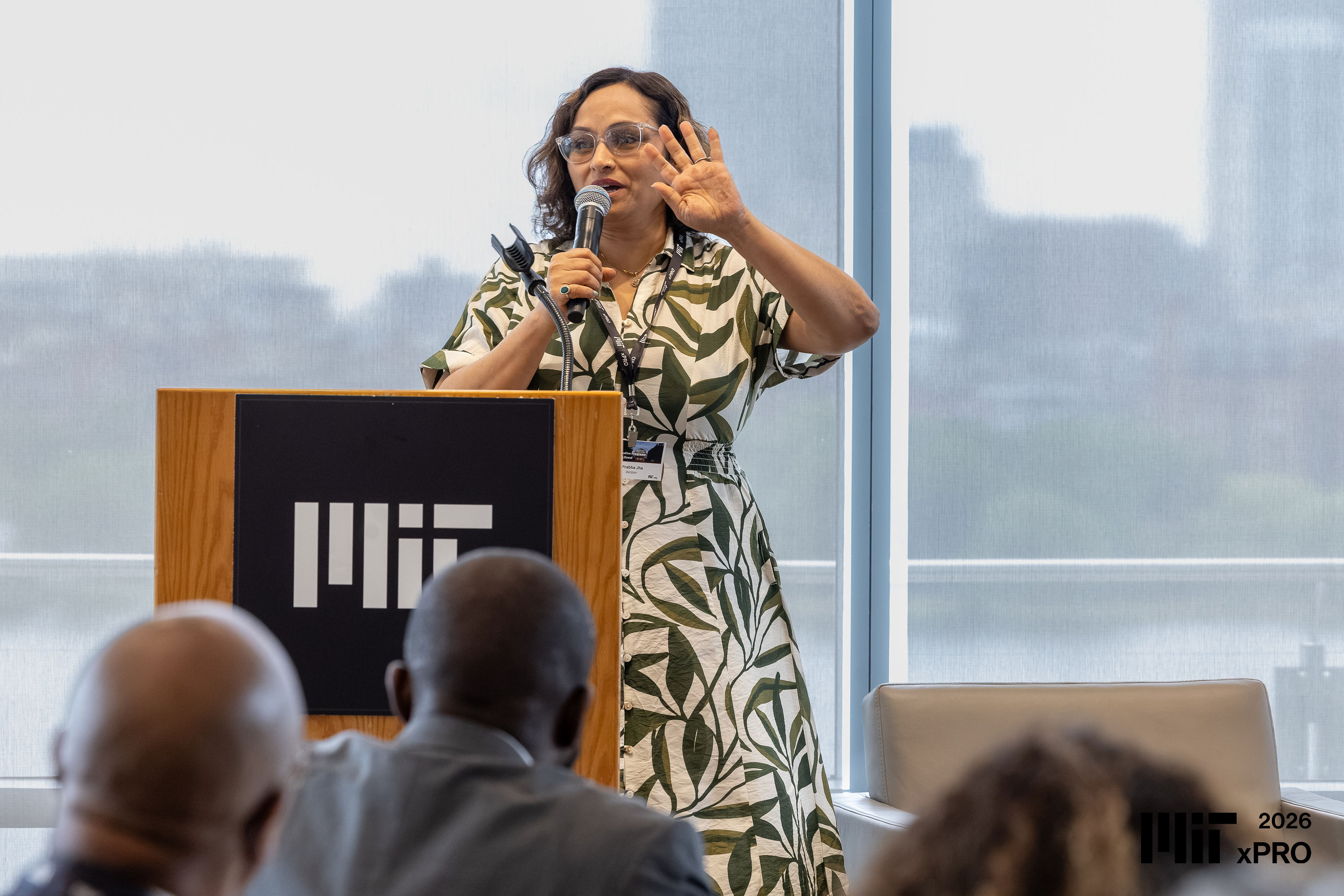
和当今许多领导者一样,Prabha Jha 一直感受到人工智能对业务运营带来的重大影响。虽然这项技术的快速演进会带来恐惧、不确定性和困惑,但 Jha 选择了另一种反应:兴奋。她开始问自己:“我怎样才能成为这件千载难逢之事的一部分?”
Jha 拥有加尔各答大学的信息技术学士学位,并在 Verizon 工作期间取得了 MBA,如今她仍在该公司继续发展自己的职业生涯。当她寻找一个能更深入接触 AI 的学习机会时,MIT 很快成为一个自然而然的选择。
在成长过程中,Jha 将 MIT 视为“所有工程与技术领域人士的麦加”,因此当她寻求学习 AI 的机会时,自然把目光投向了这所学院。与其他完全在线上进行的项目不同,MIT xPRO 的“AI for Senior Executives”最吸引 Jha 的地方在于,它包含线下环节,让她能够与同行见面并建立联系。
Jha 决定迈出这一步。她承认,这个项目在时间和金钱上都是一笔不小的投入,但她最终将其视为自己“做出的最好的决定之一”——一个“如果重来一次,[她]仍会再做一遍”的决定。这段经历给了 Jha 她所寻求的机会,让她投资自己、强化 AI 技能。它还为她带来了极其宝贵的职业人脉,以及为 Verizon 开发多个 AI 解决方案的信心。她把学到的这些新技能和人脉投入实践,与一些同行共同撰写了《The AI Anthology》,这是一本 AI 洞察文集,旨在帮助其他领导者应对类似的 AI 挑战。
一个意想不到的学习障碍
不过,Jha 的学习之路并非一帆风顺。就在她即将完成课程的前两个月,她因严重感染住院两周,无法与最初的同批学员一起毕业。在 MIT 工作人员的帮助下,她加入了下一批学员,也因此意外获得了一次机会,能在校园里再待五天,与 100 位全新的同伴相处。
“你永远不知道生活会抛出什么样的曲线球,也不知道它为何会出现,”Jha 说。
起初看似挫折的经历,最终变成了意外的收获。Jha 很珍视结识新朋友、在校园多待一段时间的机会。她也庆幸地发现,仅仅六个月后,课程内容就已经更新了。那额外的“五天沉浸式学习”成为 Jha 学习历程中至关重要的一部分,让她和同伴们有更多时间面对面协作、彼此学习。
“能遇到这么多背景多元、来自不同地域的人,我觉得很开眼界,而且我们在人的层面上建立了连接,”她说。
在了解 AI 这一领域时,Jha 尤其看重这种连接感——她承认,这个领域伴随着恐惧、脆弱和棘手的问题。与拥有不同职业和文化背景的同伴一起学习,让她获得了新的视角,也为这段经历增添了另一个维度。Jha 估计,“我学到的东西里,30% 来自课程、材料和教授,而 70% 来自我的同伴和互动。”
同伴讨论激发了一个想法
改变 Jha 在这门课程中经历轨迹的那个想法,诞生于 MIT 电气工程与计算机科学系教授 Manolis Kellis 家中的一场“沙龙聚会”。当学生们分享各自与 AI 相关的个人经历时,有一个故事让 Jha 格外难忘:那是她的一位同侪的故事,这位同侪探索 AI 解决方案的动力,源自她为母亲寻找阿尔茨海默病和痴呆症疗法的工作。
那一刻,Jha 意识到 AI 是关乎个人的。她至今“一想到那个 AI 真正变得人性化、成为人与人连接点的时刻,仍会起鸡皮疙瘩”。
她看到了记录这些超越运营效率和收入增长的多元 AI 视角与经历的价值,并希望把这番对话延续到课程之外。Jha 向同侪们表示,有兴趣把这些故事与连接收录成一本书。一年后,Jha 与其他 20 位领导者发布了《The AI Anthology》,这是一本探讨 AI 对各行业和社会影响的文集。
Jha 从“AI for Senior Executives”课程中获得的最大收获之一——也是她希望读者能从她的书中得到的——就是换一种方式思考的重要性。
Jha 认为,领导者们可能忽略了一个根本性转变:“我们仍在某种程度上困在这种传统的成功衡量标准里,”她说,“我们珍视收入;我们喜欢削减成本、节省时间,并把它们换算成美元。”
尽管 Jha 承认这种心态在美国企业界有其道理,但她认为领导者必须超越它,才能通过 AI 及其能力获得更多赋能。她指出,未来世代已经在提出不同的问题,包括:“我能获得怎样的生活质量?”以及“我如何能尽早以对自己有意义的方式使用我的时间?”
拥抱 AI,开创商业与更美好世界的未来
Jha 认为,对企业而言采用 AI 并非可选项,每个人都必须了解并拥抱它。与此同时,她坚定相信 AI 有能力创造更美好的世界。她并不把 AI 视为一种不可避免的负担,而是将其看作“前所未有的转型”,它为我们提供了克服不安全感、适应与成长、以及投资自身的机会。
在 Verizon 的工作中,Jha 认真看待公司作为“可靠、优质服务的品牌”这一角色——为急救人员或儿童等依赖其服务的群体提供“关键基础设施”。这份责任伴随着一种参与并保护社会的特权性义务,而 AI 能够帮助实现这一点,让 Jha 感到充满力量。以她自己的经历而言,她很欣赏能够加速进展与影响力,而在过去,她可能需要依赖更大的团队才能做到。
那么,Jha 接下来会做什么?目前,她正在推进一项新计划,专注于支持正在摸索 AI 落地实施的中小企业。她的目标是帮助他们了解自己需要哪些工具、AI 如何融入其特定的运营模式,以及他们如何衡量成效,从而能够专注于自身作为企业的优势以及如何创造价值。
译文由英文原文机器翻译,术语按行业惯例统一,可在文末展开原文核对。
查看英文原文(Learner collaborates with MIT peers to develop book of AI insights)
Like many leaders today, Prabha Jha has been feeling the significant impact artificial intelligence is having on business operations. While the rapid evolution of the technology can bring fear, uncertainty, and confusion, Jha chose a different response: excitement. She began asking herself, “How do I become part of this once-in-a-lifetime thing?”
Jha holds a bachelor’s degree in information technology from the University of Calcutta and earned her MBA while working at Verizon, where she continues to build her career. As she looked for an educational opportunity to engage more deeply with AI, MIT quickly emerged as a natural choice.
Growing up, Jha viewed MIT as “the mecca for anybody who is in engineering and technology,” so she naturally turned to the Institute when seeking an opportunity to learn about AI. Unlike other programs that took place fully online, MIT xPRO’s AI for Senior Executives stood out to Jha primarily because it offered an in-person component that allowed her to meet and connect with peers.
Jha decided to take the leap. She acknowledges that the program was a significant investment of both time and money, but ultimately views it as one of “the best decisions [she] made” — one she “would do all over again if [she] had to.” The experience gave Jha the opportunity she was looking for to invest in herself and strengthen her skills in AI. It also provided her with invaluable professional relationships and the confidence to develop multiple AI solutions for Verizon. Putting those news skills and relationships to work, she co-wrote, with some of her peers, “The AI Anthology,” a collection of AI insights designed to support other leaders navigating similar challenges with AI.
An unexpected learning obstacle
Jha’s learning journey wasn’t without its curveballs, though. Just two months before she was set to complete the program, she spent two weeks in the hospital with a severe infection and was unable to graduate with her original cohort. With the help of MIT staff, she joined the next cohort, giving her an unexpected opportunity to spend another five days on campus with 100 brand-new peers.
“You just never know what curveball life can throw and what it might be there for,” Jha says.
What initially felt like a setback turned into an unexpected benefit. Jha valued the opportunity to meet new people and spend more time on campus. She also appreciated that just six months later, the program’s content had already been refreshed. Those additional “five days of immersion” became a vital part of Jha’s learning journey, giving her and her peers more time to collaborate face-to-face and learn from one another.
“I think it was eye-opening to be able to meet so many people with diverse backgrounds and geography, and then we connected at the human level,” she says.
Jha particularly valued that sense of connection in the context of learning about AI, a field that, she acknowledges, comes with fears, vulnerabilities, and difficult questions. Learning alongside peers with different professional and cultural backgrounds gave her new perspectives and added another dimension to the experience. Jha estimates that “30 percent of what I was learning was from the program, material, and professor [while] 70 percent was my peers and the interactions.”
Peer discussions spark an idea
The idea that would change the trajectory of Jha’s time in the program came during a “salon gathering” at the home of Manolis Kellis, a professor in MIT’s Department of Electrical Engineering and Computer Science. As students shared personal stories about their experiences with AI, one story in particular stayed with Jha: that of one of her peers, whose motivation to explore AI solutions stemmed from her work to find a cure for her mother’s Alzheimer's disease and dementia.
At that moment, Jha realized that AI is personal. She still “gets goosebumps thinking of that moment where AI really became human and a connecting point.”
She saw the value in capturing these diverse perspectives and experiences with AI that go beyond operational efficiency and revenue growth, and wanted to continue the conversation beyond the program. Jha expressed to her peers an interest in capturing these stories and connections in a book. One year later, Jha and 20 other leaders released “The AI Anthology,” a collection of essays examining the influence AI has had across industries and across society.
One of the biggest takeaways from the AI for Senior Executives program — and one that Jha hopes readers will take from her book — is the importance of thinking differently.
Jha believes leaders may be missing a fundamental shift: “We are still kind of stuck in this traditional measurement of success,” she says. “We cherish revenue; we like cost-cutting and time-saving, and converting them to dollars.”
While Jha acknowledges this mindset makes sense in corporate America, she believes leaders must move beyond it in order to find more empowerment through AI and its capabilities. She notes that future generations are already asking different questions, including: “What can I get in the quality of my life?” and “How can I use my time in a way that is fulfilling for me early on?”
The future of embracing AI for business and a better world
Jha recognizes that AI adoption is not optional for businesses, and that everyone must learn about and embrace it. At the same time, she is a steadfast believer in AI’s ability to create a better world. Instead of viewing AI as a foregone burden, she sees it as a “transformation unlike any other” that is providing us with the opportunity to overcome insecurity, adapt and grow, and invest in ourselves.
In her work at Verizon, Jha takes seriously the company’s role as “a brand name for reliable, quality service” providing “critical infrastructure” to groups, such as first responders or children, who depend on their services. This responsibility comes with a privileged obligation to participate in and protect society, and Jha finds it empowering that AI can help enable this. In her own experience, she’s appreciated the ability to accelerate progress and impact, when she may have previously needed to rely on a larger team.
So, what’s next for Jha? Currently, she is working on a new initiative focused on supporting small and medium-sized businesses that are navigating AI implementation. Her goal is to help them understand what tools they need, how AI fits into their specific operational model, and how they can measure success, so they can focus on their strengths as a business and how they can drive value.
正文保留英文原文,标题与摘要由机器翻译。
原文发布于 MIT News AI(Learner collaborates with MIT peers to develop book of AI insights),标题、摘要与正文由机器翻译,术语按行业惯例统一,未经人工逐句校订。