MIT 相关人员获选 2026 年 AI2050 研究员
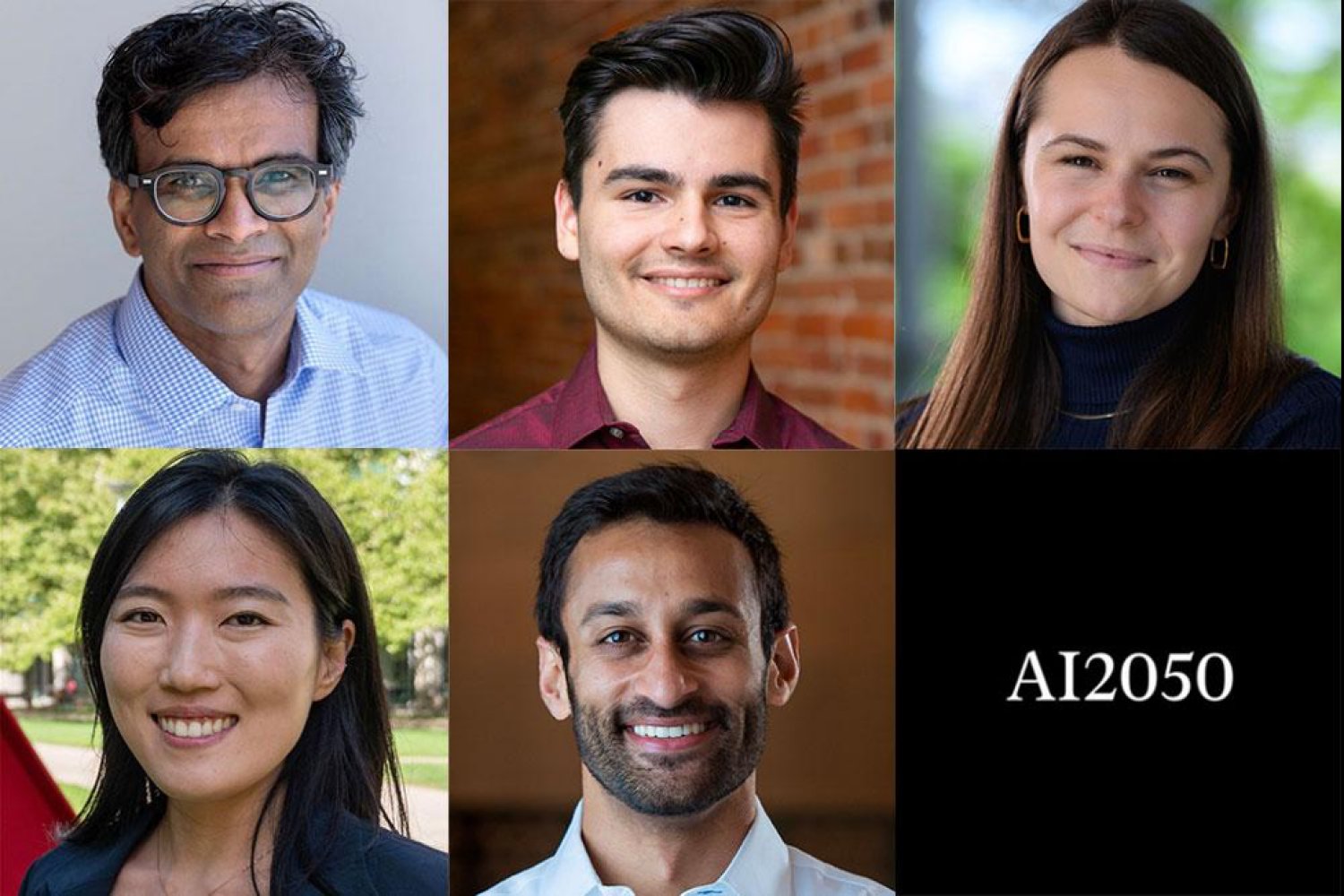
五名MIT教职人员和另外两名校友近日入选2026届AI2050 Fellows。该荣誉由Schmidt Sciences每年公布,这是Eric和Wendy Schmidt的慈善倡议,旨在加速科学创新。
AI2050由Eric Schmidt和James Manyika构想并共同主持,是一项慈善倡议,旨在帮助解决人工智能领域的难题。在他们的研究中,每位Fellow都将面对AI2050的核心驱动问题:“现在是2050年。AI已被证明对社会极为有益。发生了什么?我们解决了哪些最重要的问题,又抓住了哪些机遇和可能性,才确保了这一结果?”
AI2050高级研究员
Sendhil Mullainathan 是 MIT 的 Peter de Florez 教授,同时在经济学系与电气工程与计算机科学系任教,也是 MIT 信息与决策系统实验室的首席研究员。他当前的研究处于算法与人的交叉领域,核心工作是创办 The Bike Shop@MIT——一个通过可规模化的“思维自行车”以及面向机器学习算法的创新“齿轮”,推动更以人为本的 AI 的新研究中心。Mullainathan 是 ideas42 的联合创始人,这是一家应用行为科学的非营利组织;他还联合创办了 MIT 的 Abdul Latif Jameel 贫困行动实验室(推动在发展中应用随机对照试验)以及 Dandelion Health(将专有 AI 工具与真实世界患者数据相结合)。他是《Scarcity: Why Having Too Little Means So Much》的合著者。他获得的荣誉包括:麦克阿瑟“天才奖”;被世界经济论坛评为“全球青年领袖”;被《外交政策》杂志列为“百大思想家”;被英国《连线》杂志列入“Smart List:将改变世界的 50 人”。他是麦克阿瑟基金会董事会成员,隶属于 NBER 和 BREAD,也是美国艺术与科学院院士。他的 AI2050 项目聚焦于把 AI 可检测到的模式转化为可检验的理论。AI2050 早期职业研究员 Alex Damian 是数学系助理教授,在 MIT 计算学院与电气工程与计算机科学系设有联合职位,同时也是 MIT 信息与决策系统实验室的首席研究员。他的研究聚焦于深度学习的数学基础,重点在优化动力学与表示学习。他此前是哈佛大学 Kempner Institute 的研究员。他在普林斯顿大学获得应用与计算数学博士学位,在杜克大学获得数学学士学位。他的 AI2050 项目聚焦于高效的 AI 模型训练。
Bailey Flanigan 是政治科学系的 Theodore T. Miller (1922) 职业发展助理教授,在 MIT Schwarzman College of Computing 与 Department of Electrical Engineering and Computer Science 担任共享职位,同时是 MIT Laboratory for Information and Decision Systems (LIDS) 的首席研究员。她于 2024 年在 Carnegie Mellon University 获得计算机科学博士学位。2024-25 年,她是 Harvard Data Science Initiative Fellow,驻于 Harvard Ash Center for Democratic Innovation。她的研究结合了跨学科工具(包括社会选择理论、博弈论、算法、统计学和调查方法),以推进政治方法论并加强公众在民主中的参与。她特别关注采样算法、意见测量/偏好引出,以及协商式微型公众和参与式预算等民主创新的设计。她的 AI2050 项目专注于收集结构化的公众意见,供立法者在做出复杂决策时使用。
Yunha Hwang 是生物系 Samuel A. Goldblith 职业发展助理教授,并在 MIT Schwarzman College of Computing 与电子工程与计算机科学系联合聘任。她同时也是 MIT 信息与决策系统实验室的首席研究员。Hwang 是 Tatta Bio 的联合创始人兼首席科学家,这是一家致力于推进基因组 AI 用于生物发现的科学非营利组织。她在哈佛大学获得生物学博士学位,在斯坦福大学获得计算机科学学士学位。她的研究兴趣涵盖面向微生物演化、生物制造和开放科学的机器学习。她的 AI 2050 项目聚焦于确定生物酶的功能。
Manish Raghavan 是 MIT Sloan 管理学院 Drew Houston(2005)职业发展教授,并在 MIT Schwarzman College of Computing 与电子工程与计算机科学系联合聘任。他同时也是 MIT 信息与决策系统实验室的首席研究员。在此之前,他曾在哈佛计算与社会研究中心担任博士后。Raghavan 在加州大学伯克利分校获得电子工程与计算机科学学士学位,在康奈尔大学获得博士学位。他的研究兴趣在于将计算技术应用于社会关切领域,包括算法公平与行为经济学,尤其关注算法工具在招聘流程中的应用。他的 AI2050 项目聚焦于减轻 AI 被广泛依赖所带来的负面影响,并强化其积极方面。
MIT 校友 Irene Chen(22 届博士)和 Allison Z. Koenecke(14 届)以及前博士后 Juan Carlos Perdomo 也入选了 AI2050 Early Career Fellows。
译文由英文原文机器翻译,术语按行业惯例统一,可在文末展开原文核对。
查看英文原文(MIT affiliates named 2026 Schmidt Sciences AI2050 Fellows)
Five MIT faculty members and two additional alumni were recently named to the 2026 cohort of AI2050 Fellows. The honor is announced annually by Schmidt Sciences, Eric and Wendy Schmidt’s philanthropic initiative that aims to accelerate scientific innovation.
Conceived and co-chaired by Eric Schmidt and James Manyika, AI2050 is a philanthropic initiative aimed at helping to solve hard problems in artificial intelligence. Within their research, each fellow will contend with the central motivating question of AI2050: “It’s 2050. AI has turned out to be hugely beneficial to society. What happened? What are the most important problems we solved and the opportunities and possibilities we realized to ensure this outcome?”
AI2050 Senior Fellow
Sendhil Mullainathan is the Peter de Florez Professor at MIT with dual appointments in the departments of Economics and Electrical Engineering and Computer Science who is also a principal investigator at the MIT Laboratory for Information and Decision Systems. His current research is at the intersection of algorithms and people, with a central focus on launching The Bike Shop@MIT, a new research center that works toward more human-centered AI through scalable bicycles for the mind, and innovative new gears for machine learning algorithms. Mullainathan is the co-founder of ideas42, a nonprofit to apply behavioral science; MIT's Abdul Latif Jameel Poverty Action Lab, which promotes the use of randomized control trials in development; and Dandelion Health, which combines proprietary AI tools with real-world patient data. He's the co-author of "Scarcity: Why Having Too Little Means So Much."
Among other awards, he is a recipient of the MacArthur “Genius Grant”; has been designated a “Young Global Leader” by the World Economic Forum; was labeled a “Top 100 Thinker” by Foreign Policy Magazine; and was named to the “Smart List: 50 people who will change the world” by Wired Magazine (U.K.). He serves on the board of the MacArthur Foundation, is affiliated with the NBER and BREAD, and is a member of the American Academy of Arts and Sciences. His AI2050 project focuses on the translation of patterns detectable by AI into testable theories.
AI2050 Early Career Fellows
Alex Damian is an assistant professor in the Department of Mathematics, holding an MIT Schwarzman College of Computing shared position with the Department of Electrical Engineering and Computer Science, who is also a principal investigator at the MIT Laboratory for Information and Decision Systems. His research focuses on the mathematical foundations of deep learning, with an emphasis on optimization dynamics and representation learning. He was previously a research fellow at the Kempner Institute at Harvard University. He received his PhD in applied and computational mathematics from Princeton University and his BS in mathematics from Duke University. His AI2050 project focuses on effective AI model training.
Bailey Flanigan is a Theodore T. Miller (1922) Career Development Assistant Professor in the Department of Political Science, holding an MIT Schwarzman College of Computing shared position with the Department of Electrical Engineering and Computer Science, and a principal investigator at the MIT Laboratory for Information and Decision Systems (LIDS). She received her PhD in computer science from Carnegie Mellon University in 2024. In 2024-25, she was a Harvard Data Science Initiative Fellow, hosted at the Harvard Ash Center for Democratic Innovation. Her research combines tools from across disciplines (including social choice theory, game theory, algorithms, statistics, and survey methods) to advance political methodology and strengthen public participation in democracy. She is specifically interested in sampling algorithms, opinion measurement/preference elicitation, and the design of democratic innovations like deliberative minipublics and participatory budgeting. Her AI2050 project focuses on gathering structured public input that lawmakers can use when making complex decisions.
Yunha Hwang is the Samuel A. Goldblith Career Development Assistant Professor in the Department of Biology, holding an MIT Schwarzman College of Computing shared position with the Department of Electrical Engineering and Computer Science. She is also a principal investigator at the MIT Laboratory for Information and Decision Systems. Hwang serves as the co-founder and chief scientist at Tatta Bio, a scientific nonprofit dedicated to advancing genomic AI for biological discovery. She received her PhD in biology from Harvard University and BS in computer science from Stanford University. Her research interests span machine learning for microbial evolution, biomanufacturing, and open science. Her AI 2050 project focuses on determining biological enzyme functions.
Manish Raghavan is the Drew Houston (2005) Career Development Professor at the MIT Sloan School of Management, holding an MIT Schwarzman College of Computing shared position with the Department of Electrical Engineering and Computer Science. He is also a principal investigator at the MIT Laboratory for Information and Decision Systems. Before that, he was a postdoc at the Harvard Center for Research on Computation and Society. Raghavan received his bachelor’s degree in electrical engineering and computer science from the University of California at Berkeley, and PhD from Cornell University. His research interests lie in the application of computational techniques to domains of social concern, including algorithmic fairness and behavioral economics, with a particular focus on the use of algorithmic tools in the hiring pipeline. His AI2050 project focuses on mitigating negative effects, and strengthening positive aspects, of widespread AI reliance.
MIT alumni Irene Chen PhD '22 and Allison Z. Koenecke '14 as well as former postdoc Juan Carlos Perdomo were also named AI2050 Early Career Fellows.
正文保留英文原文,标题与摘要由机器翻译。
原文发布于 MIT News AI(MIT affiliates named 2026 Schmidt Sciences AI2050 Fellows),标题、摘要与正文由机器翻译,术语按行业惯例统一,未经人工逐句校订。