Cloudflare 加入 Jevolution,自称 Neolab
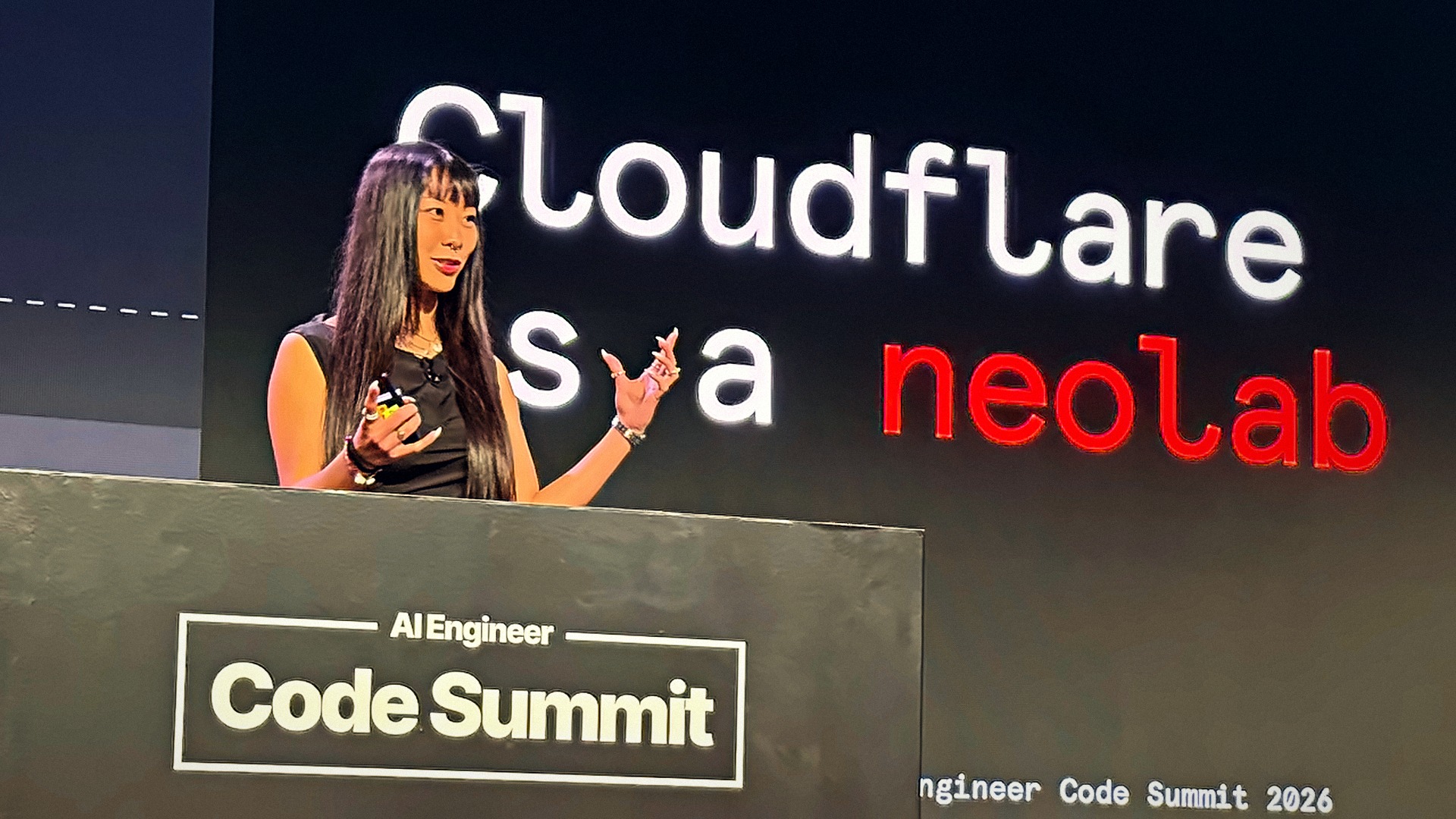
过去十五年来,Cloudflare 一直是互联网不可或缺的基础设施公司之一。但如今,它正在变成一家 neolab——至少根据 Michelle Chen 在 AI Engineer Code Summit 上的演讲来看是如此;她在产品侧负责 Cloudflare 的 AI Platform。
我们稍后会详细解释 neolab 到底是什么(简版:它们构建模型,且不叫 OpenAI 或 Anthropic)。Cloudflare 声称自己也是一家 neolab,因为它同样开始发布模型。准确地说,是两个 System One 模型:Clef 和 Clairic。正如 Chen 在她的演讲中所解释的,Clef 是一个决策模型,直接受 TypeSafe AI 具有革命性的 Jev 模型启发;而 Clairic 是一种新型的 System One 模型,Cloudflare 将其称为“extract”模型。
在演讲结束后接受 Latent Space 采访时,Chen 暗示 Cloudflare 不会只生产 System One 模型。还会推出大语言模型。
“我们成为 neolab,并不是[为了]只发布 System One 模型,尽管这对我们的基础设施来说很合理。我们现在算是打开了潘多拉魔盒,对吧?我们打开了它,现在可能性无穷无尽。”
Chen 表示,这“不只是 System One 模型,还可能包括我们一直在试验的推理模型,以及其他 LLM 之类的东西。”
不过,她补充说,这些很可能不会是像前沿实验室那样从零开始构建的预训练模型。
“我不认为那是我们的重点,但我认为我们可以利用现有的资源,让[它们]变得高效得多、有效得多。”
她指出,“我们团队大多数人实际上只做后训练”,因此这将是模型开发的重点。
neolab 一词字面意思是“新实验室”,由 The Information 的 Stephanie Palazzolo 于去年 11 月提出,她将其定义为“新一代以研究为核心的 AI 初创公司”。
Menlo Ventures 合伙人、AI 领域意见领袖 Deedy Das 维护着一份庞大的 neolab 名单,其中包括 Thinking Machines Lab、Poolside 以及 TypeSafe AI 自身。据 Das 所说,neolab 雇佣顶尖研究人员,投入大量算力(“通常用于训练自己的 AI 模型”),尚未形成显著的营收规模,而且通常都是融资额很高的初创公司。
Deedy Das 的 neolab 名单——注意 TypeSafe 位列前 20。
Cloudflare 至少有一半条件不符合,因为它是一家上市公司,且已有可观的营收规模。事实上,本月早些时候 Cloudflare 公布了创纪录的财报。“第三季度是 Cloudflare 有史以来最好的一个季度,”CEO Matthew Prince 表示。“我们的年化营收突破 30 亿美元,本季度营收为 7.82 亿美元,同比增长 39%。”
因此,把 Cloudflare 称为“neolab”是在拉伸这一公认定义。不过,正如 Chen 在其演讲中所论述的,自研模型是该公司自然演进的一部分:从基础设施,到算力(例如 Workers 平台,如今也包括面向智能体的能力),到存储,再到在 Workers AI 上为 Kimi、GLM 和 DeepSeek 等开放权重模型提供推理服务,直至如今自研模型。
Chen 坦言,Jev 促成了 Cloudflare 转向自研模型。她引用中国谚语,将 Jev 于 9 月的加入形容为“东风”,出乎意料地改变了 Cloudflare 对 AI 模型的看法。
“所以当 System One 和 Jev 范式开始出现时,”Chen 在她的演讲中说,“我们的想法是,这对我们来说太合适了,对吧?我们不必把每一个请求都发给 LLM。我们可以把其中一部分交给 System One 模型。”
在我们的对话中,Chen 谈到他们只花了两周就构建出 Clef——也就是 Jev 的复制品——而 TypeSafe AI 花了两年才做出 Jev。她说这话是在称赞 TypeSafe AI 为创造这种新型模型所付出的艰苦努力。
“真的要归功于 TypeSafe,是他们真正攻入这个领域,并在这里发明了新东西,让人们能如此强烈地产生共鸣并加以使用。而且,没错,我们很快就做出了一个模型,但他们做了大量前期工作,而我们也清楚 API schema 该长什么样之类的。”
Cloudflare 本质上仍然是一家基础设施公司——速度和低延迟是它的看家本领。Chen 表示,System One 模型的主要好处在于,它们让更多工作可以由更小、更快的模型来完成,其输出以毫秒而非秒来衡量。
虽然 Clef 是 Jev 的克隆,但 Cloudflare 很快通过 Clairic 对 System One 做出了原创性的变体,该模型于上月发布,号称是“一个全新类别中的首个模型:System One 提取模型”。
“Clairic 能做的是接收非结构化输入,并从中提取、计算、估算和预测数值,”Chen 在她的演讲中解释道。
在我们的采访中,Chen 说她的团队希望运用 System One 的原则,去找出 LLM 其他“大材小用”、且并不总能给出正确答案的领域。
他们最终确定的问题之一是,LLM 并不总能很好地处理非结构化输入。Chen 解释说,由于 LLM 是自回归的,它们容易产生幻觉,有时还会返回格式错误的 JSON。
“所以我们在那里采用了与 Jev/Clef 相同的 System One 原则,并决定做抽取。”
Cloudflare 的一些 System One 用例示例。
她以发票为例,LLM 有时会把某个重要细节弄错——比如订单号。
“当你把订单发给 LLM 时,它们会说,等等,我觉得订单号是 3,也许是 4,也许是 5。但问题是,号码就在那儿,你只要读一下就行了!”
所以 Clairic 的思路是,它能在一次前向传播中从非结构化数据里抽取出带类型的值——比如一个数字。
用“neolab”这个标签听起来有点像营销噱头,但 Cloudflare 来做 System One 模型——甚至未来做推理模型——也非常说得通。
“作为一家 neolab,意味着我们可以创造我们所缺失的东西,”Chen 在她的演讲中说道。
在我们的采访中,她还提到,打造自己的模型让 Cloudflare 得以降低其 AI 运营的风险。
“我认为 AI 领域存在很多风险,因为就像 Jev 是闭源的、我们没法运行它一样,市面上还有很多模型可能面临即将到来的监管风险,比如中国的开源模型。我认为很多模型实验室其实也想赚钱——所以会强制执行相当昂贵的许可。”
如果你现在看 Cloudflare 的产品页面,它很像 Web 2.0 鼎盛时期亚马逊云计算产品页面的样子——也就是说,内容非常多!
但仍然还有再容纳几个模型的空间。
译文由英文原文机器翻译,术语按行业惯例统一,可在文末展开原文核对。
查看英文原文(Cloudflare Joins the Jevolution and Labels Itself a Neolab)

Cloudflare has been one of the essential infrastructure companies of the web for the past decade and a half. But now, it’s turning into a neolab — at least according to a presentation at AI Engineer Code Summit by Michelle Chen, who runs Cloudflare’s AI Platform on the product side.
We’ll get into what exactly a neolab is in a minute (the short version: they build models and they’re not called OpenAI or Anthropic). Cloudflare is claiming to be one because it too has begun to launch models. Two System One models, to be precise: Clef and Clairic. As Chen explained in her talk, Clef is a decision model directly inspired by TypeSafe AI’s revolutionary Jev model, while Clairic is a new type of system one model that Cloudflare calls an “extract” model.
In an interview with Latent Space after her presentation, Chen hinted that Cloudflare won’t just be producing system one models. There will be large language models, too.
“We're not being a neolab [to] only launch system one models, even though it makes sense for our infrastructure. We've kind of entered this Pandora's box now, right? We opened it, now the possibilities are endless.”

Chen said it’s “not just system one models, but potentially reasoning models that we've been experimenting with, and other LLMs and whatnot.”
However, she added that these probably won’t be pre-trained models built from scratch, like the frontier labs produce.
“I don't think that's our focus, but I think we can take existing resources out there and make [them] a lot more efficient and effective.”
She noted that “most of our team really just does post-training,” so that will be the focus in model development.
What is a neolab and is Cloudflare really one?
The term neolab literally means a ‘new lab’ and it was coined last November by Stephanie Palazzolo from The Information, who defined it as “a new generation of research-focused AI startups.”
Deedy Das, a partner at Menlo Ventures and an AI influencer, runs a big list of neolabs. It includes companies like Thinking Machines Lab, Poolside, and TypeSafe AI itself. According to Das, neolabs employ elite researchers, spend a lot of compute (“usually to train its own AI model”), don't have significant revenue traction, and they’re typically startups that have raised a lot of money.

Deedy Das’ list of neolabs — note that TypeSafe is among the top 20.
Cloudflare doesn’t tick at least half of those boxes, since it’s a public company with significant revenue traction. In fact, earlier this month Cloudflare announced record earnings. “The third quarter was Cloudflare's best quarter ever,” said CEO Matthew Prince. “We crossed $3 billion in annualized revenue with revenue of $782 million, up 39% year over year.”
So Cloudflare as a “neolab” is pushing the accepted definition. However, as Chen argued in her presentation, building models is part of a natural progression for the company: from infrastructure, to compute (e.g. the Workers platform, including now for agents), to storage, to serving open weight models like Kimi, GLM and DeepSeek (on Workers AI), to now building its own models.

Jev as the “east wind”
Chen readily admits that Jev inspired Cloudflare’s pivot to building models. Referencing a Chinese proverb, she framed Jev’s arrival in September as “the east wind” that unexpectedly changed how Cloudflare viewed AI models.
“And so when the system one and Jev paradigm started coming on board,” Chen said in her presentation, “we were like, this makes so much sense for us to adopt, right? We don't have to send every request to an LLM. We can send some of it to a System One model.”

In our conversation, Chen commented on how it took only two weeks for them to build Clef — which is a copy of Jev — whereas it took TypeSafe AI two years to build Jev. She meant that as a compliment for how hard TypeSafe AI worked to create this new type of model.
“All credit to TypeSafe, really, for actually attacking this space and inventing something new here, that people could relate to so strongly and be able to use it. And, yeah, we came up with a model super quickly, but they put in a lot of legwork and we knew exactly what the API schema should look like and whatnot.”
Cloudflare is, at its core, still an infrastructure company — speed and low latency is its meat and potatoes. The main benefit of System One models, Chen remarked, is that they allow more work to be done by smaller, faster models, where output is measured in milliseconds rather than seconds.

Clairic and what extraction models do
While Clef was a clone of Jev, Cloudflare soon came up with an original twist on System One with Clairic, launched last month as “the first model in a new class: System One extraction models.”
“What Clairic does is it can take unstructured input, and it can extract, compute, estimate and forecast values from those inputs,” Chen explained in her presentation.

In our interview, Chen said that her team wanted to use System One principles to find other areas where LLMs were “overkill” and didn’t always return the right answer.
One of the problems they settled on was that LLMs don’t always deal well with unstructured input. Because LLMs are autoregressive, Chen explained, they are prone to hallucinate and they sometimes return malformed JSON.
“So we used the same System One principles [as Jev/Clef] there, and decided on extraction.”

Some examples of system one use cases at Cloudflare.
She used the example of an invoice, where an LLM will sometimes get an important detail wrong — like the order number.
“When you send it [the order] to an LLM, they're like, wait, I think the order number's three, maybe it's four, maybe it's five. But it's like, the number's right there, you just have to read it!”
So the idea with Clairic is that it will extract a typed value — like a number — from unstructured data, in one forward pass.
Why Cloudflare is in the lab now
Using the label “neolab” sounds a bit like a marketing gimmick, but it also makes a ton of sense for Cloudflare to produce system one models — and even, in future, reasoning models.
“Being a neolab means that we can create what we are missing,” Chen said in her presentation.
In our interview, she also mentioned that creating their own models allows Cloudflare to derisk its AI operations.
“I think there's a lot of risk in the AI space, because just like Jev was closed source and we couldn't run it, there [are] a lot of models out there [with] maybe regulatory risks coming up, like the Chinese open source models. I think lots of model labs want to actually make money, as well — so enforcing quite expensive licenses.”

If you look at Cloudflare’s product page now, it resembles what Amazon’s cloud computing product page looked like at the height of Web 2.0 — i.e. there’s a lot there!
But there’s still room for several more models.
正文保留英文原文,标题与摘要由机器翻译。
原文发布于 Latent Space(Cloudflare Joins the Jevolution and Labels Itself a Neolab),标题、摘要与正文由机器翻译,术语按行业惯例统一,未经人工逐句校订。