聚焦 AI、社会与人类
MIT 的学生去教师答疑时间的次数变少了。他们花在解题和彼此相处上的时间也更少。这些是 MIT 近期一份关于人工智能与教育的报告的发现之一,也是越来越多 MIT 教师担忧生成式 AI 正在既改变人们的工作方式、又影响人们如何思考、学习和彼此相处的原因之一。
对于 MIT 人类洞察协作组织(MIT Human Insight Collaborative,MITHIC)而言,这些问题已成为核心关注点,MITHIC 正与包括计算的社会与伦理责任项目(Social and Ethical Responsibilities of Computing,SERC)在内的全院各方合作者携手,帮助 MIT 应对这些问题。
MITHIC 于 2024 年作为一项战略倡议启动,汇聚学者、艺术家、教育工作者和研究人员,探讨当今时代核心挑战中人的维度。自启动以来,MITHIC 已支持 31 个 MIT 院系单位的 67 个项目,累计提供 550 万美元资助。
这些项目中约三分之一聚焦 AI、社会与人类——MITHIC 教师联合负责人 Heather Paxson 表示,这一议题已成为该倡议日益重要的组成部分。
“当我们谈到 AI 与社会时,我们不仅是在说个人的伦理决策或如何对劳动者进行再培训。我们关注的是 AI 如何重塑社会性、如何改变我们彼此之间的关系。”Paxson 说。她是人类学教授,也是人文、艺术与社会科学学院(SHASS)副院长。
侵蚀“创造性摩擦”
在这一关注点的基础上,今年早些时候校园内举办了一场 AI 与社会论坛。该活动由 MITHIC、SHASS、SERC 和 MIT 生成式 AI 影响联盟(MIT Generative AI Impact Consortium,MGAIC)共同组织,包含聚焦就业、民主与 AI 的演讲和专题讨论。
在校园内,这份关于 AI 与教育的报告警告称,AI 正在侵蚀长期以来界定 MIT 教育的“创造性摩擦”:学生在课堂内外就各种观点展开辩论,并相互挑战、挑战教授和助教。
MITHIC 的教师联合负责人 Seth Mnookin——科学写作教授、比较媒体研究项目/写作(CMS/W)负责人——表示:“这份报告并不是在说 AI 已经到来、我们都需要去适应。它说的是,我们需要提出更根本的问题。”
“1941 年美国参加第二次世界大战时,学院新培养出的科学家和工程师通过科学与技术帮助塑造了那个时代,”Mnookin 说。“在 AI 上,我们正处于一个同样具有重大意义的时刻。不同之处在于,这一次,最重要的问题无法仅靠技术专家来回答。这正是人文学科、艺术和社会科学发挥作用的地方。”
为寻求答案而跨越学科
MITHIC 正通过其 SHASS+ Connectivity Fund 支持一系列跨学科项目,在该基金的支持下,一位 SHASS 学者与 MIT 其他部门的研究人员结成合作。
在 2026 年美国中期选举的背景下,政治学教授 Adam Berinsky 和 Charles Stewart III,以及 MIT 斯隆管理学院助理教授 Chara Podimata 正在研究大语言模型(LLM)如何成为民主知识的中间人。
这项仍在进行中的项目展示了阿拉斯加中期选举中,使用 Anthropic 的 AI 模型 Claude 进行选前研究的选民,可能收到了关于候选人及其立场的不完整信息;该项目近期被《纽约时报》报道。
“AI 正在成为人们接触和理解政治信息这一方式的一部分,然而对于这一信息环境实际是什么样子、它对不同用户群体、政治身份和地域的人来说有何差异,我们了解得相对很少,”Podimata 对《纽约时报》(Times)表示。
在另一个项目中,CMS/W 教授 Eric Klopfer 与脑与认知科学教授 Pawan Sinha 共同领衔一项研究,测量 AI 对认知的近期与长期影响。
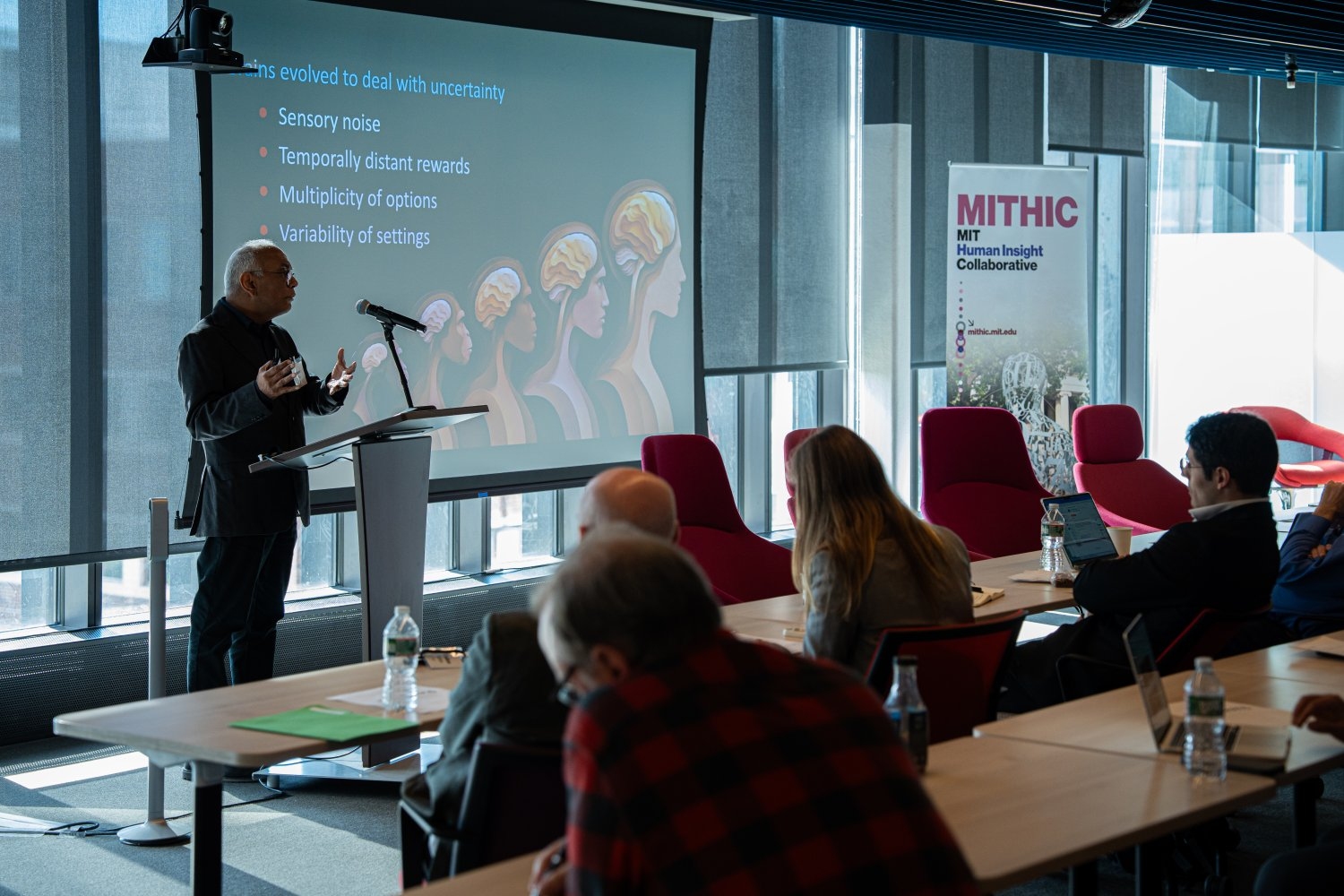
这些教授站在 AI、教育与神经科学的交汇处,正在考察:生成式 AI 是在增加人脑对信息的摄取、却把认知功能卸载出去,还是作为创作过程的一部分支持认知功能的提升。他们最近在 MIT 校园举办了一场名为“AI and the Brain”的活动,召集了该领域的专家。
在艺术与技术领域,音乐技术教授 Anna Huang(在 MIT Schwarzman College of Computing 与电气工程与计算机科学系拥有联合聘任)与 MIT Media Lab 教授 Joe Paradiso 正在考察,将 AI 纳入其中会如何影响创作过程与现场表演体验。
他们的项目“Live Musician-AI Improvisation, Tuning the Social Aesthetics in Human-AI Partnerships”探讨了这样一个问题:当人类作曲家与当代机器学习系统共同即兴创作音乐时,会发生什么?
作为项目的一部分,一群 MIT 的音乐家、民族音乐学家和工程师定期聚会,试验各种即兴创作框架,比如停下来讨论技术如何影响作者身份与音乐走向、合奏动态,以及即兴创作的其他基石。教师最终会把他们的收获纳入未来一门关于 AI 即兴创作的课程或实践课。
AI 时代的教学与学术
SHASS 的教师和学术人员也在牵头新的 MITHIC 倡议,帮助拓展围绕 AI 与社会交汇点的教学和社区对话。
人类学教授 Graham Jones 和计算机科学副教授 Arvind Satyanarayan 利用 MITHIC 的 SHASS+ Connectivity 资助,帮助开设了一门课程 6.S061/21A.S02(Humane User Experience Design),学生在课上考察 AI 系统是如何设计的,并思考 AI 智能体凭借模仿人类思维与言语的能力、与人们建立社会文化关系所带来的后果。
“我们合作的核心是‘humane’这个词。它有点双关,既指服务于人、仁慈,也指像人,”Jones 在首届 MITHIC 年度活动上说。“有意思的是,我们的学生发现,构建一个对人有益的系统与构建一个看起来像人的系统之间存在根本性张力,因为真实的人可能会产生危险的依赖。”
另一个项目“Rebuilding Computing and Society at MIT”(在 MIT 重建计算与社会)由 MITHIC 的教育影响力基金(EIF)支持。该项目由科学、技术与社会学副教授 Dwai Banerjee 领导,重振了 2019 年启动的“计算与社会”方向。此前该 HASS 方向已陷入停滞,课程列表上都是已不再开设的课程,学生兴趣寥寥。如今该方向汇集了来自 11 个 SHASS 单位的现行课程,学生可以从不同的人文与社会科学视角探索计算。
担任该方向导师的 Banerjee 还与讲师兼研究附属人员 Mariel Garcia-Montes(26 届博士)合作,设法将该方向的授课教师与校园内围绕计算与社会的各类项目连接起来。MIT 大四学生 Daniel Gonzalez 也参与其中,正在开发一个研究与外联项目,让本科生在全校计算与社会相关工作中发出声音。
另一个由 EIF 资助的 MITHIC 项目“Review of Generative AI Assistive and Resistant Communication Assignments and Supporting Workshops”(生成式 AI 辅助性与抵制性沟通作业及配套工作坊的审视)由 MIT 写作、修辞与专业沟通(WRAP)项目的讲师 Michael Trice 领导。
该项目是在回应 SHASS 教师持续提出的一项需求:他们需要更多培训与技能,“以充分应对课堂上的生成式 AI 问题”。
Trice 正在建立一个教师资源库,并围绕生成式 AI 与写作举办工作坊和客座讲座。这其中包括今年秋天早些时候伊利诺伊大学的 John Gallagher 所作的一场演讲,他介绍了 2026 年在其所在院校针对本科生开展的、关于 AI 使用与写作的大规模调查的结果。
把握当下
MIT 的领导层一致认为,如今已进入第三年的 MITHIC 正在发挥核心作用,帮助学院应对当下的时刻——AI 既带来了非凡的潜力,也带来了令人不安的风险。
“对于科学与技术以及以人为本的学科之间的建设性合作而言,从来没有比现在更重要的时刻,”MIT 校长 Sally Kornbluth 最近表示。“通过 MITHIC,MIT 正在为教师提供支持,让他们能够跨越学科界限、去追求自己的梦想。”
原文较长,译文为节选;译文由英文原文机器翻译,术语按行业惯例统一,可在文末展开原文核对。
查看英文原文(Putting a spotlight on AI, society, and humanity)
MIT students are going to office hours less often. They’re spending less time working through problem sets, and with one another. Those were among the findings of MIT’s recent report on artificial intelligence and education, and they are one reason a growing number of MIT faculty are concerned about how generative AI is both changing how people work and affecting how they think, learn, and relate to one another.
For the MIT Human Insight Collaborative (MITHIC), those questions have become a central focus, and MITHIC is working with collaborators across the Institute, including the Social and Ethical Responsibilities of Computing (SERC), to help MIT address them.
Launched in 2024 as a strategic initiative, MITHIC brings together scholars, artists, educators, and researchers to explore the human dimensions of the defining challenges of our time. Since its launch, MITHIC has supported 67 projects across 31 MIT units, offering a total of $5.5 million in funding.
Roughly a third of those projects are focused on AI, society, and humanity — a topic that MITHIC faculty co-lead Heather Paxson says has become an increasingly important part of the initiative.
“When we refer to AI and society, we’re not only speaking about individual ethical decision-making or how to retrain workers. We’re looking at how AI is reshaping sociality, how we relate to one another,” says Paxson, a professor of anthropology and the associate dean of the School of Humanities, Arts, and Social Sciences (SHASS).
Eroding “creative friction”
Building upon this focus, an AI and Society Forum took place on campus earlier this year. Co-organized by MITHIC, SHASS, SERC, and the MIT Generative AI Impact Consortium (MGAIC), the event featured presentations and panels concentrating on jobs, democracy, and AI.
On campus, the report on AI and education warned that AI is eroding the “creative friction” that has long defined an MIT education: students debating ideas and challenging one another, their professors, and their teaching assistants, in class and out of it.
MITHIC faculty co-lead Seth Mnookin, a science writing professor and head of Comparative Media Studies Program/Writing (CMS/W), said, “The report wasn’t saying that AI is here and we all need to adapt. It was saying that we need to be asking more fundamental questions.”
“When the United States entered World War II in 1941, the Institute’s newly minted scientists and engineers helped shape that era through science and technology,” Mnookin said. “We’re at a similarly consequential moment with AI. The difference is that this time, the questions that matter most can’t be answered by technologists alone. That’s where the humanities, arts, and social sciences come in.”
Crossing disciplines in the pursuit of answers
MITHIC is supporting a range of interdisciplinary projects through its SHASS+ Connectivity Fund, in which a SHASS scholar partners with a researcher in another part of MIT.
In the context of the 2026 U.S. midterm elections, political science professors Adam Berinsky and Charles Stewart III and MIT Sloan School of Management Assistant Professor Chara Podimata are studying how large language models (LLMs) have become intermediaries of democratic knowledge.
The ongoing project, which has demonstrated how voters in Alaska’s midterms who conducted their pre-election research using Anthropic’s AI model, Claude, may have received incomplete information about candidates and their views, was recently featured in The New York Times.
“AI is becoming part of the way people encounter and make sense of political information, and yet we know relatively little about what that information environment actually looks like, how it differs for different user demographics, political identities, and geographies,” Podimata told the Times.
In another project, CMS/W Professor Eric Klopfer and brain and cognitive sciences Professor Pawan Sinha are co-leading research that’s measuring AI’s near- and long-term effects on cognition.
Meeting at the intersection of AI, education, and neuroscience, the professors are examining whether generative AI is increasing the human brain’s consumption of information but offloading cognitive function, or supporting an increase in cognitive function when used as part of the creative process. They recently gathered experts on the topic for an event on the MIT campus, “AI and the Brain.”
In the field of arts and technology, Anna Huang, a professor of music technology holding an MIT Schwarzman College of Computing shared position with the Department of Electrical Engineering and Computer Science, Joe Paradiso, a professor at the MIT Media Lab, are examining how incorporating AI impacts the creative process and live performance experience.
Their project, “Live Musician-AI Improvisation, Tuning the Social Aesthetics in Human-AI Partnerships” explores the question: what happens when human composers and contemporary machine learning systems improvise to make music together?
As part of their project, a collective of MIT musicians, ethnomusicologists, and engineers meets for regular sessions to experiment with improvisation frameworks like stopping to discuss how technology impacts authorship and musical direction, ensemble dynamics, and other cornerstones of improvisation. Faculty will ultimately incorporate their takeaways into a future course or practicum on AI-improvisation.
Teaching and scholarship in an AI era
SHASS faculty and academic staff are also leading new MITHIC initiatives to help broaden instruction and community dialogue about the intersection of AI and society.
Graham Jones, professor of anthropology, and Arvind Satyanarayan, associate professor of computer science, used MITHIC’s SHASS+ Connectivity funding to help launch a course, 6.S061/21A.S02 (Humane User Experience Design), in which students examine how AI systems are designed and grapple with the consequences of AI agents entering into socio-cultural relationships with people through their ability to mimic human thought and speech.
“The crux of our collaboration is the term 'humane.' It’s a bit of a double-entendre, meaning both human-serving or benevolent, and humanlike,” Jones said at the inaugural MITHIC Annual Event. “What’s interesting is that our students are discovering that there’s a fundamental tension between building a system that’s good for people and one that seems human, because real people can develop dangerous dependencies.”
Another project, “Rebuilding Computing and Society at MIT,” is supported by MITHIC’s Education Impact Fund (EIF). Led by Dwai Banerjee, associate professor of science, technology, and society, the initiative revitalized the Computing and Society concentration launched in 2019. The HASS concentration had gone dormant, listing classes no longer being offered and with minimal student interest. The concentration now features current classes across 11 SHASS units in which students can explore computing through different humanistic and social science angles.
Banerjee, who serves as the concentration’s advisor, is also working with lecturer and research affiliate Mariel Garcia-Montes PhD ’26 to find ways to connect the concentration instructors and campus initiatives on computing and society. MIT senior Daniel Gonzalez is also part of the project, developing a research and outreach program that centers undergraduate voices in computing and society efforts across the Institute.
Another MITHIC project funded by the EIF, “Review of Generative AI Assistive and Resistant Communication Assignments and Supporting Workshops,” is led by Michael Trice, a lecturer in MIT’s Writing, Rhetoric, and Professional Communication (WRAP) program.
The project is responding to a consistent SHASS faculty request for additional training and skills needed “to fully address generative AI concerns in their classes.”
Trice is creating a bank of faculty resources and facilitating workshops and visiting lectures on generative AI and writing. These include a talk given earlier this fall by John Gallagher from the University of Illinois, who presented findings from a large-scale survey on AI-usage and writing conducted with undergraduates at his institution in 2026.
Meeting the moment
MIT leaders agree that MITHIC, now in its third year, is playing a central role in the Institute meeting the moment, as AI presents both extraordinary potential and disturbing risks.
“There has never been a more important time for constructive collaboration between science and technology and the human-centered disciplines,” MIT President Sally Kornbluth recently said. “Through MITHIC, MIT is giving faculty the support to reach out across disciplines and pursue their dreams.”
Agustín Rayo, dean of SHASS and co-chair of MITHIC, agrees. “MIT is uniquely placed to help us understand this extraordinary moment and to generate the values, tools, and policies that we will need to shape AI so that it becomes a force for good,” he said. “It is essential that we deploy AI technology in a way that elevates human existence, rather than diminishing it.”
At the recent SHASS 75th Anniversary Symposium, Provost Anantha Chandrakasan said given the rapid development of AI, an understanding of the ethical implications and societal impact of implementing new technologies is especially urgent.
“SHASS provides an essential perspective on questions concerning how technology can be developed thoughtfully and deployed responsibly, with the aim of improving human well-being,” said Chandrakasan, who also serves as MITHIC co-chair.
Looking ahead, MITHIC and SERC are developing a series of events that pair humanists or social scientists with colleagues in a single field, starting with mathematics, to examine what AI is changing about how that field produces knowledge and trains its next generation.
“The question isn’t whether AI will change these fields,” Mnookin said. “It’s whether we understand what’s at stake before it does.”
正文保留英文原文,标题与摘要由机器翻译。
原文发布于 MIT News AI(Putting a spotlight on AI, society, and humanity),标题、摘要与正文由机器翻译,术语按行业惯例统一,未经人工逐句校订。