NVIDIA 发布 Rubin HPC:科学导向服务器 GPU 2028 年推出
在繁忙的 SC26 大会期间,NVIDIA 宣布正在开发一款新 GPU,将专门面向高性能计算工作负载。这款未来芯片命名为 Rubin HPC,将是该公司 Rubin GPU 架构的 HPC 优化版本。这将是 NVIDIA 自近 4 年前的 Hopper 一代以来,首款重要的 HPC 级产品。
本周这一消息发布之际,过去几年里围绕经典 HPC 工作负载的未来以及运行这些负载的硬件,业界一直在进行更广泛的反思。随着过去五年商业 GPU 服务器需求转向 AI 相关任务和低精度数学运算,服务器 GPU 设计愈发倾向于大规模张量核心阵列以及其他更契合 AI 需求的设计选择。这使得传统科学与工程用户拥有的选择比以往更少,而在过去十年的大部分时间里,服务器 GPU 设计一直将 HPC 视为一等公民,甚至是最重要的客户。
因此,NVIDIA 宣布推出专用 HPC 芯片意义重大。在该公司的 Blackwell 一代产品几乎缺席 HPC 市场之后,人们曾质疑这位 AI 革命的领导者是否还会费心去顾及规模较小的 HPC 市场。答案显然是“会”,只不过要等到 2028 年 Rubin HPC 芯片发布之时。尽管如此,这仍是一个明确信号:NVIDIA 不打算把 HPC(或超级计算)市场永久让给 AMD 和 Intel 等竞争对手——近年来这些对手一直在瓜分这一市场。
Rubin HPC:50K+ CUDA 核心,2028 年推出
由于 NVIDIA 的 Rubin HPC 芯片预计要到 2028 年才会问世,该公司(以及极为高调的超大规模与 HPC 副总裁 Ian Buck)本周的发布实际上只是一次预热,后续还会有更多细节公布。在这次发布中,公司只分享了关于该芯片的少数关键细节。
NVIDIA SC26 Rubin HPC 摘要
最引人注目的消息是,NVIDIA 未来的 HPC 芯片将提供超过 50,000 个 CUDA 核心——CUDA 核心是 NVIDIA 用于经典矢量/SIMD 处理的 ALU 阵列。这大约是 NVIDIA 当前旗舰 Rubin SoC 的 CUDA 核心数量的两倍,而这对 HPC 市场至关重要,因为很少有 HPC 工作负载能够大量利用矩阵乘法和 NVIDIA 的 tensor core。理想的 HPC 处理器需要是一台出色的矢量处理机器,而不仅仅是张量处理机器,因此大量 CUDA 核心的公布凸显了这将是一款什么样的 GPU。
在勾勒 GPU 其余部分设计的更宏观轮廓时,NVIDIA 并未透露有关该 HPC 芯片预期性能或内存子系统的更多细节。相反,公司大力宣传一种“均衡设计”,强调计算能力与数据搬运能力同步提升,而不是单方面骤然拉高计算吞吐。
NVIDIA SC26 Rubin HPC CUDA 核心
这(据推测)指的是该芯片的另一项标志性特性,即支持 NVLink 7。NVIDIA 当前的 Rubin 服务器 GPU 采用 NVLink 6;事实上,它是首款提供该接口的芯片。这意味着,当 Rubin HPC 在 2028 年推出时,其纵向扩展(scale-up)网络技术将领先一代。
稍作字里行间的推敲,Rubin HPC 的高层级规格似乎更贴近 NVIDIA 为 Rubin 产品线准备的中期更新款——Rubin Ultra。由于 Rubin Ultra 还要再过一年才会推出,关于这款芯片的信息同样寥寥无几,但最值得注意的是,我们已经知道它将是首款支持 NVLink 7 的芯片。这也让这样一种看法更加可信:紧随其后的 2028 年 Rubin HPC 芯片,会更接近 Rubin Ultra 的衍生版本,而不是最初的 Rubin 服务器芯片。
2028 年这一时间点也正好对应着让 Rubin HPC 用上更新的 HBM4e 内存,而非当前 Rubin 服务器芯片所用的 HBM4。
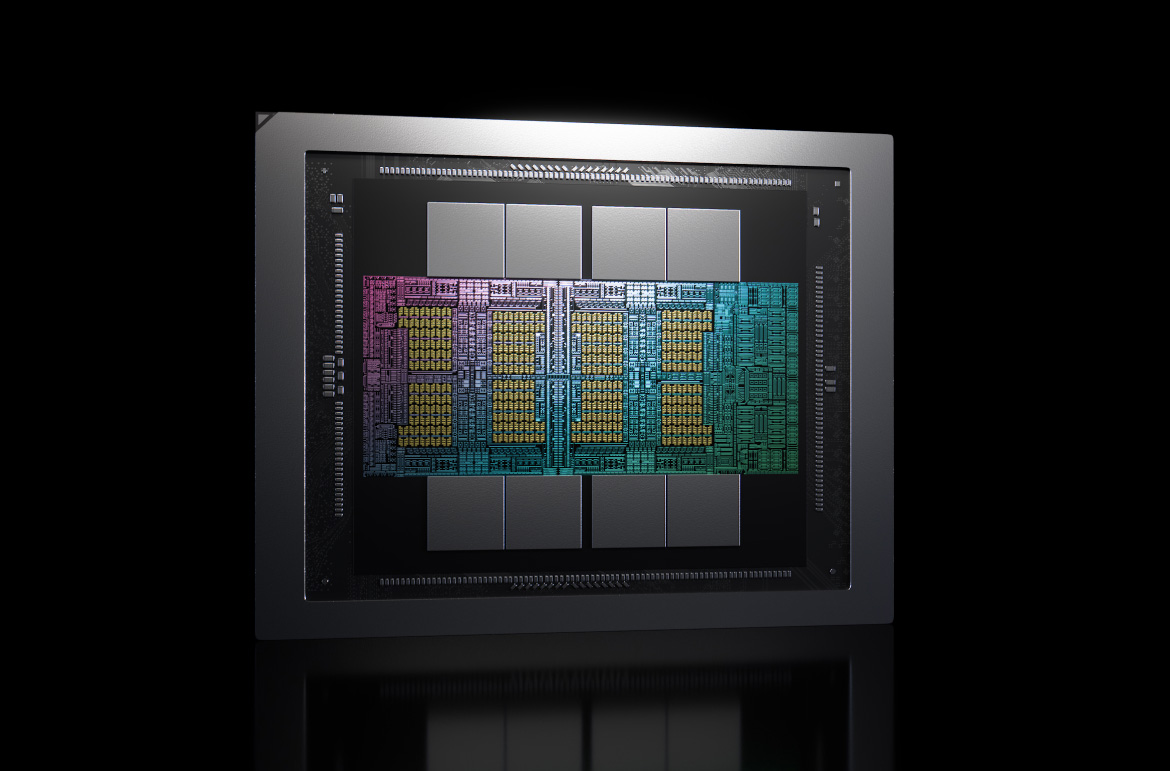
除此之外,NVIDIA 还在其 SC26 演示以及新闻室文章中附上了该芯片的渲染图,图中芯片的外观与当前 Rubin GPU 的渲染图非常相似。对于如此远期的产品,NVIDIA 的芯片渲染图往往更多是愿景或示意性质,而非技术层面的准确呈现;但如果它至少在物理层面是准确的,那么我们看到的便是 8 组 HBM 分布在多个裸片上,与当前的 Rubin 服务器芯片相同。
最后,在本周的发布中,NVIDIA 非常简短地宣传了一项其称为“稀疏数据加速”(sparse data acceleration)的能力,用于持续为 GPU 核心供给数据,但没有给出这项能力如何工作的其他细节。该公司的 tensor core 长期以来一直支持稀疏矩阵,而这一能力似乎不止于此,尤其是考虑到其对向量运算和 CUDA 核心的强调。
NVIDIA HPC 加速器规格对比
NVLink 5 18 条链路(1800GB/sec)
NVLink 4 18 条链路(900GB/sec)
虽然未公布具体性能数据,但 NVIDIA 至少强调 Rubin HPC 将适用于从 NVFP4 一直到 FP64 的广泛精度范围。虽然 FP64(以及程度稍轻的 FP32)是传统 HPC 工作负载最主要的关注点,但近期的软件工作也开始关注低精度数学运算,哪怕只是为了适应 GPU 硬件这些年来的变化。尽管 NVIDIA 完全取消低精度数学格式支持的可能性一直极低——哪怕仅出于二进制兼容性的考虑——但对支持全精度范围的强调意味着,我们也不应指望 NVIDIA 会大幅牺牲这些精度。
不过,这里最值得关注的头部指标将是 FP64 性能,包括向量与张量运算两方面。自 Hopper 以来,NVIDIA 的 FP64 性能基本上停滞在略低于 40 TFLOPS 的水平(Blackwell Ultra 在这方面的表现尤其差,不到 2 TFLOPS),因此一款 CUDA 核心数量大幅增加的全新芯片将让 NVIDIA 有能力显著提升其 FP64 性能,这在很大程度上取决于他们在架构中集成了多少 FP64 CUDA 核心。同样,也取决于他们从张量核心那里让出多少芯片面积,来为这些 FP64 硬件腾出空间。
总结一下,Rubin HPC GPU 的发布意味着,在近几年某种程度的缺席之后,NVIDIA 将坚定地重返 HPC 领域。由于该公司在 Blackwell 世代如此专注于 AI 性能,Rubin 世代标志着一个重新确立其市场地位的机会,更不用说借此利用他们为此开发的技术了。不过,NVIDIA 不会没有竞争,因为 AMD 将于 2027 年推出面向 HPC 的 Instinct MI430X 加速器,Intel 也在准备其基于 PCIe 的 GPU D-Series。这意味着对 NVIDIA 来说,如果想重新夺回 HPC 市场或其近亲——经典超级计算机市场——的大部分份额,将面临一场硬仗。
译文由英文原文机器翻译,术语按行业惯例统一,可在文末展开原文核对。
查看英文原文(NVIDIA Announces Rubin HPC: Science-Focused Server GPU to Arrive in 2028)
Adding to a busy SC26 conference, NVIDIA has announced that they are developing a new GPU that will be targeted specifically at high-performance computing workloads. Aptly named the Rubin HPC, the future chip will be an HPC optimized version of the company’s Rubin GPU architecture. It would mark NVIDIA’s first significant HPC-class part since the Hopper generation almost 4 years ago.
This week’s announcement comes amidst a broader degree of soul searching that has been taking place over the part couple of years about the future of classic HPC workloads and the hardware that will run them. With commercial GPU server demand shifting over to AI-related tasks and low precision math over the last half-decade, server GPU designs have been favoring large arrays of tensor cores and other design choices that play better to AI needs. This has left traditional science and engineering users with fewer options than they have previously enjoyed, as the bulk of the prior decade saw server GPU designs treat HPC as a first-class citizen, if not a top customer.
Consequently, NVIDIA’s announcement of a dedicated HPC chip is a significant one. After the company all but sat out the HPC market with its Blackwell generation of parts, there was a question whether the leader of the AI revolution would even bother with the smaller HPC market. The answer to that turns out to be an unambiguous “yes,” though not until 2028 when the Rubin HPC chip is released. Nonetheless, it is a clear signal that NVIDIA does not intend to permanently secede the HPC (or supercomputer) market to rivals like AMD and Intel, who have been splitting up the market in recent years.
Rubin HPC: 50K+ CUDA Cores, Coming In 2028
With NVIDIA’s Rubin HPC chip not slated to arrive until 2028, this week’s announcement from the company (and a very visible VP of Hyperscale and HPC, Ian Buck) is in effect a teaser with more details to come. The company only had a few key details to share about the chip for this week’s announcement.
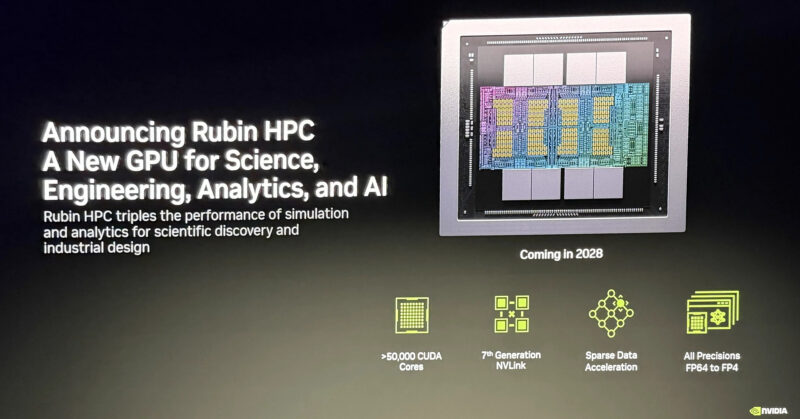 NVIDIA SC26 Rubin HPC Summary
The headline news here is that NVIDIA’s future HPC chip will over more than 50,000 CUDA cores – NVIDIA’s ALU arrays for classic vector/SIMD processing. This is around twice as many CUDA cores as NVIDIA’s current flagship Rubin SoC, and it is of great importance to the HPC market as few HPC workloads can make heavy use of matrix multiplication and NVIDIA’s tensor cores. An ideal HPC processor needs to be a great vector processing machine and not (just) a tensor processing machine, so the announcement of a large number of CUDA cores underscores just what kind of GPU this will be.
Painting broader strokes about the design of the rest of the GPU at this time, NVIDIA is not sharing any more details about expected performance or the memory subsystem for the HPC chip. Instead, the company is touting a “balanced design” that emphasizes growing compute and data movement capabilities together, rather than jump ramping up compute throughput on its own.
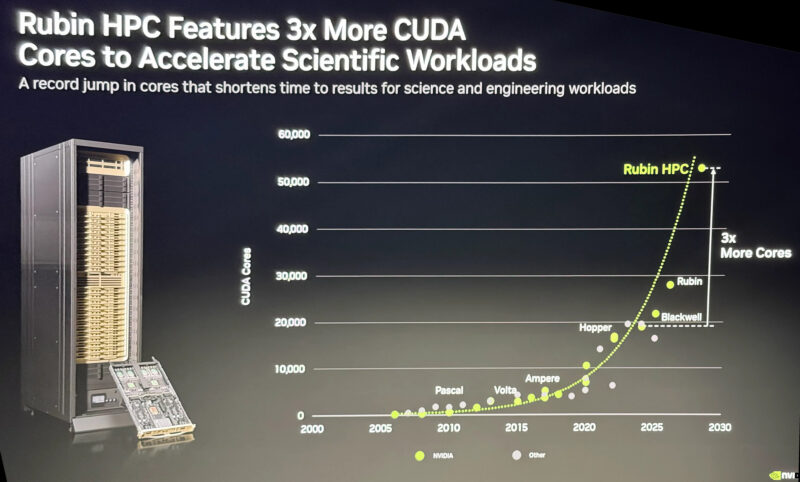 NVIDIA SC26 Rubin HPC CUDA Cores
This is (presumably) a reference to the chip’s other marquee feature, which is NVLink 7 support. NVIDIA’s current Rubin server GPU is on NVLink 6; in fact, it is the first chip to offer it. Which means that Rubin HPC’s scale-up networking technology will be a generation beyond that when it launches in 2028.
Reading between the lines a bit, the high-level specifications for Rubin HPC seem to be more closely tied to NVIDIA’s mid-generation refresh part for the Rubin lineup, Rubin Ultra. With it not set to be available for another year, there is only a paucity of information available on that chip as well, but most notably we already know that it is going to be the first chip to ship with NVLink 7 support. Which lends credit to the idea that the 2028 Rubin HPC chip following it will be closer to a Rubin Ultra derivative than it will be of the original Rubin server chip.
That 2028 timeframe also lines up with giving Rubin HPC access to newer HBM4e memory, rather than the HBM4 used on the current Rubin server chip.
Past that, NVIDIA has also included a render of the chip in their SC26 presentation as well as on their newsroom article, which showcases a chip that looks very similar to their current Rubin GPU renders. NVIDIA chip renders are often more aspirational or illustrative than technical this far out, but if it is at least physically accurate then we are looking at 8 stacks of HBM spread out across multiple dies, the same as the current Rubin server chip.
Finally, for this week’s announcement NVIDIA has very briefly touted what they are calling a “sparse data acceleration” capability to keep the GPU cores fed, though with no other details on how this might work. The company’s tensor cores have long supported sparse matrices, though this would seem to be something beyond that, especially with the emphasis on vector math and CUDA cores.
NVIDIA HPC Accelerator Specification Comparison
NVLink 5
18 Links (1800GB/sec)
NVLink 4
18 Links (900GB/sec)
In lieu of specific performance figures, NVIDIA is at least emphasizing that Rubin HPC will be applicable to a wide range of precisions, from NVFP4 all the way up to FP64. While FP64 (and to a lesser extent, FP32) are the biggest focuses for classic HPC workloads, more recent software efforts have looked at lower precision math as well, if only to account for how GPU hardware has changed over the years. While it was always extremely unlikely that NVIDIA would remove low precision math format support entirely, if only for binary compatibility reasons, the emphasis on supporting the full range of precisions implies that we should not expect to see NVIDIA too heavily compromise them, either.
Still, the top line figure to watch here is going to be FP64 performance, both for vector and tensor operations. NVIDIA has essentially plateaued at a bit under 40 TFLOPS for FP64 since Hopper (with Blackwell Ultra being especially poor here at less than 2 TFLOPS), so a fresh chip with a much larger number of CUDA cores would give NVIDIA the means to significantly ramp up their FP64 performance, depending in large part on just how many FP64 CUDA cores they bake into the architecture. And for that matter, how much die space they take away from tensor cores to free up the space for that FP64 hardware.
Wrapping things up, the announcement of their Rubin HPC GPU means that NVIDIA is going to be firmly putting its hat back into the ring for HPC after something of an absence over the last few years. With the company so heavily focused on AI performance with the Blackwell generation, the Rubin generation marks a chance to reset their position in the market, not to mention to take advantage of the technologies they have developed for it. NVIDIA will not be without competition, however, as AMD is going to be launching their HPC-focused Instinct MI430X accelerator in 2027, and Intel is preparing their PCIe-based GPU D-Series. Which means that for NVIDIA, they will have a fight on their hands if they want to retake a large portion of the HPC market or its close cousin, the classic supercomputer market.
原文为英文,正文由自动抓取并保留原文。
原文发布于 ServeTheHome(NVIDIA Announces Rubin HPC: Science-Focused Server GPU to Arrive in 2028),标题、摘要与正文由机器翻译,术语按行业惯例统一,未经人工逐句校订。