问答:AI 时代为何仍需锻炼数学能力
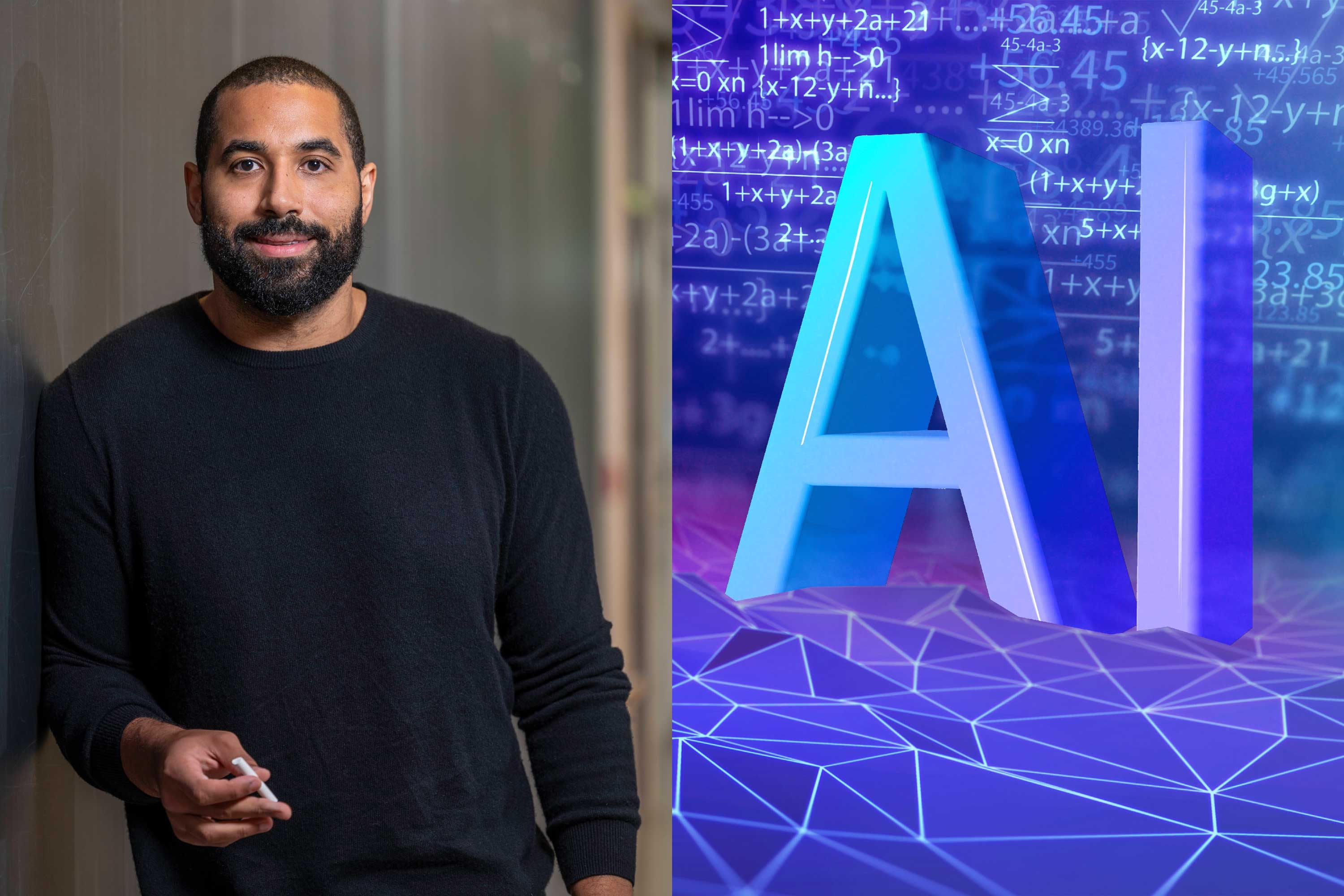
John Urschel PhD ’21,MIT 数学系“1956 届职业发展助理教授”,对锻炼肌肉并不陌生:在 MIT 获得博士学位之前,Urschel 曾作为巴尔的摩乌鸦队的进攻锋线球员,锻炼自己的“进攻肌肉”。他仍致力于帮助自己的学生锻炼,但现在他的重点是批判性思维技能。在课堂上,Urschel 与学生分享自己一生对解谜的热爱,同时磨炼他们成为强大的定性思考者的能力——他认为,在人工智能赋能的世界里,这些技能将至关重要。
Urschel 最近在 arXiv 上发表了两篇预印本,一篇关于随机矩阵的增长因子,另一篇关于高斯消元法中的最坏情况行为;在这两篇论文中,他结合人类洞察力与 AI 工具,解决了困扰数学家数十年的问题。这段经历让 Urschel 对数学和高等教育的未来,以及大学校园所提供的面对面、住宿制教育的持久重要性,有了新的洞见——在校园里,学生可以体会到挣扎、解决问题和人际联结的重要性。Urschel 最近与 MIT News 谈了教育、AI 和数学;以下为对话摘录。
问:关于学习数学,您希望与学生分享的是什么?
A:我很小的时候就喜欢解谜,不管是数独、Martin Gardner 的数学谜题还是填字游戏。我觉得,面对一个你并不完全理解的问题,努力弄清自己的方位,设法一路摸索下去,最终从中获得某种理解,这个过程本身就非常令人享受。这是我从记事起就一直乐在其中的过程,也是我在数学中真正最喜欢的东西。
说到教学,首先,我想帮助学生们自我训练,磨炼他们解决问题的能力,以及成为出色的定量思考者的能力。
第二点则更针对我所教的每一门具体课程,就是帮助他们吸收那些能让他们在特定学科中成为更好的问题解决者的大概念、工具、技术或主题。如果他们正在上一门特定学科的课,我的想法是尽力传达重要的基础知识,让他们能运用所学到的专业知识,在现实世界中成为更好的问题解决者。
Q:你最近用 AI 辅助完成了两个证明。能谈谈这段经历吗?
A:这是我头两篇接触了机器的论文,感觉确实不一样。这有点像有一位合作者,但这位合作者似乎能调用无限的资源,而且做某些事情的速度比我快得多得多。
就像计算机做计算比我们任何人都快得多一样,我认为到现阶段已经非常清楚,人工智能系统做某些类型的数学比我们任何人都高效得多得多。
Q:用 AI 解数学题是什么感觉?也同样有成就感吗?
A:就我个人而言,我会说,我刚才谈到的那种解决问题的感觉、那种靠思考打通一个问题的感觉,在我独自完成、不借助 AI 的时候,是最让我感到快乐的。
我认为有一点非常重要,那就是拥有独立的解题能力、拥有好奇心——也就是锤炼这些数学肌肉,我认为即便在 AI 时代,这一点依然重要。
尤其是当你与机器对话、向机器提问的时候,我认为提升「理解」这一概念非常重要。比如说,你在跟机器对话,它给出了某个数学事实的证明,我认为那个证明的真正价值来自人类的理解与吸收——理解机器是如何组合某些数学思想的,然后将其内化,并把这份知识传达给他人。
理解是我对那些使用 AI 系统的学生所强调的重点。而对于不使用 AI 系统的学生,我则专注于培养他们的解题能力,这也是我们在数学领域做了几百年的事。
我认为在现代 AI 机器的时代,只要人类仍有思考并尝试解决问题的角色——我相信这样的角色依然存在——那么培养这些技能就仍然重要。
Q:MIT 教学、学习与研究培训中 AI 使用特设委员会最近的报告强调,体验学习中那种必要且有成效的挣扎很重要,学习的协作性也同样重要。我很想知道你如何看待 AI 在未来数学教育中的角色。
A:一方面,AI 技术的发展应当被视为教育领域的一大胜利,也是促进公平竞争的一大胜利——当技术易于获取、能让你接触到海量知识时更是如此。
我的父母都不是教授;我记得小时候,直到上大学我才知道数学家是做什么的。我在高中以及后来上大学时学习高等数学概念的方式,都是靠一台笔记本电脑和 Google。我可以搜索任何我想了解的主题,能免费在网上找到世界顶尖专家写的论文,触手可及,随时可以学习,这让我感到惊叹。这对我非常重要,对我的教育帮助极大。
但我认为,我们如今处在一个现代技术有点像双刃剑的阶段。因为一方面,借助 AI 系统,你能以前所未有的速度学到东西;与我小时候拥有的资源相比,如今你能用来帮助自己学习的手段简直微不足道。
但问题在于,这也会剥夺你独立思考和自主学习的能力。我认为,如果你是高中生或大学生,这很难。你要忙的事情很多,你很疲惫,而多亏了 AI,你只需按一下按钮就能完成作业,按一下按钮就能写完那篇 10 页的论文。此外,你还可能产生一种错觉,以为自己多少懂了,其实根本没有。我认为,当你不再试着自己去学习时,这就是最大的危险之一。
人们不喜欢“挣扎”这个词。但当你自己不在一门学习内容上挣扎时,我认为你会产生一种学会了、但实际上并没有真正学会的错觉。与学习内容建立联系并真正逼自己一把,这是一种相当重要的能力。
当然,教职员工和授课教师这一边也有工作要做:确保我们的习题课尽可能有用;确保我们的答疑时间以最佳方式服务学生;鼓励学生,并尽量提醒他们,他们对自己的教育负有一定责任,最好的方式就是来参与、到场并与学习内容互动。但我们也应当认识到,我们对学生负有责任,要为他们提供尽可能好的学习体验,并给他们一个既有挑战性、又是他们愿意参与其中的优质教育产品。
问:鉴于 AI 技术已经取得的进步,你为什么仍然鼓励学生攻读数学?你仍然认为数学的未来令人兴奋吗?
答:是的,原因有很多。学习如何思考这一行为将比以往任何时候都更加重要。成为专家、掌握所有这些唾手可得的知识,这种观念在拥有一台掌握所有这些资源的机器时,或许就没那么重要了。我认为可能变得更加重要的,是独立思考的能力。因为随着这些机器的存在,一个自然的担忧是,随着一代又一代人过去,普通人群中这种能力会减弱,所以我认为这种能力将变得极为宝贵。我认为数学以及更广泛意义上的定量科学方面的训练,对此相当重要。
第二点是社群。我认为,学习不是独自一人,而是与一群同伴一起,会极大地提升整体体验。这是这种体验中不可或缺的一部分。我想说,这两点正是我认为仍然要学习数学、学习定量科学的原因,也是为什么仍然要去上课、到课堂去的原因。
原文较长,译文为节选;译文由英文原文机器翻译,术语按行业惯例统一,可在文末展开原文核对。
查看英文原文(Q&A: Why building math muscles remains important in the AI era)
John Urschel PhD ’21, the Class of 1956 Career Development Assistant Professor in the MIT Department of Mathematics, is no stranger to building muscle: Before earning his PhD at MIT, Urschel strengthened his offensive muscles as a lineman for the Baltimore Ravens. He remains committed to helping his students exercise, but now his focus is on critical thinking skills. In the classroom, Urschel shares with his students his lifelong love for solving puzzles, while honing their abilities to be strong qualitive thinkers — skills he argues will be essential in an artificial intelligence-enabled world.
Urschel recently published two preprints on arXiv, one on the growth factor of random matrices, the other on worst-case behavior in Gaussian elimination, in which he used a combination of human insight and AI tools to solve problems that had stumped mathematicians for decades. That experience provided Urschel with new insights into the future of mathematics and higher education, and the enduring importance of the in-person, residential education offered on college campuses, where students can experience the importance of struggle, problem solving, and human connection. Urschel recently chatted with MIT News about education, AI, and mathematics; excerpts from the conversation follow.
Q: What is it about studying math that you hope to share with your students?
A: When I was very little, I loved solving puzzles, whether that’s Sudoku puzzles or Martin Gardner math puzzles or crossword puzzles. I think there’s something really enjoyable about being faced with some problem that you don’t quite understand, trying to get your bearings, trying to make your way through it, and finally gleaning some sort of understanding from it. That’s a process that I’ve enjoyed for as long as I can remember, and that’s the thing that I’ve really enjoyed most about math.
When it comes to teaching, first, I want to help our students train themselves and hone their ability to solve problems and their ability to be strong quantitative thinkers.
The second part, which is more specific to whichever course I’m teaching, is to help them assimilate the big ideas or tools or techniques or themes that help them become better problem solvers in that specific discipline. If they’re taking a course on a specific subject, the idea is for me to try to convey important fundamentals so that they can use that learned expertise to become better problem solvers out in the world.
Q: You recently used AI to assist in solving two proofs. Can you talk a bit about the experience?
A: These are the first two papers where I’ve ever touched the machine, and it does feel different. It’s not unlike having a collaborator, but it’s a collaborator who has access to unlimited resources, seemingly, and does certain things much, much faster than I ever could.
In the same way that computers can do calculations much faster than any of us can, I think at this point it’s very clear that artificial intelligence systems can do certain types of mathematics much, much more efficiently than any of us can.
Q: What was it like using AI to solve math problems? Was it just as rewarding?
A: For me, personally, I would say that the feeling that I talked about of problem solving, of thinking your way through a problem, I find that that’s most joyful for me when I do that by myself, without AI.
One thing that I think is really important is to have an independent sense of problem-solving ability, a sense of curiosity — this idea of building those mathematics muscles, which I think are important, even in the era of AI.
Especially when you are talking with a machine, asking the machine for things, I think it’s very important to elevate the idea of understanding. If you’re talking to a machine, let’s say, and it gives you a proof of some mathematical fact, I think the true value in that proof comes from a human understanding and assimilating the way in which the machine combines certain mathematical ideas, and then internalizing that and communicating that knowledge to others.
Understanding is the big thing that I stress to my students who use AI systems. And then for the students who do not use AI systems, I focus on building their problem-solving abilities, which is what we’ve done for centuries in mathematics.
I think in the age of modern AI machines, as long as there is a role for humans to think and try to solve problems, which I believe there is, then building these skills remains important.
Q: The recent report from MIT’s Ad Hoc Committee on AI Use in Teaching, Learning and Research Training stressed the importance of experiencing the necessary and productive struggle of learning, along with the collaborative aspect of learning. I’m curious what you think about the role of AI in math education going forward.
A: On one hand, the development of AI technologies should be viewed as a giant win for education, a giant win for leveling playing fields when you have technology that’s easily accessible, that gives you access to vast amounts of knowledge.
Neither of my parents are professors; I remember when I was a kid, I didn’t know what a mathematician was until I got to college. And the way I learned about advanced mathematical concepts in high school, but also when I got to college, was with a laptop, and with Google. I was able to Google some topic I want to learn about, and it was amazing that I could find papers written by some of the world’s leading experts, just freely available online at my fingertips to learn from. That was really important for me and so helpful for my education.
But I think we’re at a point where modern technology is a bit of a double-edged sword. Because on one hand, with AI systems you can learn something faster than ever, and the resources I had when I was a kid would seem like small potatoes compared to the sorts of things you can do to help yourself learn nowadays.
But the issue is that this also can take away your ability to think and learn for yourself. I think it’s hard if you’re a high school student or you’re a college student. You have a lot going on, you’re tired, and thanks to AI, you can just finish your homework with the push of a button. You can write your 10-page essay with the push of a button. Also, you can get the false impression that you more or less understand what’s going on when you really don’t. I think that’s one of the big dangers when you don’t try to learn things for yourself.
People don’t like the word “struggle.” But when you don’t struggle with a certain material on your own, I think you can get the impression of learning without actually learning. Connecting with the material and really pushing yourself, that’s quite an important skill.
Certainly, there’s work to do from the faculty and instructor side: to make sure that our recitations are maximally useful; to make sure that our office hours are serving students in the best way possible; to encourage the students and try to remind them that they have some responsibility for their education, and that the best way is to come and show up and interact with the material. But we should also recognize our responsibility to the students to deliver them the best learning experience possible and to give them an educational system that challenges them but also is a quality product they want to come and take part in.
Q: Why would you still encourage students to pursue studies in mathematics given the advances AI technologies have made? Do you still see the future of mathematics as exciting?
A: Yes, for a multitude of reasons. The act of learning how to think is going to be more important than ever. This idea of being an expert, of knowing all these things, which are easily available and at your fingertips, is perhaps a little less important when you have a machine that has all these resources. I think something that may become even more important is the ability to think for yourself. Because with the existence of these machines, I think a natural fear is that that skill set is going to lessen in the general population as generations move on and on, and so I think that ability will be at a premium. I think training in mathematics and quantitative sciences more generally is quite important for that.
The second thing is community. I think learning, not by yourself, but with a group of peers, greatly improves the overall experience. It’s an integral part of the experience. I would say those two things are the reason why I think it’s still important to study math, to study quantitative sciences, and also why it’s still important to come and go to class.
The world is changing fairly rapidly. I think we as an institution have a responsibility to prepare students for that. We’re having lots of conversations about this right now because the ability to think, reason, and solve problems are core skills that our students, I think, will need now more than ever. I also think we need to make sure that we’re preparing our students for the world that they’re about to enter into. The exact way that we teach our students, or prepare our students for the world, absolutely cannot look like what it was 10 years ago. Because this world simply looks quite different.
正文保留英文原文,标题与摘要由机器翻译。
原文发布于 MIT News AI(Q&A: Why building math muscles remains important in the AI era),标题、摘要与正文由机器翻译,术语按行业惯例统一,未经人工逐句校订。