TE Connectivity 在 OCP 峰会 2026 的访谈
TE Connectivity OCP Summit-26
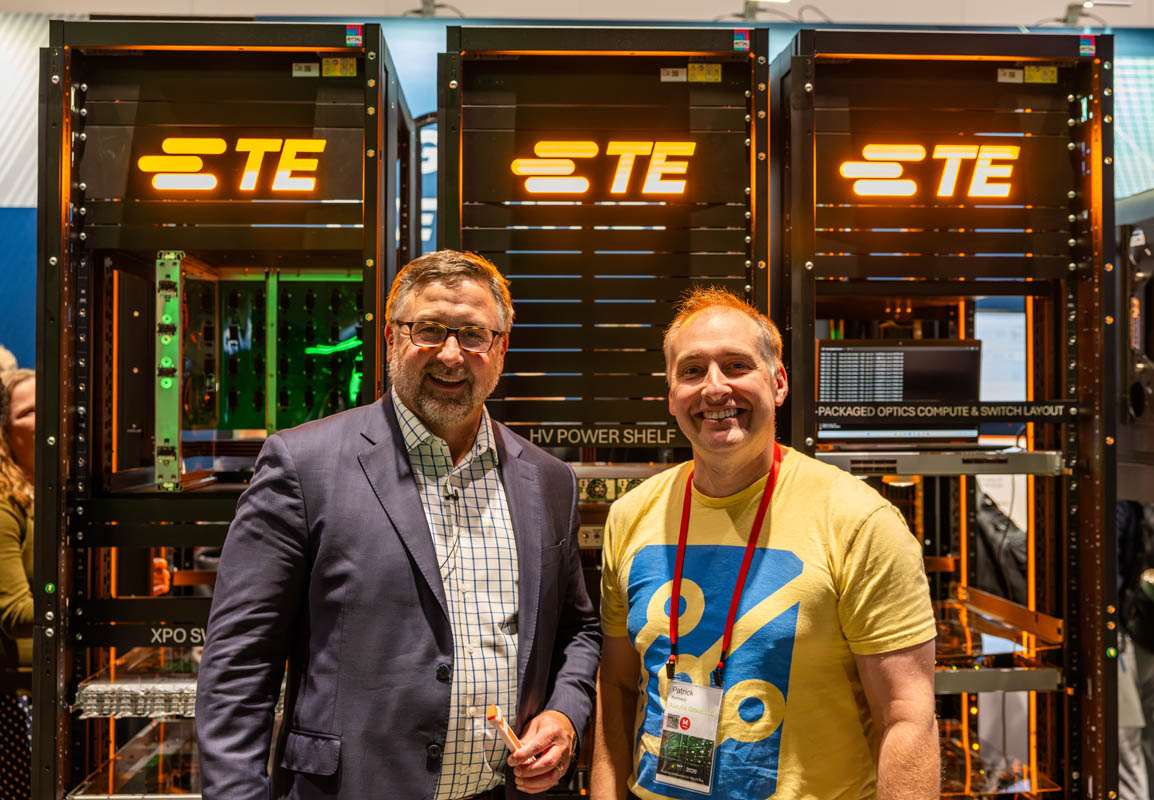
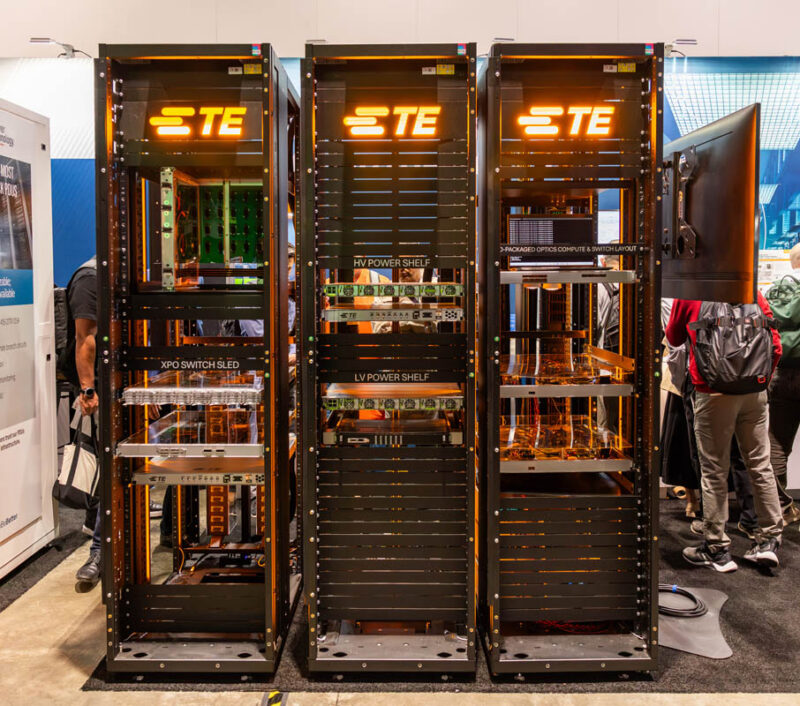
在 2026 年 OCP 全球峰会上,我有机会与 TE Connectivity 数字数据网络(DDN)业务的产品管理副总裁 Brian Payne 坐下来交流。我们许多读者会因为他在 Dell 工作 26 年而认识 Brian,但我们交谈时,他加入 TE Connectivity 才大约一个月。TE 的展台围绕三个相互连接的系统级机架搭建:一个光互连机架、一个边车式供电机架,以及一个铜互连 IT 机架,因此我们逐一了解了高速互连、供电,以及为什么 TE 认为随着 AI 基础设施规模扩大,其系统级方案很重要。我们此前在 STHLabs 上发布了一段简短的展台导览视频,获得了出乎意料的关注,所以我们决定用在现场做的这段采访作为后续。
一如既往,我们为便于阅读做了轻微编辑。
OCP 上的 Brian Payne 与 TE Connectivity
Patrick Kennedy:Brian,能简单介绍一下你自己吗?
Brian Payne:当然。首先,谢谢。很高兴再次见到你。我是 TE Connectivity 的产品管理副总裁。我在这行有很长的经历,在 Dell 待了 26 年。
Patrick Kennedy:能给我们介绍一下 TE Connectivity 的背景吗?
Brian Payne:TE Connectivity 是一家规模非常大的公司,为多个行业制造并提供连接解决方案。但我们现在做的最令人兴奋的事情之一,是在我们称之为 DDN 的数字数据网络部门。过去三年我们经历了巨大的增长,全都是在建设支撑我们今天所做一切的 AI 基础设施。这是一个令人兴奋的领域,前方还有巨大的上升空间。
TE Connectivity OCP Summit-25
Patrick Kennedy:作为其中的一部分,TE Connectivity 因其对 OCP 的贡献而广为人知。
Brian Payne:TE Connectivity 从 2017 年起就是 OCP 的一员,那还是很早的阶段。如你所见,看看我们周围。OCP 在增长方面刚刚迎来爆发。TE Connectivity 专注于 AI 基础设施各个领域的电源与连接。我们做出了巨大的贡献,今天我们将谈论其中一些令人兴奋的成果。
448G 与下一代前面板连接
Patrick Kennedy:你手里拿着一些东西,我觉得你对此非常兴奋。能告诉我们这些是什么,并给我们稍微展示一下吗?
TE Connectivity USFP 3D Print OCP Summit 2026 3 Large
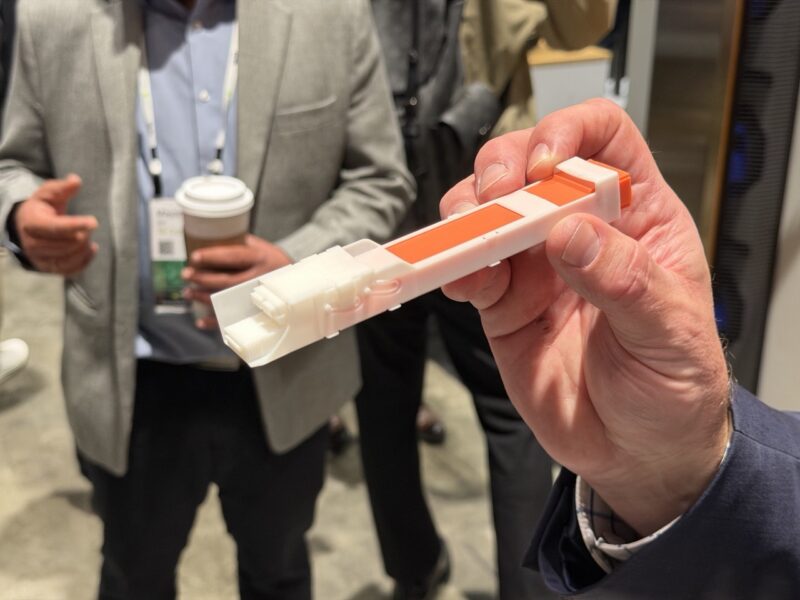
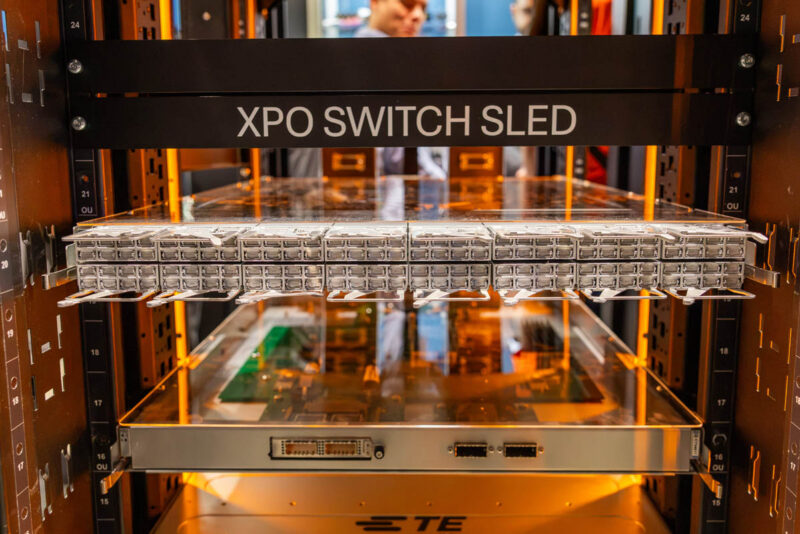
Brian Payne:当然可以。在 TE Connectivity,我们思考的是如何为数据中心提供电力,以及如何实现连接。每一次芯片创新都会带来越来越多的带宽。你如何把它从计算托盘中引出,又如何把它接入网络?挑战之一就是达到 448。要在热管理和信号完整性之间取得平衡,存在很多挑战,业界也在推动寻找合适的解决方案。我想说,目前有两种相互竞争的方案。一种是 XPO,它是一种大型的。
TE Connectivity OCP Summit-18
Patrick Kennedy:这里要说明一下,这些都是 3D 打印的模型。
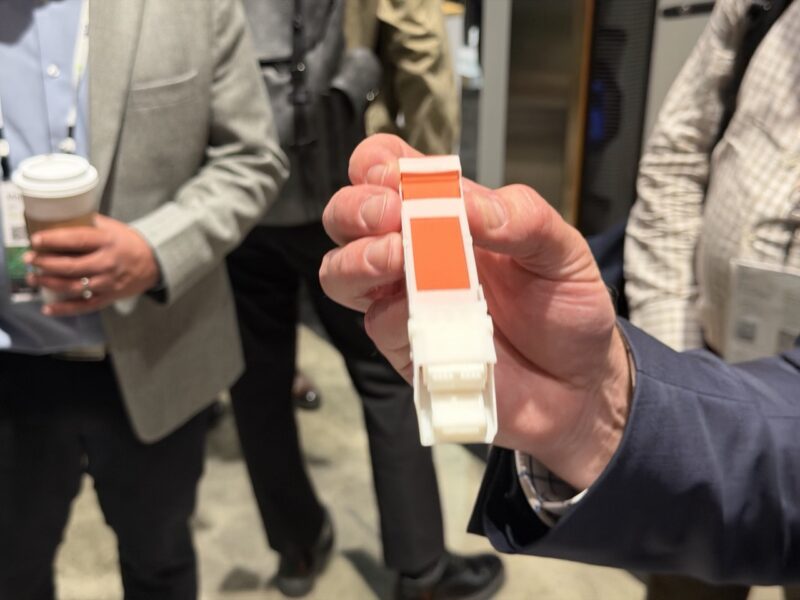
Brian Payne:我之所以拿着一个 3D 打印模型,是因为就在本周一(在 2026 年 10 月的 OCP 峰会上),我们与 NVIDIA 和 Cisco 合作,发布了实现 448 的新标准。这就是我手里拿的这个东西。你会看到,它的外形尺寸与今天的 QSFP 类似。我们想做的一件事,是在信号完整性、供电和外形尺寸之间取得平衡,而不是过分偏重其中任何一项。我们相信我们拿出了胜出的方案。
TE Connectivity USFP 3D 打印 OCP 峰会 2026 2 Large
说到概念开发,这正是我们这里所做的事情。光模块滑入其中,我们有一种独特的方式把它压紧,从而把供电和信号完整性分开处理。所以我们的信号完整性非常非常强。这个设计还考虑到了这一点:随着光模块功率不断提升,我们将能够采用冷板液冷把热量从系统中带走。
TE Connectivity OCP Summit-33
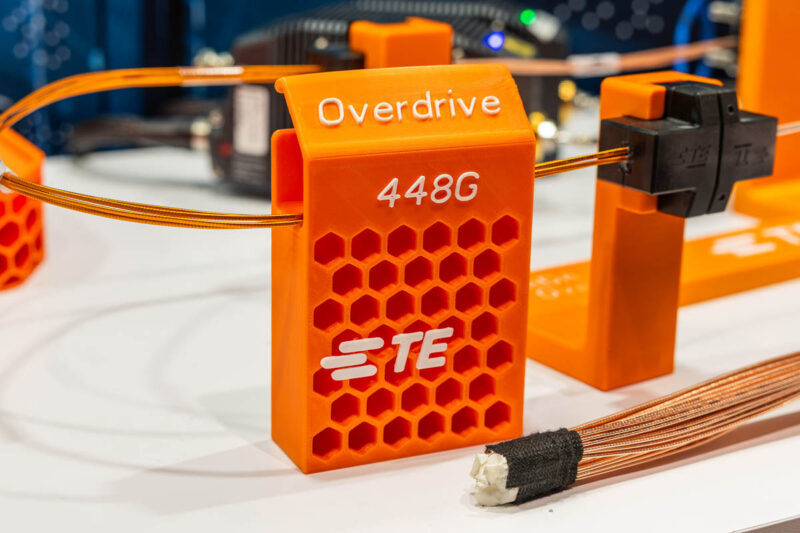
Patrick Kennedy:你说 448G,指的是 SerDes,实际上就是每通道的通信速率。
TE Connectivity OCP Summit-38
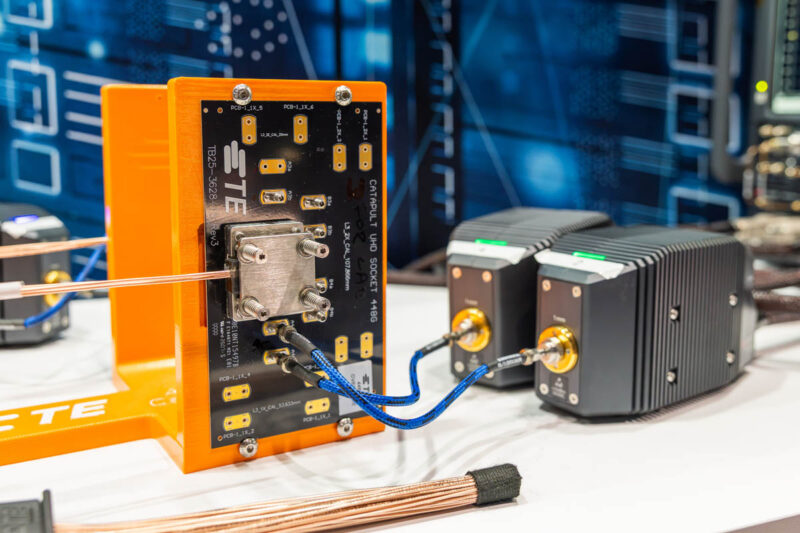
Brian Payne:没错。
TE Connectivity OCP Summit-34
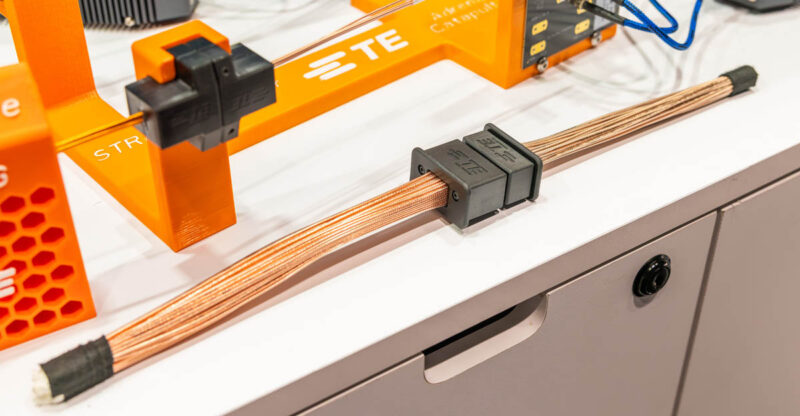
Patrick Kennedy:当我们开始讨论每比特皮焦耳这类指标,或者说传输数据要消耗多少功耗时,这就非常关键了。不过,除了 USFP 之外,你身后还有不少使能技术。也许我们应该从这边的铜互连开始说起。
铜背板与中板
Brian Payne:行业内取得重大突破的领域之一就是铜背板技术,以及铜背板与中板的组合。我们这里的这个产品就是一个中板设计的示例:计算插箱(compute sled)可以连同供电模块一起滑入。采用这种中板设计,你就能把计算部分与 GPU 分开,然后通过中板轻松地将它们连接起来。而在背面,我们则采用铜背板。就为这些机架级解决方案带来的突破而言,这是一种技术含量极高、工程化程度极高的方案,而且我们必须以极大的规模量产。
TE Connectivity OCP Summit-21
TE 是业内为数不多能够做到这一点的公司之一。市场上这样的公司寥寥无几,我们对此感到振奋。我们的关注点从芯片一直延伸到交换机。我们在近芯片封装方面有创新,在光通信方面也有创新。我们在考虑前端和后端 I/O 连接以及两者之间的线缆。在所有这些环节,我们都有创新和产品,而且如今正以极大的规模部署。
Patrick Kennedy:AI 部署中一个有意思的现象是,一个机架里的每一个机箱内部都在进行数量惊人的通信通道。你如何做到第一,不消耗过多功耗、不产生过多热量,同时又能保证可靠性?我想这正是 TE Connectivity 需要投入大量精力的地方。
Brian Payne:我来到 TE Connectivity 后发现的一件事——这对我来说是个惊喜——就是前端的研发。我们如何攻克材料科学方面的难题,开发出必要的零部件,从而释放带宽的大幅提升,并应对驱动这些芯片、推动数据在网络中传输所需的全部功耗?
光学与共封装光学
Patrick Kennedy:如今有许多技术都致力于延长铜缆的可用寿命,但下一代真正的方向是光学。我想你这边就有一个相关的演示。
TE Connectivity OCP Summit-1
Brian Payne:这里我要说的重点是,你可以回溯到 10 千兆以太网时代,当时我们就说铜缆的终结即将到来,而铜缆在业界依然普遍存在。话虽如此,光学已经就位,并且在解决一个非常非常重要的挑战。这也是我们进行前瞻性探索和提前投资的一部分。今年早些时候,我们收购了一家光学公司 RAM Photonics。我们正在将其纳入产品组合,并在光学领域大举投资——从共封装光学到共封装铜,再到把光学移出系统。因此,我们有多项投资和新兴的新能力来支撑这一方向。
TE Connectivity OCP Summit-3
Patrick Kennedy:业界谈论共封装光学已经谈了很久很久,感觉像是永远。与 10 年前相比——当时人们说“哦,我们需要立刻上共封装光学”——如今发生的事情有什么不同?
Brian Payne:我认为这是物理层面的挑战——随着我们必须使用的通道数量不断增加,铜缆布线究竟还能走多远。总会有某一个时间点,我们不得不做出转向。我明白,这话在 10 年或 12 年前也说得出来,但随着我们面对这些挑战,它正变得越来越真实。这也是为什么我们在该领域的投资和产品化正在提速。但这并没有让我们停止对铜的投入,因为铜依然是当前最先进的技术,对于交付客户所期望的结果仍然很重要。这就是我们在两条线上同时投入的原因。
TE Connectivity OCP 峰会-6
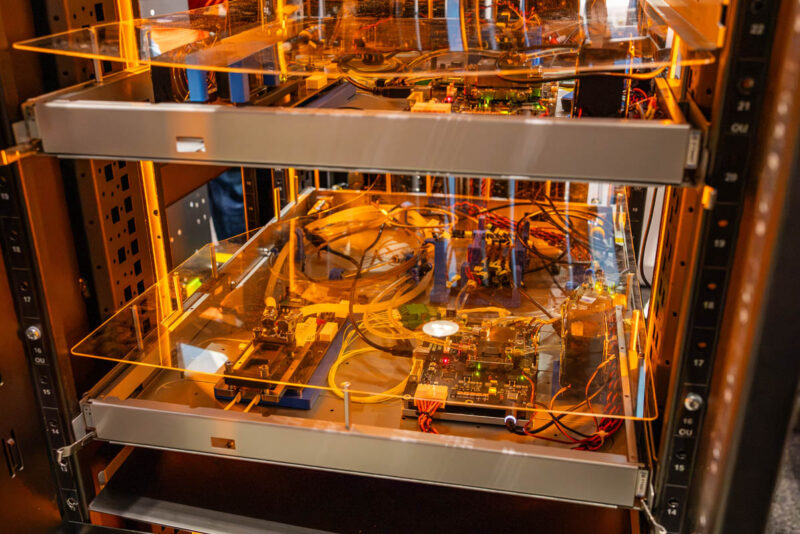
Patrick Kennedy:你们在展台上展示的内容之一,是围绕共封装光学(co-packaged optics)的一些创新,其中包括接入芯片封装、以便对其进行维护的连接器。这在五六年前人们甚至还不知道怎么做,而这是一项新的创新,能把共封装光学带入大众市场并真正实现部署。
原文较长,译文为节选;译文由英文原文机器翻译,术语按行业惯例统一,可在文末展开原文核对。
查看英文原文(TE Connectivity at OCP Summit 2026 The Interview)
TE Connectivity OCP Summit-26
At the 2026 OCP Global Summit, I had the chance to sit down with Brian Payne, Vice President of Product Management for the Digital Data Networks (DDN) business at TE Connectivity. Many of our readers will know Brian from his 26 years at Dell, but he had been at TE Connectivity for about a month when we spoke. TE’s booth was built around three interconnected system-level racks, an optical interconnect rack, a sidecar power rack, and a copper IT rack, so we walked through the high-speed connectivity, the power delivery, and why TE thinks its system-level approach matters as AI infrastructure scales. We previously published a short booth tour video on STHLabs that got a surprising amount of attention, so we figured we would follow it up with the interview we did while we were there.
As always, we lightly edited this for readability.
Brian Payne and TE Connectivity at OCP
Patrick Kennedy: Brian, could you tell us a little bit about yourself?
Brian Payne: Sure. First of all, thanks. It’s great to see you again. I am vice president of product management here at TE Connectivity. I’ve got a long history in this industry. I spent 26 years at Dell.
Patrick Kennedy: Could you give us a little bit of background about TE Connectivity?
Brian Payne: TE Connectivity is a very large organization that manufactures and provides connectivity across multiple industries. But one of the most exciting things we’re doing right now is in what we call DDN, our Digital Data Networks division. We have experienced massive growth over the last three years, all building out the AI infrastructure that’s powering everything we’re doing today. It’s an exciting space to be in, with tremendous upside ahead of us.
 TE Connectivity OCP Summit-25
Patrick Kennedy: As part of that, TE Connectivity is well known for its contributions to OCP.
Brian Payne: TE Connectivity has been a part of OCP since 2017, so very early days. And as you can imagine, look around us. OCP has just boomed in terms of growth. TE Connectivity is focused on power and connectivity across all domains in the AI infrastructure. We have made tremendous contributions, and there are some exciting ones we’re going to talk about today.
448G and Next-Generation Front-Panel Connectivity
Patrick Kennedy: You have some things in your hand that I think you are super excited about. Could you tell us what these are and show us a little bit?
 TE Connectivity USFP 3D Print OCP Summit 2026 3 Large
Brian Payne: Absolutely. At TE Connectivity, we’re thinking about how we deliver power for the data center and how we connect it. With every chip innovation, more and more bandwidth is coming. How do you get that out of the compute tray, and how do you get it into the network? One of the challenges is getting to 448. There are a lot of thermal challenges and signal integrity challenges to balance, and there’s a push in the industry to find the right solution. I would say there are two competing models out there. There’s XPO, which is a large.
 TE Connectivity OCP Summit-18
Patrick Kennedy: And just to be clear here, these are 3D-printed models.
Brian Payne: The reason I’ve got a 3D-printed model is that just Monday of this week (at the October 2026 OCP Summit), in a partnership with NVIDIA and Cisco, we announced our new standard for getting to 448. That’s what I have in my hand right here. You will see that it’s a similar form factor to QSFP today. One of the things we’re trying to do is balance signal integrity, power delivery, and form factor, and not over-index on one or the other. We believe we have a winner.
 TE Connectivity USFP 3D Print OCP Summit 2026 2 Large
When you talk about developing concepts, that’s exactly what we have here. The transceiver slides in, and we’ve got a unique way to compress it so that power delivery and signal integrity are handled separately. So our signal integrity is really, really strong. The design is also made so that, as we see the power of the transceiver escalate, we’ll be able to do cold plate liquid cooling to pull heat out of the system.
 TE Connectivity OCP Summit-33
Patrick Kennedy: When you say 448G, you’re talking about the SerDes and really the per-lane communication speed.
 TE Connectivity OCP Summit-38
Brian Payne: Absolutely.
 TE Connectivity OCP Summit-34
Patrick Kennedy: That’s a big deal when we start talking about things like picojoules per bit, or how much power it takes to move data. But there are also a number of enabling technologies beyond USFP that you have behind us. Maybe we should start with some of the copper over here.
Copper Backplanes and Midplanes
Brian Payne: One of the huge areas of breakthrough in the industry has been copper backplane technology, and a combination of copper backplanes as well as midplanes. What we have here is an example of a midplane design, where a compute sled slides in along with power delivery. By going with this midplane design, you’re able to separate compute from GPU and then easily connect those together through the midplane. Then on the back side, we’ve got copper backplanes. In terms of an unlock for these rack-scale solutions, it is a highly technical, highly engineered solution that we have to produce in massive volumes.
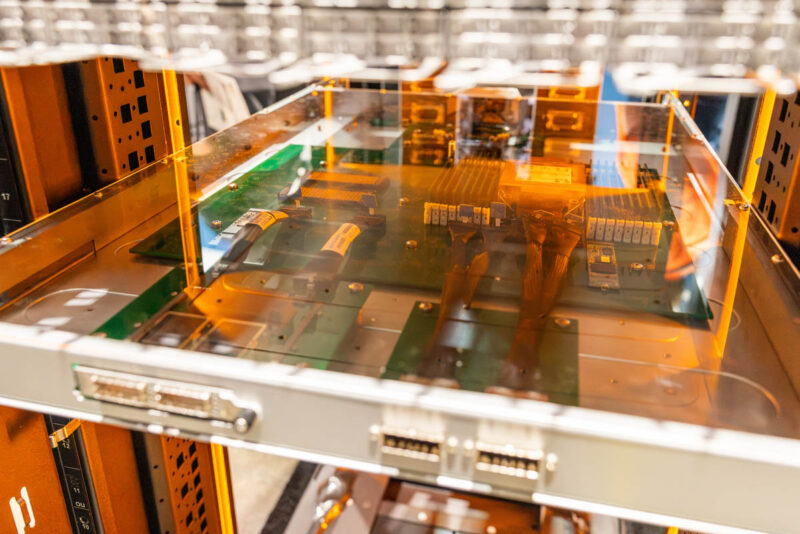 TE Connectivity OCP Summit-21
TE is one of the only companies in the industry that’s able to do that. There are very few in the market, and we’re excited about that. We are focused from the chip all the way to the switch. We’ve got innovation in near-chip packaging. We’ve got innovation around optics. We’re thinking about front and back I/O connectivity and the cabling in between. We’ve got innovation and products across all of those that are being deployed today at massive scale.
Patrick Kennedy: One of the interesting things in AI deployments is just how many lanes of communication are happening in every single box in a rack. How do you make that, number one, not use too much power and not create too much heat, but then also make it reliable? I imagine that’s a lot of what TE Connectivity needs to work on.
Brian Payne: One of the things I’ve discovered, and it’s been a pleasant surprise coming into TE Connectivity, is the R&D on the front end. How do we get through the material science challenges and develop the parts necessary to unlock these massive increases in bandwidth, and then deal with all of the power that’s required to push these chips and push the data across the network?
Optics and Co-Packaged Optics
Patrick Kennedy: There are a number of technologies today focused on extending the usefulness of copper, but the next generation is really optics. I think you have a demo of that over here.
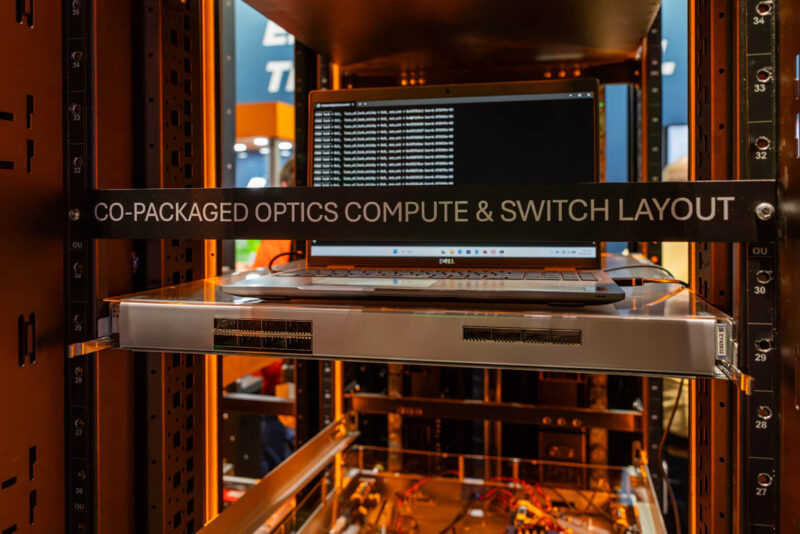 TE Connectivity OCP Summit-1
Brian Payne: The main thing I would say here is that you can go back to 10 Gigabit Ethernet, when we said the end of copper was coming, and copper is still prevalent in the industry. That being said, optics is there and solving a very, very important challenge. This is part of how we’re pathfinding and investing ahead. Earlier this year, we acquired an optics company, RAM Photonics. We’re bringing that into the product portfolio, and we’re massively investing in optics, from co-packaged optics as well as co-packaged copper, to getting the optics out of the system. So we’ve got a number of investments and new capabilities emerging to support that.
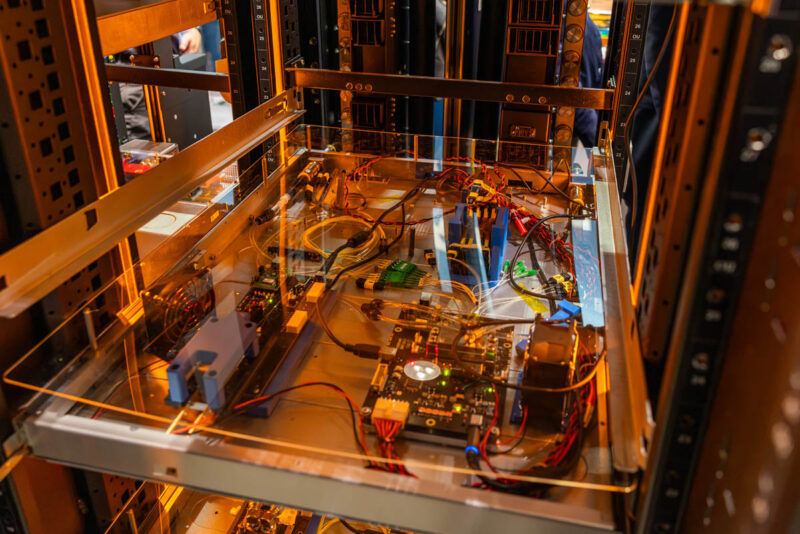 TE Connectivity OCP Summit-3
Patrick Kennedy: Folks have been talking about co-packaged optics in the industry for what feels like forever. What’s different about what’s happening today versus 10 years ago, when folks were saying, “Oh, we need co-packaged optics immediately”?
Brian Payne: I think it is the physics challenge, and how far you can route copper as we increase the number of lanes that are necessary. There is a point in time where we will have to make the pivot. I realize you could have said that 10 or 12 years ago, but it’s becoming more and more real as we face these challenges. That’s why our investment and productization are picking up in that space. But it’s not stopping our investment in copper, because copper is still the state of the art. It’s still important to deliver the outcomes our customers expect. That’s where we’ve got a dual investment.
 TE Connectivity OCP Summit-6
Patrick Kennedy: One of the things you’re showing in the booth is some of the innovation around co-packaged optics, with connectors that go into the chip package so that you can service them. That was something folks didn’t know how to do even five or six years ago, and it’s a new innovation to bring co-packaged optics to the mass market and actually deploy it.
Brian Payne: When these are deployed at scale, it’s not just about getting the signal across the line. It’s about how you think about the system-level design and the operation, and what this looks like at scale. So to your point, serviceability is a critical design vector that drives innovation. That’s part of the TE approach: how do we not just get the technology working, but do it in a way that will support the massive volumes this industry is driving?
Power: The Sidecar Power Rack and Horizontal Busbar
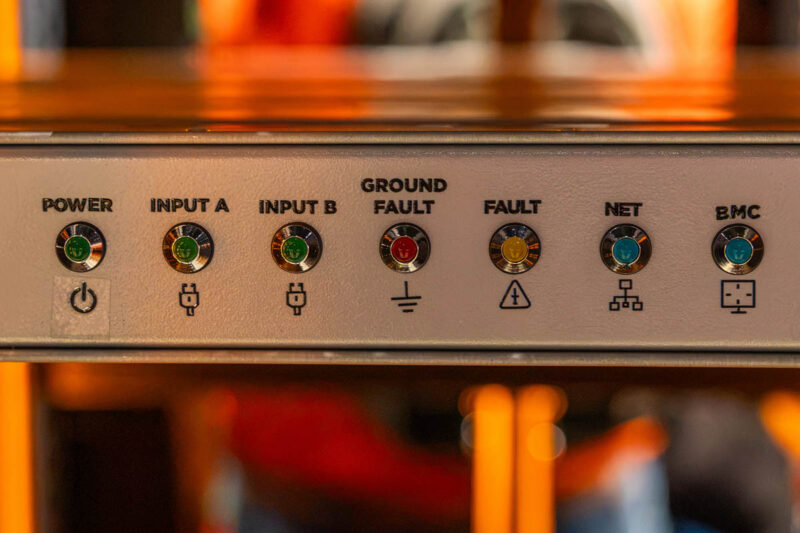
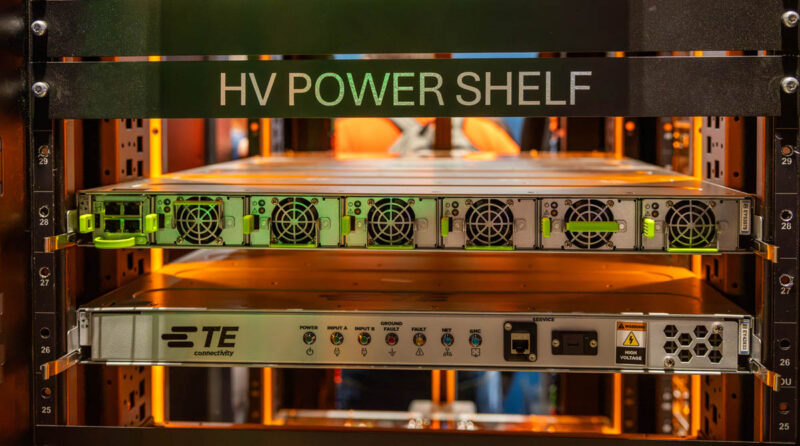
Patrick Kennedy: This is a power shelf and a power rack. Why do we have a power rack, with racks focused on data connectivity on either side?
 TE Connectivity OCP Summit-9
Brian Payne: To deliver the performance the industry is driving for, a massive amount of power is required to power the chips, and then to power the switches that connect them together. We simply don’t have the power density today to fit all of that in one rack, and that led to the innovation we see today. We’re starting to see sidecar designs like what we have here, which is a full rack of power distribution and cooling capabilities on one side.
 TE Connectivity OCP Summit-27
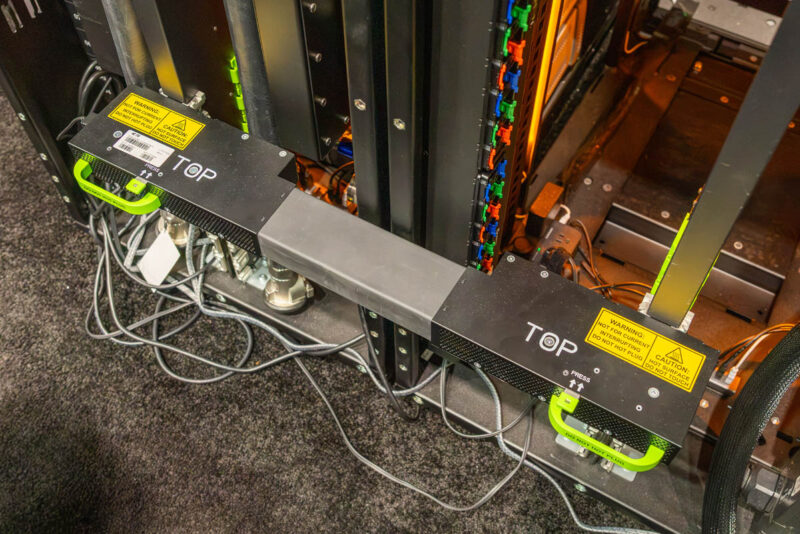
Then on the back side, when we get around there, we’ve actually got a busbar that runs horizontally, which is unique in the industry. Nobody’s done that. We did it to solve a problem with one of our large customers, and to deliver power to the next rack, the IT rack, with the IT equipment, the compute sleds, and the switches. That’s a great example of us thinking whip to chip. How do we put together a practical solution that addresses the ever-growing thirst for more and more power?
Patrick Kennedy: One of the really interesting things there is that the density challenge is actually in the nodes, so that you can get the copper connectivity within a rack. It’s actually using power to solve a connectivity challenge. And one of the big innovations is moving that power out of the rack and figuring out how to get a lot of current back into it.
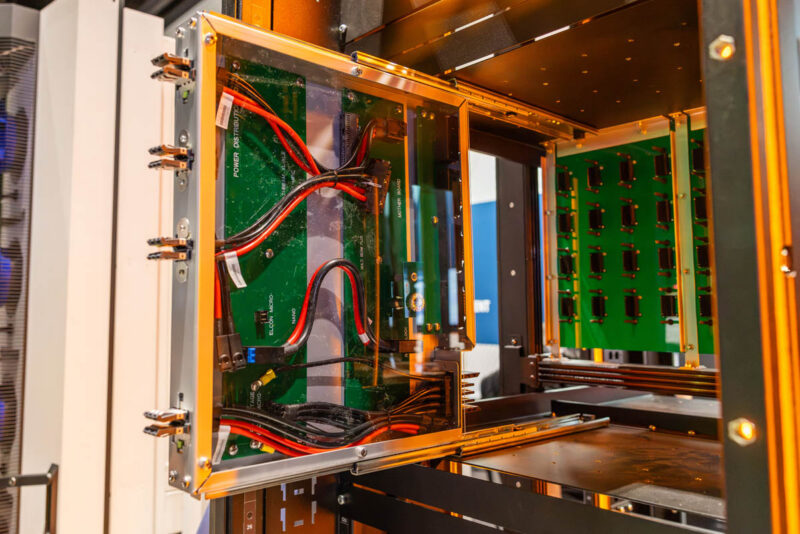
Brian Payne: Right. In this industry, we have talked about power constraints and half-full racks for years and years. We’ve talked about busbars, and none of that really took hold until the AI boom. That’s what led to the innovation where we are delivering liquid-cooled busbars that span the rack to deliver power across without having to amp up the current and the overall heat dissipation. It’s about finding that balance in power delivery, but doing it in an efficient way.
 TE Connectivity OCP Summit-16
The next frontier is high voltage. We’ve got pathfinding concepts on the back side here where we’re pushing towards 800 volt. That’s what’s going to be necessary to get to a megawatt of power at the rack level. So how do we solve practically for the limitations of today, and also prepare ourselves for the future?
800V and Rack-to-Rack Power
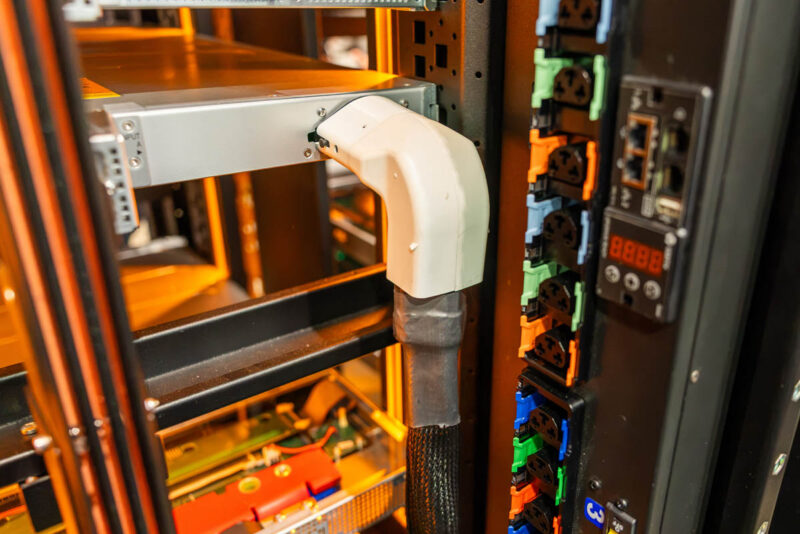
Patrick Kennedy: One of the cool things about 800 volt is that it provides a more efficient power distribution path, which means your data center is more efficient. But there are cool things you’re doing as well. That 800 volt busbar back there has liquid cooling.
 TE Connectivity OCP Summit-28
Brian Payne: Absolutely. And there are even things we can’t show you yet. Getting to 800 volt, number one, we’re thinking about how you get 800 volt all the way from the source. Every conversion has losses associated with it. So how do we bring it from the busways down into the rack, and then deliver it efficiently across the rack? To run this efficiently, liquid cooling to pull heat out is a critical element, and it’s something we’ve solved and have deployed across the industry.
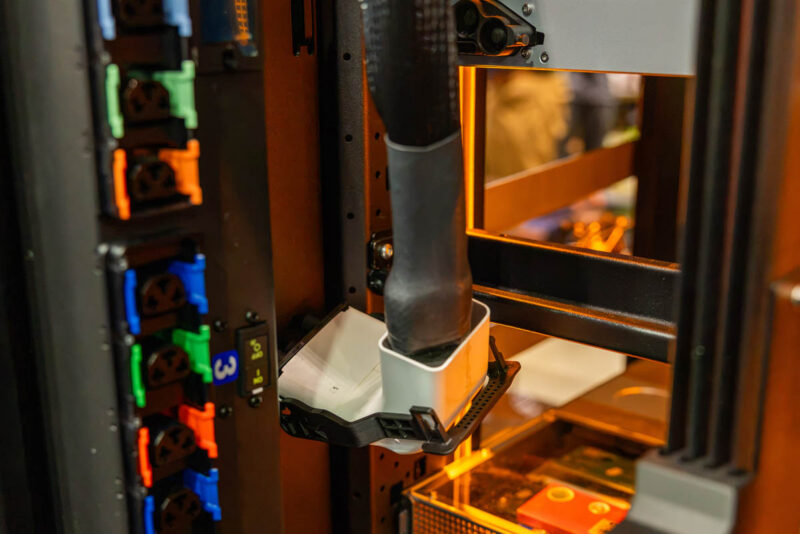
Patrick Kennedy: You have another solution, which is a big, giant rack-to-rack cable. Can you tell me a little bit about that?
 TE Connectivity OCP Summit-30
Brian Payne: Part of the issue is that once you get the power down to the IT equipment and you need to span multiple racks, you have to have an efficient way to get it rack to rack if a horizontal busbar isn’t the optimal choice. That’s why we’ve got prototype rack-to-rack 800 volt cables on the back of the system.
Patrick Kennedy: And that prototype is another example of how TE Connectivity is doing pathfinding with the OCP community and with customers to figure out how to solve these practical challenges.
Brian Payne: Our customer engagement starts in our customers’ data centers and in their offices, but also at places like OCP, where you can see we’re just covered up with people coming by. That inspires thought, new ideas, and future innovation. It’s super important to be a part of this community, to get those ideas in, show people what we’re thinking, and then iterate and evolve the designs going forward.
Pathfinding and Manufacturing at Scale
Patrick Kennedy: Could you give us some sense of how TE Connectivity doesn’t just make products for standards, but actually contributes to the pathfinding behind a lot of what is used in OCP?
 TE Connectivity OCP Summit-35
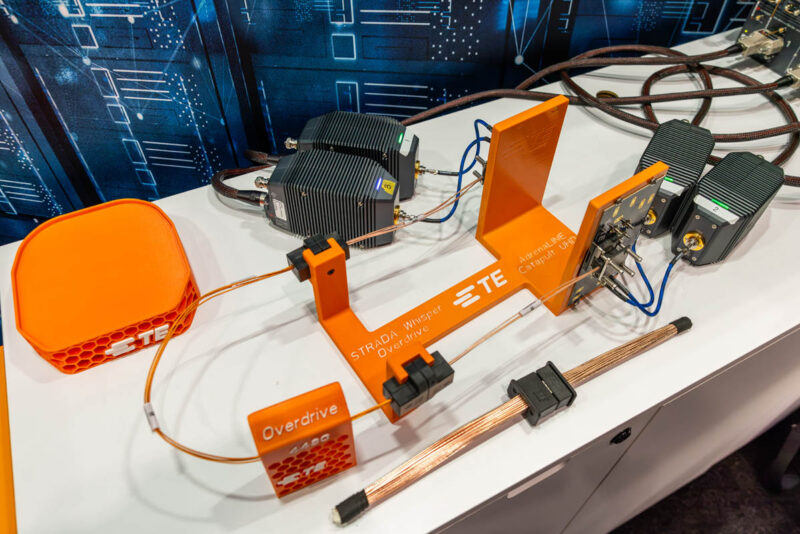
Brian Payne: Absolutely. I’ll take power as an example. We think whip to chip. We’re one of the few, if not the only, company focused on the entire power delivery of the AI infrastructure at the AI rack. That means we see the bottlenecks before they occur, and we’re able to project ahead. The industry has the ambition to get to a megawatt of power at the rack level, and that has a lot of hard challenges. Behind us here, you’ll see some of the concepts we’re working on for how we’re going to deliver power rack to rack in the future. We get feedback on those from customers in real time, and we’re able to course correct and be ready when the industry needs us to go to full mass production.
Patrick Kennedy: I would imagine there are a bunch of steps that go into that. It starts with what problem you’re trying to solve. But then there’s also how you make something manufacturable, that you can build for a large AI data center and for an entire industry that’s really building around OCP.
 TE Connectivity OCP Summit-7
Brian Payne: Everything starts with the customer. We’re partnering with the entire ecosystem, but especially the hyperscalers building out these AI data centers at a breakneck pace. The chip cycle, everything has moved faster, and we’ve got to be way ahead of where things are going: partnering, figuring out the problems they need to solve, innovating, delivering concepts, getting feedback, and continuing to iterate until we have the design the customers need.
Then that’s when we’ve got to shift to, “Oh my gosh, there are thousands of units to build to roll out in mass production.” We’ve got global manufacturing capabilities, and we’re able to rise up and produce high-quality, mass-produced parts to power the AI infrastructure we all enjoy today. TE Connectivity has a large global manufacturing footprint. We have 10 manufacturing facilities around the world, from China to Southeast Asia to North America, all focused just on the DDN business to power what’s going on in this industry.
What Is Driving TE Connectivity
Patrick Kennedy: Brian, I’ve known you for years. At the end of the day, what are the big things that are driving you?
Brian Payne: It all starts with our customers. What do they need us to do? They need us to be at the forefront of technology innovation, and they need us to be able to deliver to support their business. That means we have to be able to design high-quality products that solve the technical challenges we have. But just as important, we’ve got to be able to manufacture at scale. We’ve got that balanced investment where we can do that across power and connectivity to push the industry forward.
Patrick Kennedy: Awesome.
A big thank you to Brian for taking the time to walk us through TE Connectivity’s booth at OCP Summit 2026. The broader theme was that AI infrastructure is no longer just a chip problem.
TE Connectivity OCP Summit-25
Getting to 448G per lane, scaling copper while preparing for co-packaged optics, and moving rack power toward 800V and the megawatt-class rack all have to work together at the system level, and then be manufactured at scale.
原文为英文,正文由自动抓取并保留原文。
原文发布于 ServeTheHome(TE Connectivity at OCP Summit 2026 The Interview),标题、摘要与正文由机器翻译,术语按行业惯例统一,未经人工逐句校订。


