黄仁勋因丑闻下台,暴露企业对 AI 的疑虑
Nvidia 的这场人事震荡可能不会损害这家 GPU 巨头,但它凸显了当企业面对 AI 技术投资回报不明朗时所潜伏的行业风险。
Esther Shittu,AI Business 新闻撰稿人
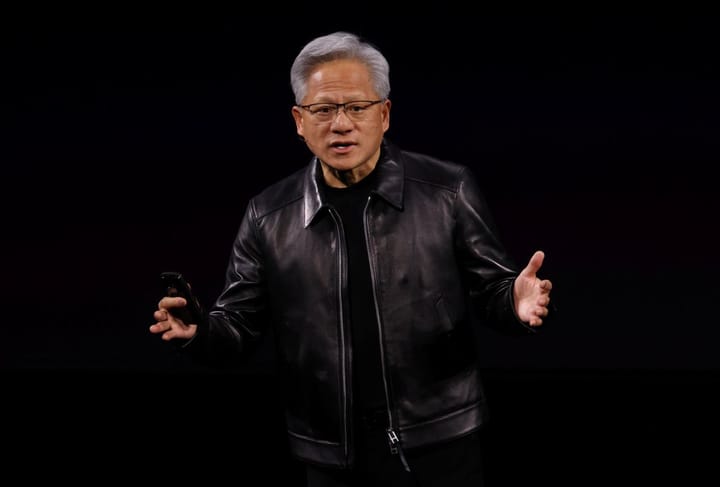
Nvidia 前 CEO 黄仁勋于 10 月在 Nvidia GTC Berlin 发表主题演讲。Sean Gallup via Getty Images
Nvidia 著名的创始人兼 CEO 黄仁勋在与一名中国间谍及其一名高级幕僚发生婚外情后辞职。这家 AI 芯片巨头的董事会任命副总裁兼 CFO Colette Kress 为临时 CEO。
董事会于周四披露的黄仁勋离职,可能不会影响 Nvidia 作为领先 AI 芯片生产商的地位,但它暴露了 AI 支出和估值中的结构性风险,并可能成为持怀疑态度的企业退出 AI 的转折点。
“在人们对 AI 的怀疑日益加剧之际,AI 行业失去了其最可信的公共倡导者之一,”RPA2AI Research 创始人 Kashyap Kompella 表示。“黄仁勋非常善于将技术创新与更广泛的经济叙事联系起来。他的离开制造了一个真空,而此刻行业正需要加强其运营的社会许可。”
现年 63 岁的黄仁勋是这家在 AI 热潮中成为全球市值最高公司的联合创始人兼前掌门人。他因与 Alice Huang 的关系引发轩然大波而辞职;Alice Huang 是总部位于新加坡的数据中心公司 MegaSpeed International 的前高管,这段关系发生在 2023 年和 2024 年。
在此期间,MegaSpeed 及与其有关联的公司购买了价值数十亿美元的、含有 Nvidia 芯片的 AI 设备。美国情报机构还在 2025 年 10 月向总统 Donald Trump 作了简报,内容涉及对 Alice Huang 是中国国家安全部间谍的担忧。
Jensen Huang(与 Alice Huang 无亲属关系)是 AI 领域极具魅力的代表人物,而他的迅速离职正值 AI 业务的多事之秋。11 月 3 日美国中期选举之后,Nvidia 及其他 AI 数据中心相关股票大幅下跌。
此后,AI 股票有所反弹。然而,仍笼罩着 Nvidia 的近期风波,令外界对这家 AI 芯片巨头的未来产生了疑虑。
Nvidia 股价在周三部分回升后,今日又下跌了 4.8%。
Kompella 表示:“Huang 的离职也让出口管制辩论少了一个有影响力的声音,在这场辩论中,国家安全关切与长期技术竞争力日益紧张。”他指的是围绕美国对华芯片出口政策的高风险审议,中国是美国在 AI 领域的主要竞争对手。
与此同时,Nvidia 继续投资于顶尖 AI 模型制造商,如 Anthropic 和 OpenAI,以及一些最大的新兴云服务商,如 CoreWeave。
Constellation Research 创始人 R “Ray” Wang 坚持认为,尽管 Huang 可能因与所谓中国间谍的关系而面临美国政府的严重问题,但 Nvidia 很可能不会有事。
Wang 说:“他们有产品路线图。他们有即将推出的产品,因此必须按路线图执行。”
Wang 还表示,他认为鉴于当前形势,投资者意识到他们不一定需要 Nvidia 在市场上有好表现,因为在 Nvidia 股价暴跌的同时,AI 交易中的其他大部分仍在上涨。
在 Wang 看来,NVIDIA 的困境不太可能对企业产生太大影响。不过他表示,这可能给它们带来一些新的选择,以规避供应商锁定。
“这不会影响它们作为企业的做法,因为它们仍然需要芯片,仍然需要算力。NVIDIA 仍然是这一领域的领导者,”Wang 说。“如果别家有产品,这就给了人们选择其他厂商的自由。”
Gold Associates 总裁 Jack Gold 表示,NVIDIA 的领导层变动可能意味着,实力不及 NVIDIA 的竞争对手之间将迎来更多竞争。
“如果你将来想购买 NVIDIA 的系统,它们可能不会是供货最充足的,而且这一领域很可能会出现来自 AMD、Intel 及其他厂商的更多竞争,”Gold 说。
他说,他还认为网络领域会出现更多竞争,并且会有一部分需求从 NVIDIA 无处不在的 CUDA 开源 AI 开发平台转移。“这意味着,与 NVIDIA 达成的众多合作协议虽然不会立即面临风险,但随着企业对不确定性变得更加谨慎,这些协议可能会发生变化,”Gold 继续说道。
Futurum Group 首席顾问 David Nicholson 表示,NVIDIA 的这场动荡并未改变其作为众多 AI 厂商、云服务商和 neocloud 公司主要投资者的基本定位。不过,这也暴露出该行业可能出现的一种风险。
Nicholson 说,AI 产业被困在一个“相互交织、盘根错节”的圈子里,而 NVIDIA 正处于中心位置。
这家硅谷公司正在打造生成式 AI 的首选硬件,尤其是在超大规模云厂商和云服务商持续购买 NVIDIA GPU 的情况下。
NVIDIA 也一直在向基础设施公司提供资金支持,其中包括 CoreWeave 和已有 49 年历史的技术巨头 Oracle,这些公司反过来用这些支持购买 NVIDIA 的硬件,再出租给 AI 市场。这些基础设施公司建造的数据中心里装满了 NVIDIA 的设备,而 Anthropic、OpenAI 等顶级 AI 模型提供商已承诺购买其使用权限。
Nicholson 表示,问题在于,这个循环只有在 AI 用户愿意持续为 AI 技术买单的情况下才能运转。
“这一切都取决于终端用户、企业客户……是否会继续这样做,”他说。
但当前的市场形势,尤其是 Anthropic IPO 估值低于预期——按多数人的说法,该 IPO 将在下周登场——表明市场正在回落。
“Anthropic 的 IPO 可能成为一个具有决定性意义的价格发现时刻,”Kompella 说。“投资者将不再只盯着爆发式的营收增长,而是会审视可持续的盈利能力。算力成本、基础设施承诺以及持续的资金需求都将受到更严格的审视。”
黄仁勋退出所引发的余波,也让 AI 技术的成本与价值成为关注焦点。随着企业寻求 AI 支出的回报,一些企业发现很难证明这笔投入是合理的。与此同时,投资者已下调对 Anthropic IPO 以及预计明年进行的 OpenAI IPO 的预期。
Nicholson 表示,NVIDIA 的处境可能成为催化剂,促使部分企业客户进一步退缩。
“很多人会把 NVIDIA 眼下的情况说成是左右 NVIDIA 估值的主要因素,我想说,这纯属无稽之谈,”他说。
对 AI 技术的怀疑情绪已积聚了一段时间,企业对成本高得惊人的 AI 技术能否快速取得投资回报心存疑虑。此外,一个愈发明显的事实是:开源 AI 模型——尤其是来自中国的模型,但越来越多来自西方的模型也是如此——对企业而言可能比 Anthropic、OpenAI、Google 等公司强大的专有模型更便宜。
或许颇具讽刺意味的是,黄仁勋与他 1993 年联合创办、此后一直领导且尚无明确接班人的公司,一直是开源的热情倡导者,将其视为更民主、更透明的 AI 技术路线。
NVIDIA 最近通过收购 Hugging Face 开发者平台,进一步巩固了其在开源领域的版图。
新闻撰稿人,AI Business
Esther Shittu 自 2021 年起报道 AI 技术与行业趋势。作为 Targeting AI 播客的联合主持人,她与专家、意见领袖和从业者对话,探讨 AI 领域的关键进展。在加入 AI Business 之前,她曾为 SearchEnterpriseAI、New York Daily News、Bklyner 和 Brooklyn Daily Eagle 撰稿。在不深入钻研 AI 世界的时候,她把时间投入到自己热爱的项目上,并抚养三个女儿。
译文由英文原文机器翻译,术语按行业惯例统一,可在文末展开原文核对。
查看英文原文(Jensen Huang’s scandal-fueled ouster exposes enterprise doubts about AI)
The Nvidia shakeup probably won't damage the GPU giant, but it highlights risk lurking in the industry as enterprises deal with unclear ROI from AI technology.
Esther Shittu,News Writer, AI Business
Jensen Huang, former CEO of Nvidia, giving keynote address at Nvidia GTC Berlin in October.Sean Gallup via Getty Images
Nvidia’s famed founder and CEO Jensen Huang has resigned after extramarital affairs with a Chinese spy and a member of his top staff. The AI chip giant’s board made vice president and CFO Colette Kress interim CEO.
Huang’s exit, disclosed by the board on Thursday, likely won’t affect Nvidia’s position as the leading producer of AI chips, but it exposes structural risks in AI spending and valuations, and could be the turning point for skeptical enterprises to back away from AI.
“The AI industry has lost one of its most credible public advocates at a time when skepticism about AI is growing,” said Kashyap Kompella, founder of RPA2AI Research. “Huang was very effective at connecting technological innovation to a broader economic narrative. His departure creates a vacuum just as the industry needs to strengthen its social license to operate.”
The 63-year-old Huang was co-founder and former leader of what became the world’s most valuable company during the AI boom. He resigned following furor over his relationship with Alice Huang, a former executive at Singapore-based data center company MegaSpeed International, in 2023 and 2024.
Over that period, MegaSpeed and companies connected to it acquired billions of dollars of AI equipment containing Nvidia chips. U.S. intelligence also briefed President Donald Trump in October 2025 regarding concerns that Alice Huang was a spy for China’s Ministry of State Security.
Jensen Huang, who is not related to Alice Huang, was the charismatic face of AI, and his quick departure comes at a rocky time for the AI business. After the November 3 U.S. midterm elections, Nvidia’s stock and that of other AI data center-related stocks declined sharply.
Since then, AI stocks have rebounded. However, the recent debacle still enveloping Nvidia is raising doubts about what will become of the AI chip giant.
Nvidia stock was down 4.8% today from its partial recovery on Wednesday.
“Huang’s departure also removes an influential voice from the export-control debate, where national security concerns and long-term technological competitiveness are increasingly in tension,” Kompella said, referring to the high-stakes deliberations over U.S. chip export policy toward China, the U.S.'s chief AI rival.
Meanwhile, Nvidia continues to fund top AI model makers, such as Anthropic and OpenAI, as well as some of the biggest neocloud vendors, such as CoreWeave.
Although Huang could face serious problems with the U.S. government due to his relationship with the alleged Chinese spy, Nvidia will likely be fine, maintained R “Ray” Wang, founder of Constellation Research.
“They’ve got a product roadmap,” Wang said. “They’ve got products that are going to come out, and so they have to execute on the roadmap.”
Wang also said he thinks that, given the situation, investors realize they don’t necessarily need Nvidia to do well in the markets, because while Nvidia’s stock is plummeting, much of the rest of the AI trade is still on the upswing.
For Wang, Nvidia’s troubles aren’t likely to sway enterprises much. However, it could give them some new options to avoid vendor lock-in, he said,
“It’s not going to affect what they do as enterprises in the sense that they still need chips; they still need compute. Nvidia is still the leader in the space,” Wang said. “It gives people the freedom to go choose someone else if they have the product.”
Leadership change at Nvidia could mean more competition ahead among less powerful Nvidia rivals, according to Jack Gold, president of Gold Associates.
"If you want to buy Nvidia systems in the future, they may not be the most available, and there will likely be more competition in this space from AMD, Intel and others,” Gold said.
He said he also sees more of a contest in networking and some movement away from Nvidia’s ubiquitous CUDA open source AI development platform. “It means that the numerous partnership agreements in place with Nvidia, while not in any immediate jeopardy, might change as companies become more cautious about the uncertainty,” Gold continued.
David Nicholson, chief advisor at Futurum Group, said the tumult at Nvidia doesn’t change the fundamentals of the company's position as a major investor in a slew of AI vendors, cloud providers and neocloud companies. Still, it exposes a danger that could arise in the industry.
The AI business is locked in an “intertwined and incestuous” circle, with Nvidia at the center point, Nicholson said.
The Silicon Valley company is building the preferred hardware for generative AI, especially as hyperscalers and cloud providers continue to buy Nvidia’s GPUs.
Nvidia has also been providing financial backing to infrastructure companies, including CoreWeave and the 49-year-old tech giant Oracle, which in turn use that support to buy Nvidia’s hardware and rent it out to the AI market. The data centers these infrastructure companies have built are filled with Nvidia equipment, and top AI model providers such as Anthropic and OpenAI have committed to buying access to it.
The problem is that the cycle works only as long as AI users are willing to keep buying into AI technology, Nicholson said.
“It all hinges upon whether the end users, enterprise customers … are going to continue to do so,” he said.
But the current market situation, especially with the new lower-than-expected valuation of Anthropic’s IPO – coming up next week by most accounts – suggests a pullback.
“Anthropic’s IPO could become a defining price-discovery moment,” Kompella said. “Investors will look beyond explosive revenue growth to scrutinize sustainable profitability. Compute costs, infrastructure commitments and ongoing capital requirements will come under greater scrutiny."
Fallout from Huang’s exit also puts a spotlight on the cost and value of AI technology. As enterprises seek a return on AI spending, some are finding it hard to justify it. Meanwhile, investors have lowered expectations for the Anthropic IPO and OpenAI’s, expected next year.
Nvidia’s situation could be the catalyst prompting some enterprise customers to retreat further, Nicholson said.
“A lot of people are going to point to what’s going on with Nvidia right now as being the primary mover of Nvidia’s valuation, and I would just say that’s nonsense,” he said.
Skepticism about AI technology has been building for some time, with enterprises unsure about quick ROI from staggeringly expensive AI technology. Also, it has become apparent that open source AI models, particularly from China, but also, increasingly, from the West, can be cheaper for enterprises than powerful proprietary models from Anthropic, OpenAI, Google and others.
Perhaps ironically, Jensen Huang and the company he co-founded in 1993 and has led since, with no clear successor, have been ardent advocates of open source as a more democratic and transparent approach to AI technology.
Nvidia recently consolidated its open source reach by acquiring the Hugging Face developer platform.
News Writer, AI Business
Esther Shittu has covered AI technologies and industry trends since 2021. As co-host of the Targeting AI podcast, she talks with experts, thought leaders and practitioners exploring critical AI developments. Before AI Business, she wrote for SearchEnterpriseAI, the New York Daily News, Bklyner and the Brooklyn Daily Eagle. When she's not diving deep into the world of AI, she spends her time on passion projects and raising her three daughters.
原文为英文,正文由自动抓取并保留原文。
原文发布于 AI Business(Jensen Huang’s scandal-fueled ouster exposes enterprise doubts about AI),标题、摘要与正文由机器翻译,术语按行业惯例统一,未经人工逐句校订。