英特尔自2025年来首次夺回CPU整体市场份额
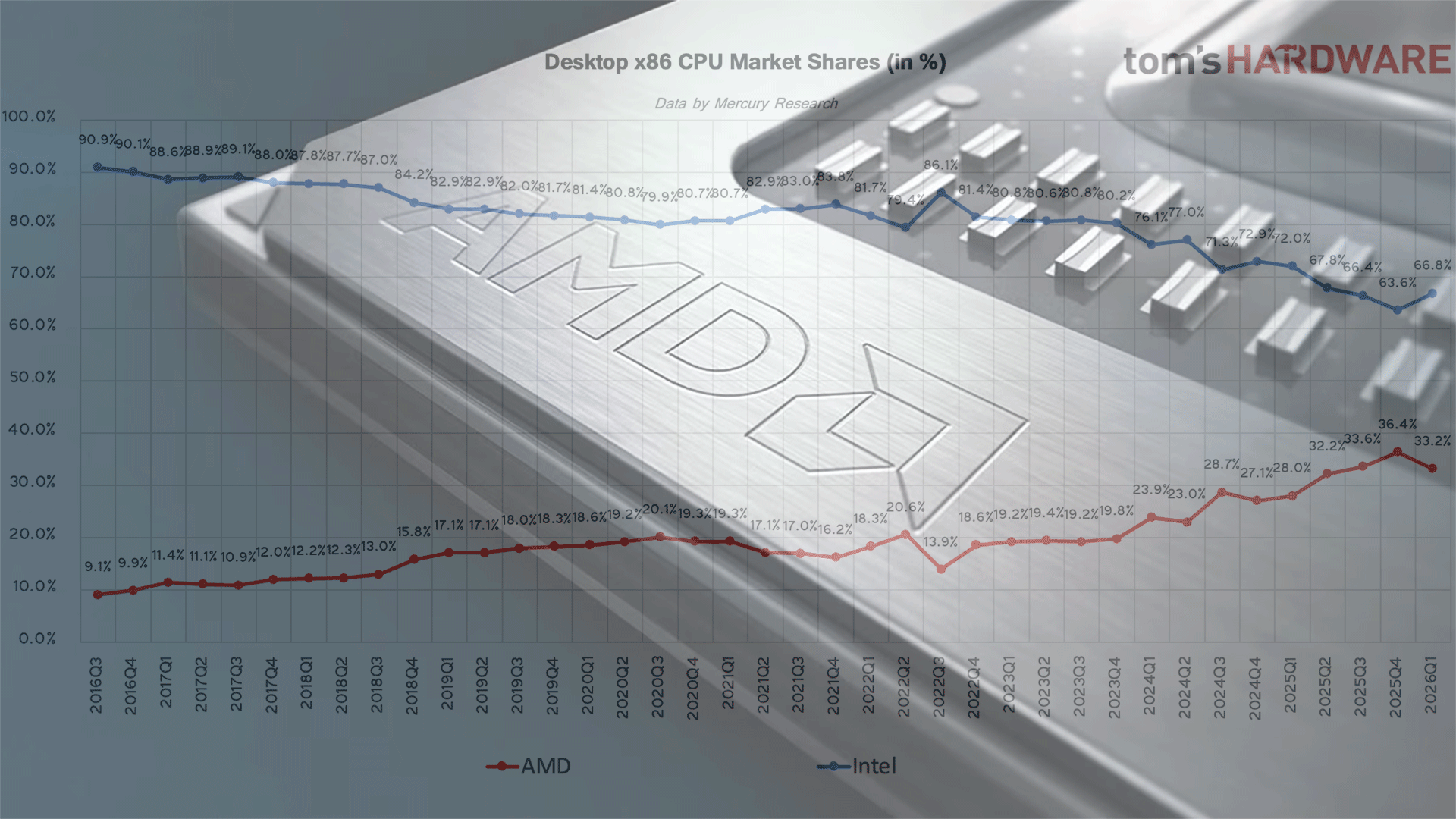
根据 Mercury Research 的最新报告,第三季度 x86 CPU 出货量环比和同比双双下滑,原因是零部件价格高企导致客户端处理器需求大幅下降;而服务器 CPU 出货量同比大增 20%。Intel 自 2025 年第二季度以来首次从 AMD 手中夺回整体 CPU 市场份额,主要归功于台式机 PC 出人意料的强劲表现。报告称,与此同时 AMD 在移动和服务器 CPU 领域继续创下新纪录。Jon Peddie Research 报告称,整个行业共供应了 6893 万颗 x86 CPU。
Intel 2026 年第三季度
AMD 环比增长
Intel 2025 年第三季度
AMD 同比增长
所有 CPU,包括 IoT 和 SoC
Mercury Research 称,在第二季度表现远超预期之后,2026 年第三季度整体 CPU 市场的出货量环比和同比均出现萎缩。该季度 AMD 和 Intel 分别出货 6080 万颗客户端 CPU 和 813 万颗数据中心处理器。看 JPR 和 Mercury Research 的报告时需要注意一点:它们统计的是 CPU 出货量,而这些 CPU 要在数月之后才会搭载于实际系统中售出。
Mercury Research 首席分析师 Dean McCarron 表示:“在客户端处理器市场第二季度表现远超预期之后,第三季度 PC CPU 市场的下滑幅度远超预期,这完全是由于移动 CPU 的低迷——而上一季度恰恰是该细分市场出人意料地走高,这暗示部分下滑可能是因为 CPU 需求把原本属于第三季度的销售提前拉动了。”
Intel 和 AMD 均在财报中表示,第三季度末 PC 需求迅速走软,波及客户端处理器出货量,且第四季度客户端 CPU 的前景将是下滑超过 20%。不过,与客户端 CPU 不同,服务器处理器在上季度继续强劲增长,嵌入式 CPU 也是如此。
环比来看,这一下滑主要由移动处理器需求大幅下降所驱动,x86 笔记本 CPU 出货量下降超过 10%。相比之下,桌面 CPU 出货量有所回升,这在很大程度上要归功于 Intel,而服务器和嵌入式 CPU 出货量则继续强劲增长。剔除 IoT、半定制 SoC 和嵌入式产品后,AMD 和 Intel 的 x86 处理器出货量均低于上一季度,不过 AMD 的降幅大于 Intel。
与 2025 年第三季度相比,除服务器外,CPU 出货量在所有主要细分市场均出现下滑。由于元器件成本上升、尤其是内存价格上涨导致 PC 需求走弱,桌面和笔记本 CPU 出货量下降。嵌入式处理器和半定制 SoC 出货量同样下滑,主要原因是 AMD 游戏主机业务萎缩。相比之下,在 AI 基础设施持续建设的推动下,服务器 CPU 出货量同比增长超过 20%,创下近五年来最高的年度增速。
Jon Peddie Research 总裁 Jon Peddie 博士表示:“第三季度客户端 CPU 出货量走软,原因是 OEM 厂商维持低库存,DIY 渠道也依然疲弱。服务器 CPU 继续增长,AMD 份额提升,AI 相关需求支撑了市场。我们预计,PC 市场的艰难状况将持续到 2027 年上半年。”
根据 Mercury Research 的数据,由于客户端 PC 市场疲软,AMD 的整体 x86 市场份额(不含嵌入式和半定制 SoC)环比下降 0.6%,这是多年来首次出现环比下滑,但同比仍大幅增长 4.5%。
在 x86 客户端 PC 领域,根据 Jon Peddie Research 和 Mercury Research 的数据,随着整体客户端 CPU 出货量下滑幅度超出预期,Intel 在 2026 年第三季度从 AMD 手中收复了部分失地。JPR 估计,AMD 与 Intel 在 2026 年第三季度合计出货 6080 万颗客户端处理器,低于上一季度的 6293 万颗,也低于 2025 年第三季度约 6500 万颗。
AMD 客户端 CPU 出货量份额降至 29.3%,低于第二季度创纪录的 30.3%,但仍明显高于一年前的 25.4%。与此同时,Intel 的份额升至 70.7%,不过其地位仍明显弱于 2025 年第三季度——当时它掌控着 74.6% 的市场。
Intel 份额的环比增长完全由台式机 CPU 出货量大幅增加所驱动,而 AMD 在笔记本领域继续扩大份额,只是速度较前几个季度慢得多。Mercury Research 认为,移动 CPU 需求走弱可能使 Intel 得以将更多芯片产能分配给台式机处理器,而这一市场该公司已有一段时间供应不足。
不过,两家公司的客户端 CPU 业务前景都相当黯淡,因为零部件成本上升(尤其是 DRAM 和 3D NAND 价格)正压制 PC 需求。AMD 和 Intel 都预计第四季度客户端 CPU 出货量将出现超过 20% 的环比下滑,并在接下来一年继续下降。与此同时,必须记住,第四季度售出的 CPU 是用于第一季度出货的系统,而第一季度传统上属于淡季。因此,尽管 20% 的同比降幅非同寻常,但其中相当一部分下滑是季节性的。
在台式机 PC 细分市场,Intel 在 2026 年第三季度上演了惊人的回归,一个季度内夺回 5% 的市场份额。Intel 的台式机 CPU 出货量份额攀升至 70.1%,环比提升 5%,较去年同期提升 3.7%。相比之下,AMD 的份额降至 29.9%,低于 2026 年第二季度的 34.9% 和 2025 年第三季度的 33.6%,这意味着该公司过去一年取得的份额增长已被悉数抹去。
Mercury Research 推测,笔记本处理器需求走弱,使 Intel 得以将更多晶圆产能分配给主流台式机 CPU——这是一个两家公司都长期服务不足的市场。AMD 表现不佳的另一个原因,是其对游戏 PC 市场的敞口更大,而该市场受到游戏显卡供应有限以及内存模组、SSD 等其他零部件成本异常高企的拖累。
然而,台式机成为 AMD 唯一一个在环比和同比两个维度都丢失出货量份额的主要 x86 CPU 细分市场。
根据 Mercury Research 的数据,在移动 PC 领域,AMD 和 Intel 在 2026 年第三季度的 CPU 出货量均出现大幅下滑,原因是市场环比萎缩超过 10%。不过,AMD 的出货量降幅略小于 Intel,这使其移动 CPU 单位份额升至创纪录的 29.2%,高于 2026 年第二季度的 28.9% 和 2025 年第三季度的 21.9%。Intel 仍以 70.8% 的份额保持主导供应地位,但低于上一季度的 71.1% 和去年同期的 78.1%。
尽管 AMD 环比 0.2% 的份额增幅微不足道,但其 7.2% 的同比增长依然亮眼,尤其是考虑到 Intel 在笔记本市场历来强势的地位。Mercury Research 将移动 CPU 出货量环比大幅下滑部分归因于 PC 厂商将 CPU 采购提前至异常强劲的第二季度。
对 AMD 和 Intel 而言都不幸的是,第四季度前景黯淡,因为内存及其他零部件价格上涨推高了笔记本价格,并抑制了终端用户需求。
与黯淡的客户端 CPU 市场不同,服务器 CPU 市场正蓬勃发展。根据 Jon Peddie Research 的数据,2026 年第三季度数据中心处理器出货量达到 813 万颗。Mercury Research 的数据显示,该市场再次实现 20% 的同比增长,为近五年来最高的年度增速。
在服务器 CPU 领域,AMD 延续连胜势头,其单位份额达到创纪录的 35.5%,高于 2026 年第二季度的 34.5% 和 2025 年第三季度的 27.8%。Intel 仍以 64.5% 的份额保持主导供应地位,环比下降 1%,同比下降 7.7%。
有趣的是,McCarron 认为,Intel 显然通过大幅提升 Xeon SP 处理器的出货量,成功减缓了 AMD 在核心数据中心 CPU 市场的推进势头。当比较范围仅限于 AMD 的 EPYC 和 Intel 的 Xeon SP 处理器时,AMD 的出货量份额达到 46.8%,环比仅增长 0.4%,这是 AMD 过去一年中最小的环比增幅,因为在之前三个季度里,该公司按这一指标计算的季度份额平均增长 3%。
与客户端 CPU 市场不同,服务器处理器市场的前景对 AMD 和 Intel 而言都尤为有利。AI 基础设施的持续建设不仅拉动了对传统数据中心级处理器的需求,也带动了对用于较小规模部门级 AI 服务器的工作站级 CPU 的需求。
2026 年第三季度,x86 CPU 出货量环比和同比双双下滑,降至 6893 万颗,原因是零部件价格上涨抑制了客户端 PC 需求,而服务器 CPU 出货量同比增长超过 20%。
原文较长,译文为节选;译文由英文原文机器翻译,术语按行业惯例统一,可在文末展开原文核对。
查看英文原文(Intel reclaims overall CPU market share for the first time since 2025)
Shipments of x86 CPUs declined quarter-over-quarter and year-over-year in the third quarter as demand for client processors dropped sharply due to high component prices, while server CPU unit sales grew by a whopping 20% year-over-year, according to the latest report from Mercury Research. Intel regained overall CPU market share from AMD for the first time since Q2 2025, largely due to surprisingly strong performance in desktop PCs. Meanwhile, AMD continued to set new records in the mobile and server CPU segments, the report claims. In total, the industry supplied 68.93 million x86 CPUs, Jon Peddie Research reports.
Segment | AMD Q3 2026 | Intel Q3 2026 | AMD QoQ gain | AMD Q3 2025 | Intel Q3 2025 | AMD YoY gain |
|---|---|---|---|---|---|---|
Overall x86 | 30.10% | 69.90% | −0.7% | 25.60% | 74.40% | 4.50% |
Client | 29.30% | 70.70% | −0.9% | 25.40% | 74.60% | 4.00% |
Desktop | 29.90% | 70.10% | −5.1% | 33.60% | 66.40% | −3.7% |
Mobile | 29.20% | 70.80% | 0.20% | 21.90% | 78.10% | 7.20% |
Server | 35.50% | 64.50% | 1.00% | 27.80% | 72.20% | 7.70% |
All CPUs, including IoT and SoCs | 33.90% | 66.10% | −0.2% | 30.90% | 69.10% | 3.00% |
CPU unit sales head south, set to get worse
The overall CPU market contracted both sequentially and year-over-year in unit shipments in Q3 2026, after a much stronger-than-expected second quarter, according to Mercury Research. AMD and Intel shipped 60.8 million client CPUs and 8.13 million data center processors during the quarter. One thing to keep in mind about the reports from JPR and Mercury Research is that they count CPU shipments, which happen months before those CPUs are sold in actual systems.
"After a far better than expected second quarter market for client processors, the third quarter PC CPU market declined far more than expected, entirely due to a downturn in mobile CPUs — this was the same segment that was unexpectedly higher last quarter, hinting that part of the downturn may have been due to CPU demand pulling in sales from the third quarter," said Dean McCarron, principal analyst at Mercury Research.
"Both Intel and AMD indicated in their earnings results that there was a rapid softening in PC demand late in the third quarter that impacted client processor shipments and that the outlook for client CPUs in the fourth quarter will be a decline in excess of 20%. Unlike client CPUs, however, server processors continued to grow strongly in the past quarter, as did embedded CPUs."
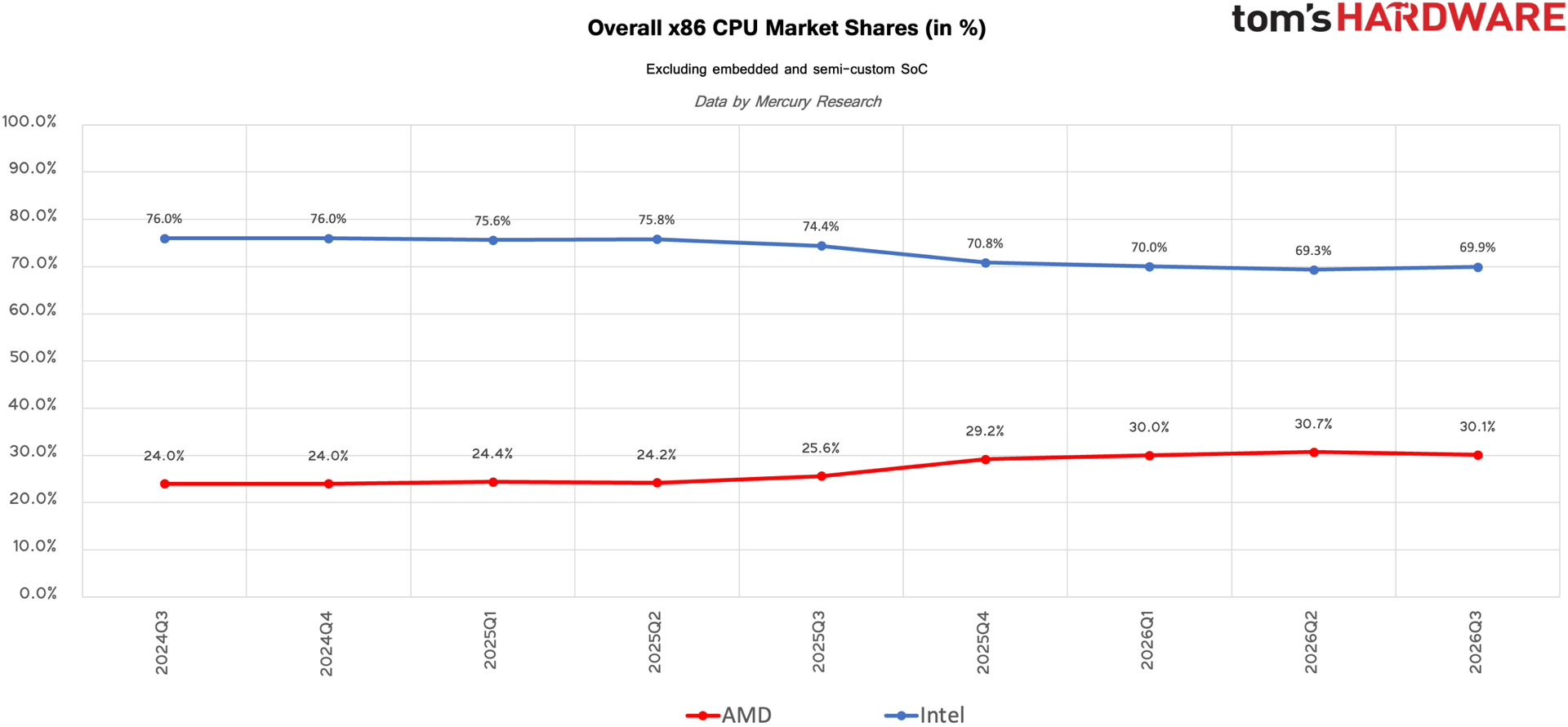
Quarter over quarter, the decline was driven primarily by significantly lower demand for mobile processors, as 86 notebook CPU shipments dropped by more than 10%. By contrast, desktop CPU shipments recovered, largely thanks to Intel, while server and embedded CPU shipments continued to grow strongly. Excluding IoT, semi-custom SoCs, and embedded products, both AMD and Intel shipped fewer x86 processors than in the previous quarter, though AMD's decline was larger than Intel's.
Compared with the third quarter of 2025, CPU shipments declined across all major market segments except servers. Desktop and notebook CPU shipments decreased due to weaker PC demand amid rising component costs, particularly memory prices. Embedded processor and semi-custom SoC shipments also declined, primarily due to AMD's shrinking game console business. By contrast, fueled by the ongoing buildout of AI infrastructure, server CPU shipments increased by more than 20% YoY, their highest annual growth rate in nearly five years.
"Client CPU shipments softened in Q3 as OEMs kept inventories lean and the DIY channel remained weak," said Dr. Jon Peddie, president of Jon Peddie Research. "Server CPUs continued growing, with AMD gaining share and AI-related demand supporting the market. We expect PC conditions to remain difficult into the first half of 2027."
Due to weakness in the client PC space, AMD's overall x86 market share (excluding embedded and semi-custom SoC) declined by 0.6% QoQ for the first time in years, but still grew by a significant 4.5% YoY, according to Mercury Research.
Client CPUs: AMD loses share for the first time since 2022
In the x86 client PC segment, Intel regained some ground on AMD in Q3 2026 as overall client CPU shipments declined more sharply than expected, according to both Jon Peddie Research and Mercury Research. JPR estimates that AMD and Intel shipped 60.8 million client processors in Q3 2026, down from 62.93 million a quarter before and roughly 65 million in Q3 2025.
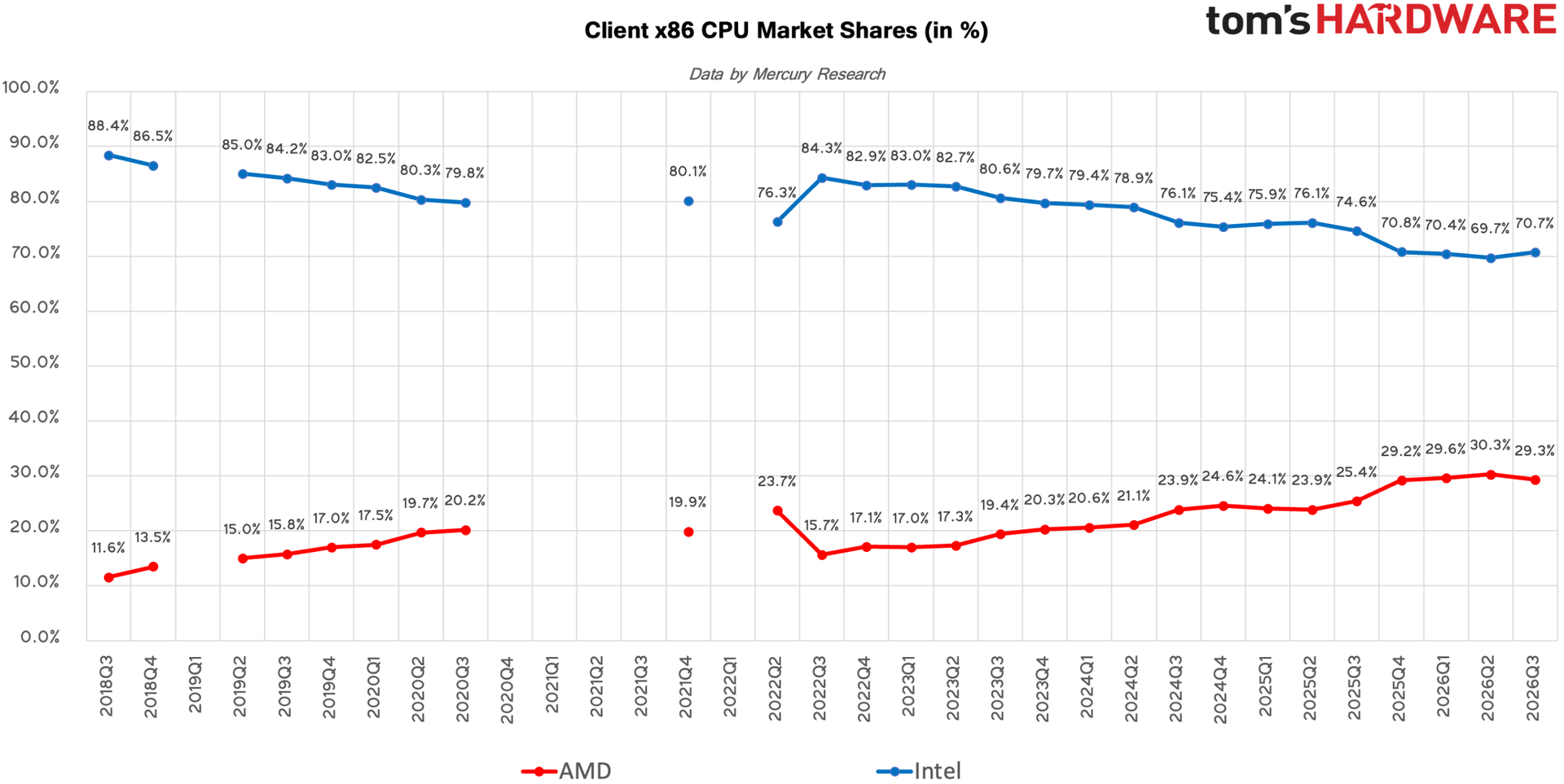
AMD's client CPU unit share dropped to 29.3%, down from a record 30.3% in Q2, but still notably higher than the 25.4% it commanded a year earlier. Meanwhile, Intel increased its share to 70.7%, though its position remained considerably weaker than in Q3 2025, when it controlled 74.6% of the market.
Intel's sequential market share gains were driven entirely by a substantial increase in desktop CPU shipments, while AMD continued to gain ground in notebooks, albeit at a much slower pace than in previous quarters. Mercury Research believes that weaker demand for mobile CPUs may have enabled Intel to allocate more silicon to desktop processors, a market that the company had undersupplied for some time.
However, the outlook for both companies' client CPU businesses is rather gloomy, as rising component costs (especially DRAM and 3D NAND prices) are weighing on PC demand. Both AMD and Intel anticipate a sequential decline in client CPU shipments of more than 20% in the fourth quarter and further declines in the year to come. Meanwhile, one has to keep in mind that CPUs sold in Q4 are meant for systems to be shipped in Q1, which is traditionally weak. Hence, while the 20% YoY decline is extraordinary, a substantial part of that decline is seasonal.
Desktop CPUs: Intel is bringing vengeance
In the desktop PC segment, Intel made a spectacular comeback in Q3 2026, reclaiming 5% of the market in one quarter. Intel's desktop CPU unit share climbed to 70.1%, up 5% sequentially and 3.7% in the same quarter a year ago. By contrast, AMD's share dropped to 29.9%, down from 34.9% in Q2 2026 and 33.6% in Q3 2025, meaning the company wiped out its market share gains over the past year.
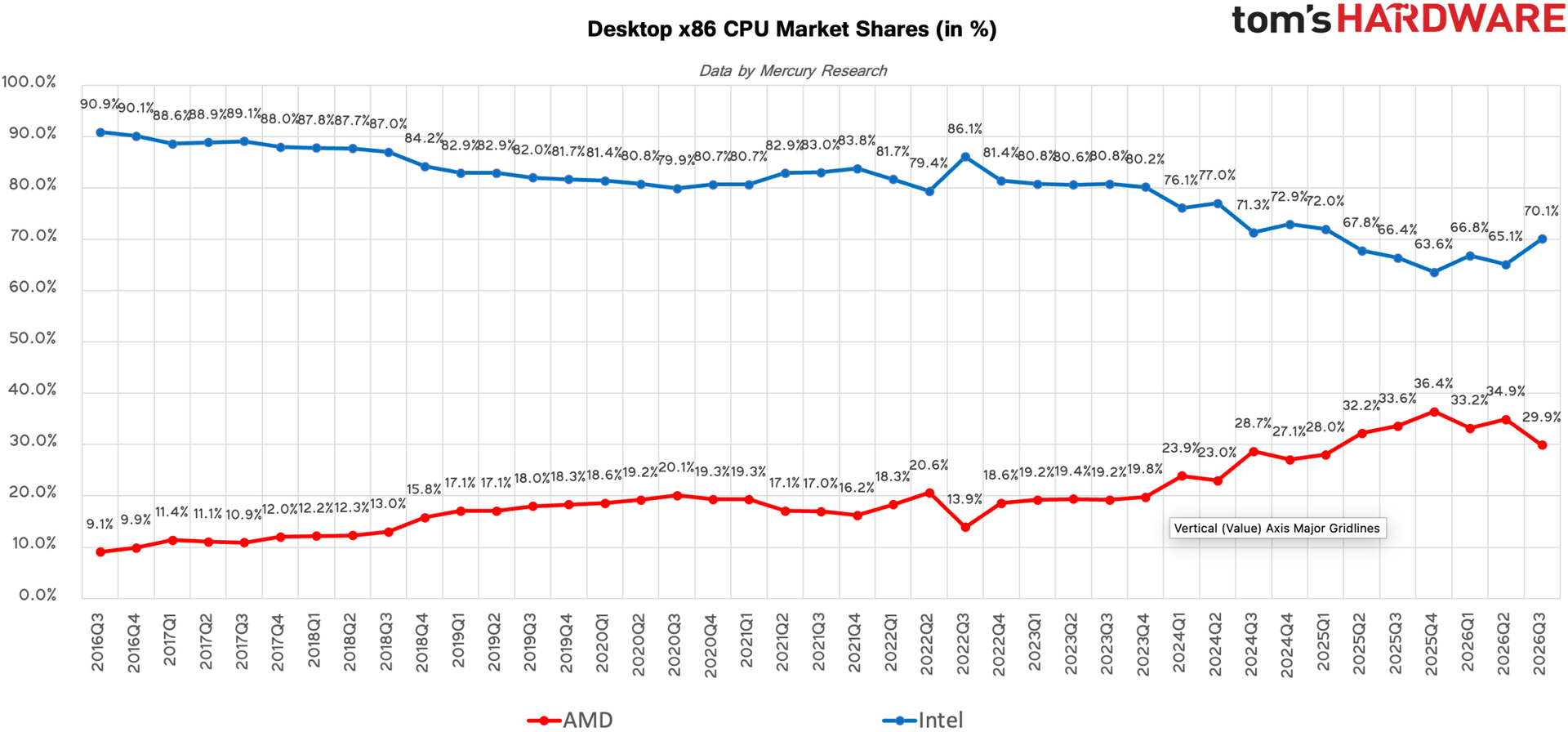
Mercury Research speculates that weaker demand for notebook processors enabled Intel to allocate more silicon to mainstream desktop CPUs, a market that both companies have underserved for some time. Another factor behind AMD's poor performance was its greater exposure to the gaming PC market, which suffered from limited availability of gaming graphics cards and unusually high costs for other components, such as memory modules and SSDs.
Yet, desktops became the only major x86 CPU market segment where AMD lost unit share both sequentially and year-over-year.
Mobile CPUs: AMD gains amid market declines
In the mobile PC segment, both AMD and Intel saw a substantial decline in CPU shipments in Q3 2026 as the market contracted more than 10% sequentially, according to Mercury Research. However, AMD's shipments declined slightly less than Intel's, which enabled the company to increase its mobile CPU unit share to a record 29.2%, up from 28.9% in Q2 2026 and 21.9% in Q3 2025. Intel remained the dominant supplier with a 70.8% share, down from 71.1% in the previous quarter and 78.1% a year earlier.
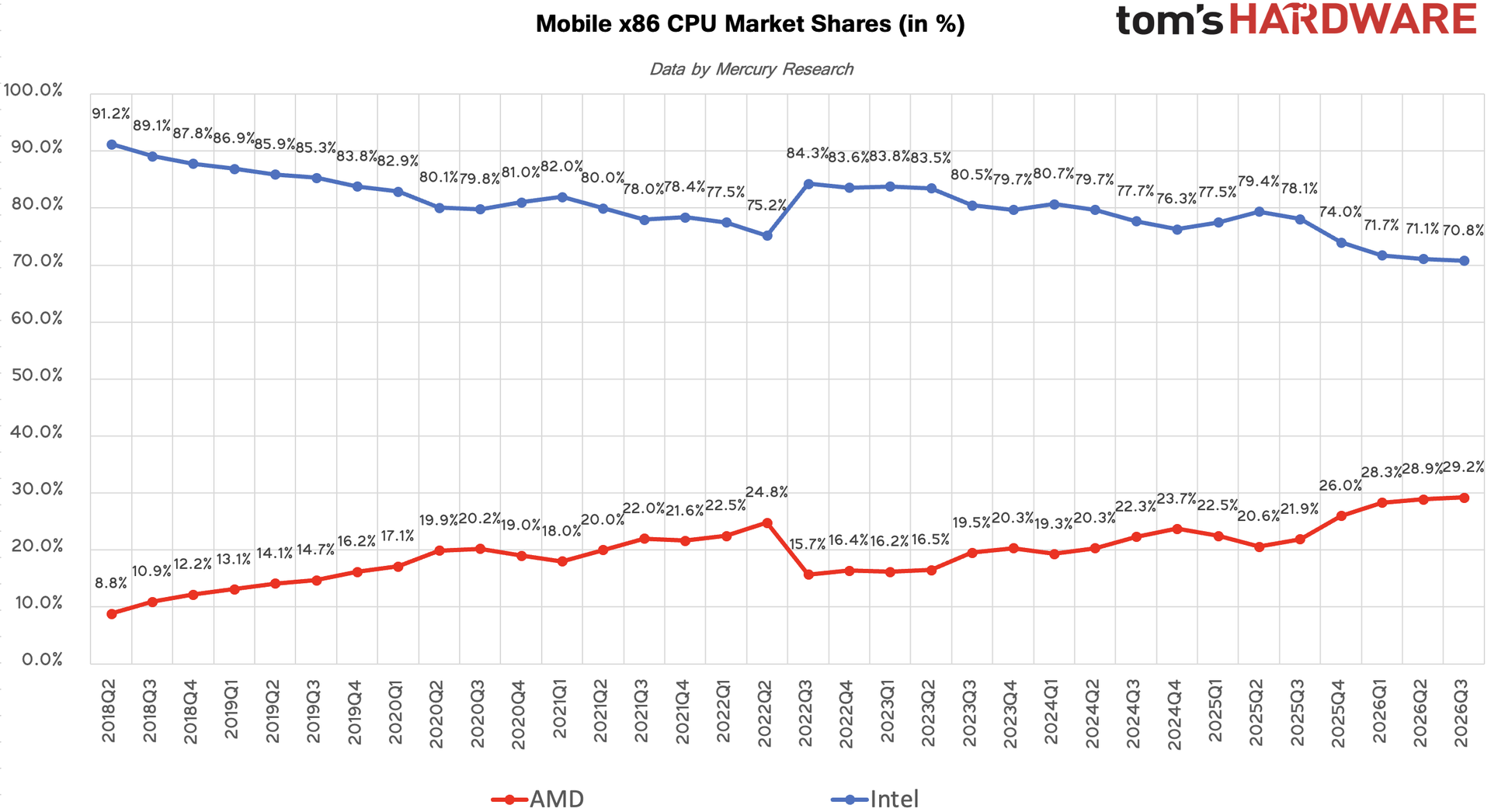
Although AMD's sequential market share gain of 0.2% was negligible, its 7.2% YoY gain was impressive, especially given Intel's historically strong position in the notebook market. Mercury Research attributes the sharp sequential decline in mobile CPU shipments partly to PC makers pulling forward their CPU procurements into the unusually strong second quarter.
Unfortunately for both AMD and Intel, the outlook for the fourth quarter is gloomy, as rising memory and other component prices drive up notebook prices and reduce end-user demand.
Server CPUs: Best quarter ever?
Unlike the bleak client CPU market, server CPUs are thriving, with shipments of data center processors reaching 8.13 million units in Q3 2026, according to Jon Peddie Research. The market again grew 20% year-over-year, the highest annual growth rate in nearly five years, according to Mercury Research.
In the server CPU segment, AMD continued its winning spree as its unit share reached a record 35.5%, up from 34.5% in Q2 2026 and 27.8% in Q3 2025. Intel remained the dominant supplier with a 64.5% share, down 1% sequentially and 7.7% year-over-year.
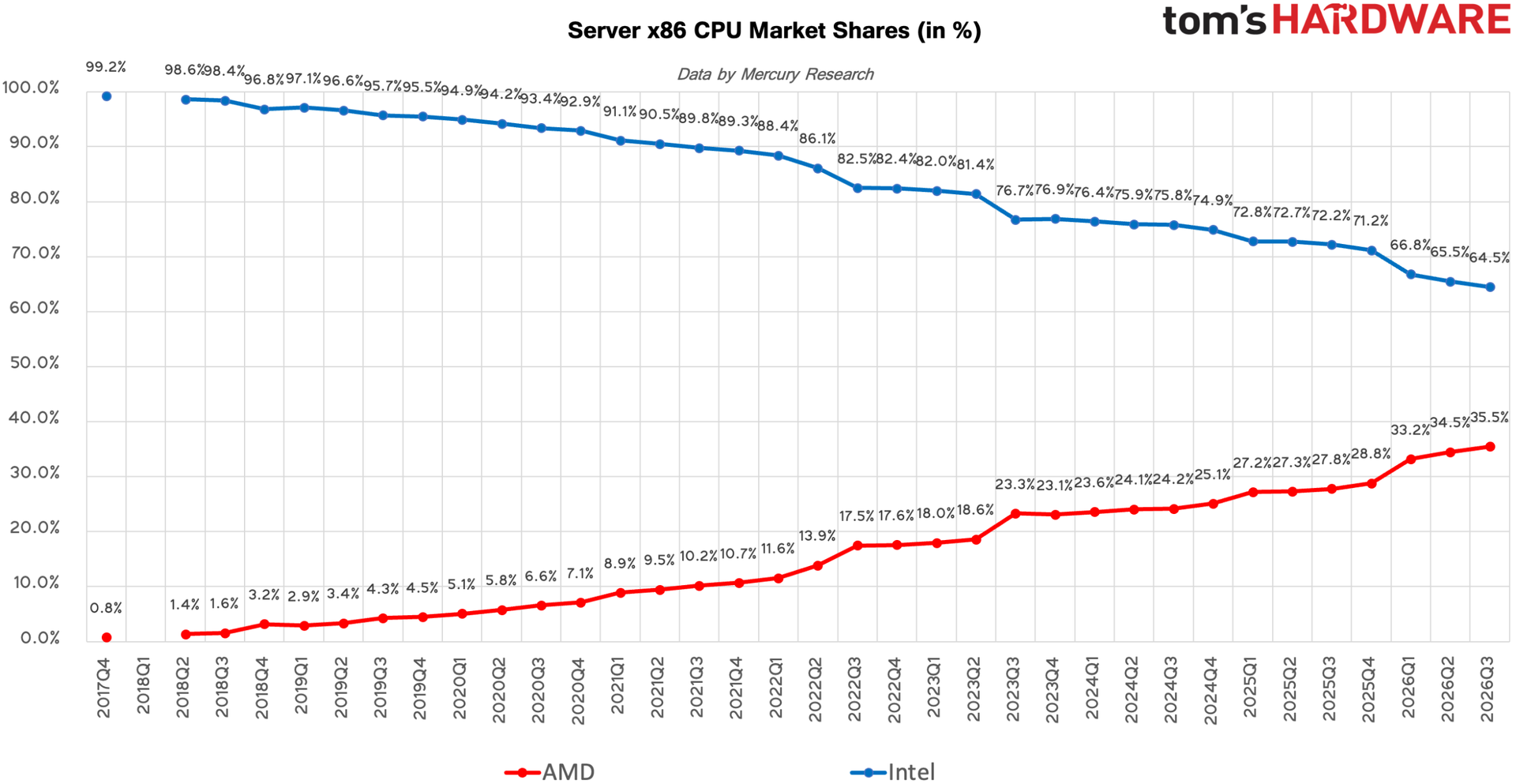
Interestingly, Intel managed to slow AMD's advance in the core data center CPU market by apparently substantially increasing shipments of its Xeon SP processors, McCarron believes. When the comparison is limited to AMD's EPYC and Intel's Xeon SP processors, AMD's unit share reached 46.8%, up just 0.4% sequentially, which represents AMD's smallest sequential gain over the past year, as the company's quarterly share gains by this metric averaged 3% over the preceding three quarters.
Unlike the client CPU market, the outlook for the server processor market remains particularly favorable for both AMD and Intel. The ongoing buildout of AI infrastructure drives demand not only for conventional data center-grade processors, but also for workstation-class CPUs used in smaller departmental AI servers.
Summary
Shipments of x86 CPUs declined both sequentially and year-over-year in Q3 2026 to 68.93 million units as rising component prices weighed on client PC demand, while server CPU shipments grew more than 20% year-over-year.
Intel regained overall x86 CPU market share from AMD for the first time since Q2 2025, largely thanks to a spectacular comeback in the desktop CPU segment, where its share reached 70.1%. Meanwhile, AMD gained 0.3% of the mobile CPU market, now commanding 29.2%, its highest share ever. Furthermore, AMD reached a record unit share in the server CPU segment, where it now commands 35.5%.
Both companies expect client CPU shipments to drop by more than 20% sequentially in Q4, whereas demand for server processors continues to grow due to the ongoing buildout of AI infrastructure.
正文保留英文原文,标题与摘要由机器翻译。
原文发布于 Tom's Hardware(Intel reclaims overall CPU market share for the first time since 2025),标题、摘要与正文由机器翻译,术语按行业惯例统一,未经人工逐句校订。