OpenAI 调离机器人研究员,通用模型或可替代专用 AI

GPT-Image-2,提示词由 THE DECODER 提供
OpenAI 显然再次解散了其机器人团队,但这次的原因与 2020 年不同。
该公司并非放弃机器人技术,而是希望通过把研究人员并入其他团队来加速推进。机器人研究人员将转入首席研究官 Mark Chen 领导的主研究团队,而应用机器人团队和硬件团队则加入 Greg Brockman 领导的 Applied 组织。
据 Fortune 报道,OpenAI 做出这一决定非常仓促,以至于它已经在奥斯汀的 Conference on Robot Learning(CoRL)上预订了展位,该展位随后空置。OpenAI 显然认为,像 GPT-6 Astra 这样的通用模型可以直接控制机器人,从而减少了对专用机器人模型的需求。
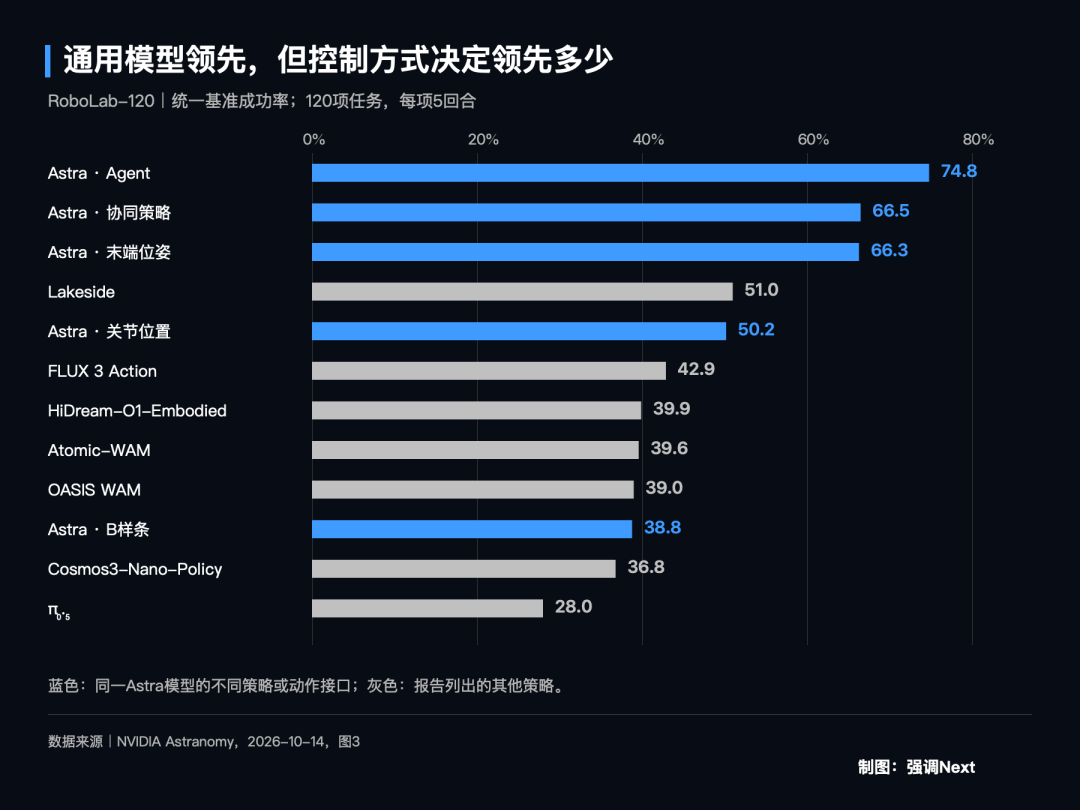
在 NVIDIA 的一项研究中,由 Astra 驱动的智能体在模拟机器人任务上取得了 74.8% 的成功率,而最好的专用模型为 51%。测试使用的是模拟的 DROID 机器人,而非实体机器人。
一项名为 StationeryBench 的新机器人基准测试,在涉及双臂 YAM 机械臂操作桌面物体的五项任务上,对比了 GPT-6 Astra 与 Ai2 的 MolmoAct2。在 200 次试验中,Astra 完整完成了 100 项任务中的 7 项,而 MolmoAct2 一项都没完成。Astra 的平均进度得分为 46,MolmoAct2 为 12。在另一项测试中,运行在人形机器人上的 Astra 完成了厨房的导航和清理。
目前尚不清楚 OpenAI 及其他公司在训练中加入了多少机器人数据。Anthropic 和 Google 的其他大型通用模型近期也在机器人任务上取得了进展。专用机器人模型在成本和可靠性,以及速度和能耗方面可能仍有优势,即便它们的泛化能力不如通用模型。
康奈尔大学与 Google DeepMind 的 AI 研究员 Yoav Artzi 同样认为 Astra 在空间理解上实现了重大跃升。据 Artzi 称,在尚未公布的 REMAP 基准测试中,GPT-6 Astra 达到了接近人类的准确率。他怀疑 OpenAI 可能用大量 3D 训练数据(如 Blender 场景)训练了该模型。
OpenAI 与机器人:情况很复杂
OpenAI 于 2020 年关停了其机器人部门,联合创始人 Wojciech Zaremba 称原因是公司缺乏所需的训练数据,而大语言模型是通往 AGI 的更快捷路径。该公司于 2024 年重建了该团队。据报道,CEO Sam Altman 的目标是在 2027 年进行首次公开机器人演示,而 OpenAI 长期希望打造自己的日常机器人。但公司同时面临沉重的财务压力,必须聚焦其核心 AI 业务——在这一领域,它已大幅落后于 Anthropic。
没有炒作噪音的 AI 新闻——由人工精选
译文由英文原文机器翻译,术语按行业惯例统一,可在文末展开原文核对。
查看英文原文(OpenAI reassigns robotics researchers to other teams as general-purpose models might make specialized robotics AI unnecessary)
GPT-Image-2 prompted by THE DECODER
OpenAI is apparently disbanding its robotics team again, but this time for different reasons than in 2020.
Rather than abandoning robotics, the company wants to accelerate it by folding researchers into other teams. Robotics researchers are moving to the main research team under Chief Research Officer Mark Chen, while the applied robotics and hardware teams join Greg Brockman's Applied organization.
OpenAI made the decision on such short notice that it had already booked a booth at the Conference on Robot Learning (CoRL) in Austin, which then sat empty, Fortune reports. OpenAI apparently believes that general-purpose models like GPT-6 Astra can control robots directly, reducing the need for specialized robotics models.
In an Nvidia study, an Astra-powered agent achieved a 74.8 percent success rate on simulated robotics tasks, compared to 51 percent for the best specialized models. The tests used a simulated DROID robot, not a physical one.
A new robotics benchmark called StationeryBench compared GPT-6 Astra with Ai2's MolmoAct2 on five tasks involving desk objects on dual-arm YAM robotic arms. Across 200 trials, Astra fully completed 7 out of 100 tasks, while MolmoAct2 didn't complete a single one. Astra's average progress score was 46, compared to 12 for MolmoAct2. In another test, Astra running on a humanoid robot navigated and cleaned up a kitchen.
It remains unclear how much robotics data OpenAI and others incorporated during training. Other large general-purpose models from Anthropic and Google have also made recent progress on robotics tasks. Specialized robotics models may still have advantages in cost and reliability as well as speed and energy consumption, even if they don't generalize as well.
Yoav Artzi, an AI researcher at Cornell University and Google DeepMind, also sees Astra as a major leap in spatial understanding. On the still-unpublished REMAP benchmark, GPT-6 Astra reaches near-human accuracy, according to Artzi. He suspects that OpenAI may have trained the model on large amounts of 3D training data such as Blender scenes.
OpenAI and robots, it's complicated
OpenAI shut down its robotics division in 2020 because, according to co-founder Wojciech Zaremba, the company lacked the training data it needed and large language models were a faster path to AGI. The company rebuilt the team in 2024. CEO Sam Altman is reportedly targeting a first public robot demo for 2027, and OpenAI wants to build its own everyday robots in the long term. But the company also faces heavy financial pressure to focus on its core AI business, where it has lost significant ground to Anthropic.
AI News Without the Hype – Curated by Humans
原文为英文,正文由自动抓取并保留原文。
原文发布于 The Decoder(OpenAI reassigns robotics researchers to other teams as general-purpose models might make specialized robotics AI unnecessary),标题、摘要与正文由机器翻译,术语按行业惯例统一,未经人工逐句校订。