打造 AI 就绪企业的实用蓝图
一家AI就绪型企业需要试验空间、针对敏感工作负载的防护措施,以及在不从头再来的情况下采用新模型的自由。构建这样的企业意味着要在基础设施、数据、成本和责任方面做出明确选择。
当AI项目从试点走向日常使用时,问题就会发生变化。领导者需要知道它能否可靠运行、成本是多少,以及由谁对其负责。一次成功的演示只是开始。
董事会希望在批准投资前了解收益和风险。技术团队需要时间来测试AI能带来什么。企业需要一种兼顾两者的方式:开展小规模、受控的实验,并就扩展这些实验前必须证明什么达成一致。
企业必须决定每个AI应用应在哪里运行、可以使用哪些信息,以及被允许做什么。这些决定应反映所涉及的风险。一个总结公开文档的助手,与一个能够更改客户记录的AI智能体,需要不同的防护措施。
企业还必须为变化做好准备。可能会出现更好的模型,提供商可能会调整价格,或者应用可能需要新功能。目标不是采用每一个新发布的模型,而是在无需重建整个系统的情况下做出有用的变更。
根据Adobe的《2026年AI就绪状态报告》,该地区约59%的组织陷入“Frozen Middle”(冰冻中间地带),它们正在试点或部署AI,但缺乏将其规模化所需的协调。对于智能体式AI,这一比例为40%。
因此,挑战不止于选择一个模型或获取算力。企业需要一条清晰的路径,从测试一个想法到可靠地运行它。这意味着要就由谁批准、如何衡量成功,以及出问题时该怎么办达成一致。
保持控制并不意味着自建每一个模型或拥有每一台服务器。它意味着清楚数据流向何处、谁能访问、AI 系统可以做什么,以及谁对其使用负责。企业可以与外部供应商合作,同时保留对这些决策的控制权。
“企业领导者对采用 AI 越来越放心。但他们对放弃控制权仍然明显不那么放心。主流偏好是企业控制的 AI,而非供应商控制的 AI,”neo-cloud 服务商 Neysa 指出。
Neysa 提出了一个共享 AI 平台,帮助企业从实验走向日常使用。其理念是为团队提供一套共同的基础,用于运行应用、监控性能和跟踪成本。他们仍应能够为不同任务选择不同的模型和工具。
许多组织的 AI 之旅始于一个个单独的项目。一个团队可能测试某个模型,另一个团队可能构建聊天机器人,第三个团队可能探索 AI 智能体。这些项目有助于识别有用的应用。下一步是决定哪些值得进一步投资,以及由谁来运营。
不同团队可能需要不同的工具。问题始于没有人清楚了解他们正在使用什么、能访问哪些数据,或花了多少钱。共享的规则可以弥补这些缺口,而无需强迫每个团队使用相同的技术。
在 AI 应用投入日常使用之前,它需要一位明确的业务负责人、获批的数据访问权限、可衡量的质量目标、支持计划和运营预算。它还需要足够的算力,以及有人来支持它。仅获得 GPU 的使用权限并不能回答这些问题;企业需要知道当需求上升或出现问题时,该应用将如何持续运行。
企业还应了解哪些因素可能让未来的变更变得困难。一个 AI 应用可能严重依赖某一家供应商的工具,或依赖某个特定模型的响应方式。把这些依赖关系弄清楚可以让变更更容易,尽管替换仍需经过测试。如果其 AI 算力基础设施与某个特定供应商或技术紧密绑定,那么任何变动也都将意味着大量的返工。
团队不应为每一个新的 AI 应用都重复搭建同一套基础配置。复用已获批准的部署应用、管理访问权限和监控性能的方式,可以节省精力并降低风险。共享平台和技术支持能提供帮助,而业务团队仍需负责判断该应用是否足够好用。
这一方法的核心,是 Neysa 所称的 AI“围墙花园”。简而言之,它是一个受控环境,企业在此管理支撑其 AI 应用的基础设施,包括其使用的模型、工具和框架。
其目标是让组织对其 AI 系统拥有更强的掌控力,同时不限制它们试验新技术的能力。
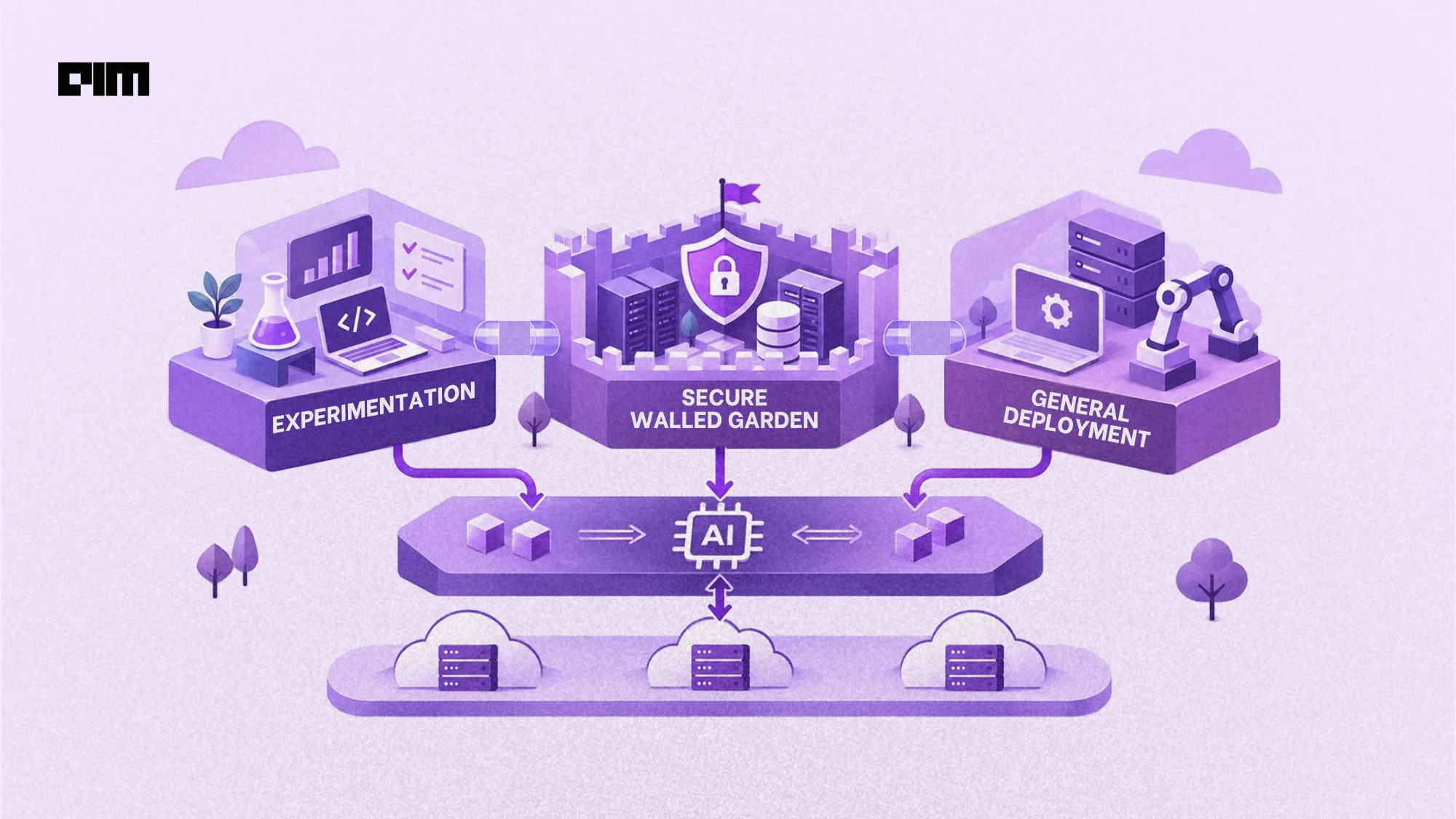
Neysa 提出的架构依据 AI 工作负载需要如何被管理,将这一环境划分为三大领域。
第一个是面向创新团队的实验环境。它可以让团队测试模型、对现有模型进行微调、构建应用并运行 POC。团队还可以在决定是否更大范围部署之前,评估来自外部 AI 软件供应商的解决方案。
第二个是面向对数据隐私、安全和合规有严格要求的工作负载的高度受控环境。企业可以将处理敏感信息或在监管限制下运行的应用放入这一环境,但须遵守相应的访问控制与策略。
第三个是通用部署环境,面向那些不像更敏感的工作负载那样需要同等程度监管审查或数据保护的 AI 应用。
这些环境将在同一个更大的平台内运行,但服务于不同目的。企业可以允许团队在划定的边界内自由实验,同时对处理敏感数据的应用保持更严格的控制。
这种隔离还有助于组织根据每项工作负载自身的需求来决定它应在哪里运行,而不是对每个 AI 应用都套用相同的基础设施和安全设置。
Neysa 方案的一个核心,是能够替换单个组件而无需重建整个基础设施。
企业可能会根据性能、成本和其他要求,为不同任务使用不同的模型。随着需求演变,它们也可能更换用于开发应用的工具和框架,或引入新技术。
Neysa 主张,基础设施从一开始就应支持这些变化。在满足兼容性、安全和性能要求的前提下,模型、工具和框架应能在平台内互换。
例如,Adopt AI 使用 TrueFoundry 的 AI Gateway,将应用连接到来自 OpenAI、Anthropic、Google Vertex AI、AWS Bedrock 和 Groq 等提供商的模型。
Adopt AI 联合创始人兼 CTO Rahul Bhattacharya 解释说,应用不再直接与各个模型提供商通信。相反,请求会经由一个中央网关传递,这使公司无需更改应用代码即可切换模型并管理流量。
这种做法降低了对单一模型提供商或技术栈的依赖。当有新模型出现,或现有方案不再满足需求时,它也让企业拥有更大的灵活性。
AI 智能体使这种灵活性尤为重要。与仅针对单个提示生成回复的应用不同,智能体可以执行多个步骤、使用工具并与其他应用交互以完成任务。
模块化平台将为企业组织提供一个统一的环境来管理这些组件,而无需为每个应用或智能体都新建一套基础设施。
然而,用一个组件替换另一个组件并不总是那么简单。企业仍需测试兼容性、评估性能,并确保变更符合其安全与治理要求。
构建一个可控的 AI 环境,并不一定意味着要把所有企业应用和工作负载都迁移到单一基础设施提供商。
许多企业已经在公有云平台上投入了大量资源。它们的应用、数据库、开发工具和业务流程,可能都是围绕 Microsoft Azure 等提供商的服务构建的。把这些系统迁到别处可能既困难又昂贵。
Neysa 的做法是,让企业保留这些既有投入,同时在另一个受控环境中运行选定的 AI 工作负载。
例如,企业可以继续使用 Azure AI Foundry 来选择和开发 AI 解决方案,同时将运行该解决方案所需的计算工作负载导向 Neysa 提供的基础设施。该 AI 系统会在指定环境中处理请求,并把结果返回给运行在既有云平台上的应用。
原文较长,译文为节选;译文由英文原文机器翻译,术语按行业惯例统一,可在文末展开原文核对。
查看英文原文(A Practical Blueprint for an AI-Ready Enterprise)
An AI-ready enterprise needs room to experiment, safeguards for sensitive workloads and the freedom to adopt new models without starting again. Building one means clear choices about infrastructure, data, costs and responsibility.
When an AI project moves from a pilot into everyday use, the questions change. Leaders need to know whether it will work reliably, what it will cost and who will be responsible for it. A successful demonstration is only the beginning.
Boards want to understand the benefits and risks before approving an investment. Technology teams need time to test what AI can deliver. Enterprises need a way to do both: run small, controlled experiments and agree on what must be proven before scaling them.
Enterprises must decide where each AI application should run, what information it can use and what it is allowed to do. These decisions should reflect the risk involved. An assistant summarising public documents needs different safeguards from an AI agent that can change customer records.
Enterprise must also prepare for change. A better model may become available, a provider may change its prices, or an application may need new features. The aim is not to adopt every new model release. It is to make useful changes without having to rebuild the whole system.
According to Adobe’s 2026 State of AI Readiness Report, around 59% of organisations in the region are stuck in the ‘Frozen Middle’, where they are piloting or deploying AI but lack the coordination needed to scale it. For agentic AI, the figure stands at 40%.
The challenge is therefore bigger than choosing a model or securing computing capacity. Enterprises need a clear path from testing an idea to running it reliably. That means agreeing on who approves it, how success will be measured and what happens when something goes wrong.
Keeping control does not mean building every model or owning every server. It means knowing where data goes, who can access it, what AI system may do and who is responsible for its use. An enterprise can work with outside providers while retaining control over these decisions.
“Enterprise leaders are increasingly comfortable adopting AI. They remain significantly less comfortable relinquishing control. The dominant preference is Enterprise-controlled AI. Not vendor-controlled AI,” neo-cloud provider Neysa observes.
Neysa proposed a shared AI Platform that helps enterprises move from experiments to everyday use. The idea is to give teams a common foundation for running applications, monitoring performance and tracking costs. They should still be able to choose different models and tools for different tasks.
From Isolated AI Pilot Projects
Many organisations begin their AI journey with individual projects. One team might test a model, another might build a chatbot, and a third might explore AI agents. These projects help identify useful applications. The next step is deciding which ones deserve futher investment and who will run them.
Different teams may need different tools. The problem begins when no one has a clear view of what they are using, what data they can access or how much they are spending. Shared rules can address these gaps without forcing every team to use the same technology.
Before an AI application moves into everyday use, it needs a named business owner, approved data access, measurable quality targets, a support plan and an operating budget. It also needs enough computing capacity and someone to support it. Access to GPUs alone does not answer these questions; the enterprise needs to know how the application will keep running when demand rises or problems occur.
Enterprises should also understand what might make future changes difficult. An AI application may depend heavily on one provider’s tools or on the way a particular model responds. Keeping these dependencies clear can make changes easier, although a replacement will still require testing. If their AI compute infrastructure is tightly tied to a particular provider or technology, any will mean substantial rework too.
Teams should not have to build the same basic setup for every new AI application. Reusing approved ways to deploy applications, manage access and monitor performance can save effort and reduce risk. A shared platform and technical support can help, while business teams remain responsible for deciding whether the application works well enough.
Building a Controlled Environment
At the centre of this approach is what Neysa describes as a walled garden for AI. In simple terms, it is a controlled environment in which an enterprise manages the infrastructure supporting its AI applications, including the models, tools and frameworks it uses.
The objective is to give organisations greater control over their AI systems without restricting their ability to experiment with new technologies.
Neysa’s proposed architecture divides this environment into three broad areas based on how AI workloads need to be managed.
The first is an experimentation environment for innovation teams. It would allow them to test models, fine-tune existing ones, build applications and run POCs. Teams could also evaluate solutions from external AI software providers before deciding whether to deploy them more widely.
The second is a tightly controlled environment for workloads with strict requirements around data privacy, security and compliance. Enterprises could place applications that handle sensitive information or operate under regulatory restrictions in this environment, subject to the appropriate access controls and policies.
The third is a general deployment environment for AI applications that do not require the same level of regulatory oversight or data protection as more sensitive workloads.
These environments would operate within the same broader platform but serve different purposes. An enterprise could allow teams to experiment freely within defined boundaries while maintaining tighter controls over applications that handle sensitive data.
The separation would also help organisations decide where each workload should run, based on its requirements rather than applying the same infrastructure and security settings to every AI application.
Making AI Infrastructure Modular
A central part of Neysa’s proposal is the ability to replace individual components without rebuilding the entire infrastructure.
Enterprises may use different models for different tasks, depending on their performance, cost and other requirements. They may also change the tools and frameworks used to develop applications or introduce new technologies as their needs evolve.
Neysa argues that the infrastructure should support these changes from the outset. Models, tools and frameworks should be interchangeable within the platform, subject to compatibility, security and performance requirements.
For example, Adopt AI uses TrueFoundry’s AI Gateway to connect applications to models from providers including OpenAI, Anthropic, Google Vertex AI, AWS Bedrock and Groq.
Adopt AI’s co-founder and CTO Rahul Bhattacharya explains that applications no longer communicate directly with individual model providers. Instead, requests pass through a central gateway, which allows the company to switch models and manage traffic without changing application code.
This approach reduces dependence on a single model provider or technology stack. It also gives enterprises more flexibility when a new model becomes available, or an existing solution no longer meets their needs.
AI agents make this flexibility particularly important. Unlike applications that only generate responses to individual prompts, agents can perform multiple steps, use tools and interact with other applications to complete tasks.
A modular platform would give organisations a common environment in which to manage these components, rather than requiring them to create a new infrastructure setup for every application or agent.
However, replacing one component with another would not always be straightforward. Enterprises would still need to test compatibility, evaluate performance and ensure that changes meet their security and governance requirements.
Why Hybrid Cloud Could Play a Role
Building a controlled AI environment does not necessarily mean moving all enterprise applications and workloads to a single infrastructure provider.
Many companies already have substantial investments in public cloud platforms. Their applications, databases, development tools and business workflows may be built around services from providers such as Microsoft Azure. Moving these systems elsewhere could be difficult and expensive.
Neysa’s approach is to allow enterprises to retain these existing investments while running selected AI workloads in a separate, controlled environment.
For example, a company could continue using Azure AI Foundry to select and develop an AI solution while directing the computing workloads required to run that solution to infrastructure provided by Neysa. The AI system would process requests in the designated environment and return the results to the application running on the existing cloud platform.
This is a form of hybrid cloud architecture, in which workloads operate across different infrastructure environments according to their requirements.
The arrangement could allow enterprises to continue using their preferred cloud services while exercising greater control over where selected AI workloads run. It could also help them avoid having to move their entire application stack simply to change the infrastructure supporting AI.
The exact implementation would depend on the services involved, the integration available and the enterprise’s technical requirements. Data movement, latency, security responsibilities and the cost of operating across multiple environments would also need to be considered.
Governance, Interoperability and Cost Remain Key Challenges
The architecture an enterprise chooses must address more than the technical requirements of running AI models. It must also account for governance, interoperability and cost economics.
Governance determines how AI systems can be used across the organisation. Enterprises need to establish which teams can access particular models and data, what restrictions apply to sensitive workloads and how security and compliance policies are enforced.
A common platform could manage these requirements across environments, although organisations would still need to implement and monitor the policies and controls.
Interoperability matters when organisations use models, applications, and infrastructure from multiple providers. If these components cannot work together, enterprises may find themselves tied to particular technologies or forced to rebuild applications when their requirements change. A modular architecture could help, provided the underlying systems support the necessary integrations.
Cost economics is another consideration. The cost of running AI depends on factors such as the models selected, computing capacity, workload volumes and the infrastructure required to support applications in production. Organisations must also account for the cost of operating and maintaining the environment.
正文保留英文原文,标题与摘要由机器翻译。
原文发布于 Analytics India Magazine(A Practical Blueprint for an AI-Ready Enterprise),标题、摘要与正文由机器翻译,术语按行业惯例统一,未经人工逐句校订。


