在 NVIDIA 的阴影下,中国芯片厂商另辟蹊径

编者按:中国通用 AI 计算 GPU 厂商登临科技(Denglin Technology)于11月10日在香港上市,募资14.1亿港元。2026年前四个月,其营收达到2.004亿元人民币,已超过2025年全年总额。Frost & Sullivan 将其列为中国企业级 AI GPGPU 市场第三名,但市场份额仅为1%。这家新上市的芯片厂商能否将快速增长转化为持久的市场影响力?
从会议记录助手到工厂摄像头和考试监控系统,AI 正越来越多地运行在 GPU 上。对芯片厂商来说,造出处理器只是工作的一半;更难的部分是从 NVIDIA 等成熟供应商手中赢得客户。
登临科技由四名曾在嵌入式 GPU 开发商 Vivante 共事的同事于2017年在上海创立。团队花了六个月时间拜访客户和供应商,最终才确定将通用计算与 AI 加速相结合的设计方案。
团队最初瞄准智慧城市应用,首批芯片样品于2021年初到位。随着业务扩张,公司于2024年将总部迁至苏州,以更靠近半导体供应链。
一个早期的选择体现了登临的策略:采用智能手机式的低功耗双倍数据速率(LPDDR)内存,而不用高端加速器中常见的高带宽内存(HBM)。LPDDR 更便宜、更节能,供应链可控性也更强,但其带宽较低,可能成为最大规模 AI 模型的瓶颈。
登临试图通过更多的片上静态随机存取存储器(SRAM),以及让数据被复用而非反复从外部内存读取的软件,来缓解这一瓶颈。该设计把成本和能效置于峰值性能之上。
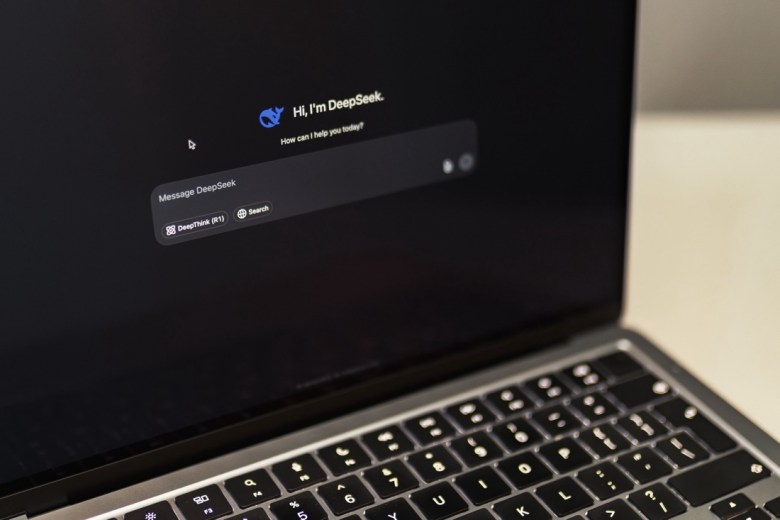
10月,Denglin 的 KS GPU 已完成针对 DeepSeek-V4.1-Flash-1017 的兼容性测试与效率优化,展现出其支持大型 AI 模型的能力。
Denglin 还计划进军更高性能的 AI 计算领域。首个 Minsky IV 版本计划于 2026 年 12 月推出,而目标定在 2027 年下半年的第二个版本,预计将采用 HBM3e 或其他先进内存,面向大型 AI 数据中心和公有云。
目前,Denglin 以效率为导向的 GPU 最适合企业级 AI,尤其是私有云,这类客户看重成本、能效和数据控制。其产品还面向边缘推理和终端设备。
据 Frost & Sullivan 估算,企业级 AI 仍是相对较小的细分市场,2025 年占中国通用图形处理器(GPGPU)市场的 9.5%,而公有云 AI 占 90.5%。
Denglin 自身的业务此后也转向了这一方向。2023 年,智慧城市项目贡献了其 GPGPU 产品收入的约 80%。
但到 2026 年前四个月,企业私有云占比达 83%,智慧城市仅贡献 12.2%。其 KS 推理卡推动了这一转变:该期间 Denglin 售出 10,246 张,收入 1.66 亿元人民币。
这一转变恰逢营收快速增长。销售额从 2023 年的 2790 万元人民币增至 2024 年的 8260 万元,2025 年的 1.713 亿元,随后在 2026 年前四个月就达到 2.004 亿元。
然而,竞争差距依然很大。按 2025 年收入计算,Frost & Sullivan 将 Denglin 列为中国企业级 AI GPGPU 市场第三名,但其市场份额仅为 1%,相比之下 Nvidia 为 83.1%,AMD 为 12.3%。
销售额的快速增长尚未转化为持续盈利。登临科技(Denglin)2023年净亏损人民币3.32亿元,2024年为2.965亿元,2025年为2.81亿元。高额研发投入是主要因素:2025年研发支出达2.38亿元,几乎是公司8430万元毛利润的三倍。
2026年前四个月情况有所改善,净亏损从上年同期的1.083亿元收窄至1650万元。在加回股份支付和上市开支后,经调整净利润达到2060万元。
但另一项挑战在于其客户结构。2026年前四个月,前五大客户贡献了90.4%的收入,其中最大一家占38%。能否将早期采用转化为重复订单并拓宽客户基础,将是维持增长的关键。
11月10日,登临科技在香港上市,募资约14.15亿港元。公司依据第18C章上市,该章允许尚未达到港交所2.5亿港元年收入门槛的特专科技公司以“未商业化公司”身份上市。
公司计划将35%的募资净额用于升级现有GPU产品线,25%用于开发新品类,20%用于软件工具。
AI正走进工厂和办公室。登临科技已经站稳脚跟,但把早期采用转化为重复业务和持久竞争力,是另一回事。
DragonLab穿透噪音,寻找可能塑造未来的中国初创企业、创始人和技术。
有值得我们关注的初创公司?请通过 dragonlab@technode.com 联系我们。
译文由英文原文机器翻译,术语按行业惯例统一,可在文末展开原文核对。
查看英文原文(In Nvidia’s Shadow, a Chinese Chipmaker Takes a Different Route)

Editor’s note: Denglin Technology, a Chinese maker of general-purpose GPUs for AI computing, went public in Hong Kong on November 10, raising HK$1.41 billion. Revenue reached RMB 200.4 million in the first four months of 2026, already exceeding its full-year 2025 total. Frost & Sullivan ranked it third in China’s enterprise AI GPGPU market, but its share was just 1%. Can the newly listed chipmaker turn rapid growth into lasting market clout?
From meeting-note assistants to factory cameras and exam-monitoring systems, AI increasingly runs on GPUs. For chipmakers, building a processor is only half the job; the harder part is winning customers from established suppliers such as Nvidia.
A Different Kind of Memory Bet
Founded in Shanghai in 2017 by four former colleagues at embedded-GPU developer Vivante, Denglin spent six months visiting customers and suppliers before settling on a design combining general-purpose computing with AI acceleration.

The team initially targeted smart-city applications, with its first chip samples arriving in early 2021. As the business expanded, it moved its headquarters to Suzhou in 2024, closer to the semiconductor supply chain.
An early choice reflected Denglin’s strategy: smartphone-style low-power double data rate (LPDDR) over the high-bandwidth memory (HBM) common in high-end accelerators. LPDDR is cheaper, more energy-efficient and offers greater supply-chain control, but its lower bandwidth can bottleneck the largest AI models.
Denglin sought to ease this bottleneck with more on-chip static random-access memory (SRAM) and software that reuses data rather than repeatedly fetching it from external memory. The design prioritizes cost and power efficiency over peak performance.
In October, Denglin’s KS GPUs had completed compatibility testing and efficiency optimization for DeepSeek-V4.1-Flash-1017, demonstrating their ability to support a major AI model.
Denglin also plans to move into higher-performance AI computing. The first Minsky IV version is planned for December 2026, while a second version, targeted for the second half of 2027, is expected to adopt HBM3e or other advanced memory for large AI data centers and public clouds.
Betting on a Smaller Cloud
For now, Denglin’s efficiency-focused GPUs are best suited to enterprise AI, particularly private clouds, where customers value cost, power efficiency and data control. Its products also target edge inference and terminal devices.
Enterprise AI was still a relatively small segment, accounting for 9.5% of China’s general purpose graphics processing units (GPGPU) market in 2025, compared with 90.5% for public-cloud AI, according to Frost & Sullivan estimates.
Denglin’s own business has since shifted in that direction. In 2023, smart-city projects generated about 80% of its GPGPU product revenue.
But by the first four months of 2026, enterprise private cloud accounted for 83%, while smart cities contributed just 12.2%. Its KS inference cards helped drive the shift: Denglin sold 10,246 during the period, generating RMB166 million.

The shift coincided with rapid revenue growth. Sales climbed from RMB27.9 million in 2023 to RMB82.6 million in 2024 and RMB171.3 million in 2025, before reaching RMB200.4 million in just the first four months of 2026.
The competitive gap remains wide, however. Frost & Sullivan ranked Denglin third in China’s enterprise AI GPGPU market by 2025 revenue. Yet it held just 1% market share, compared with Nvidia’s 83.1% and AMD’s 12.3%.
Growth With a Catch
Rapid sales growth has yet to translate into sustained profitability. Denglin recorded net losses RMB332 million in 2023, RMB 296.5 million in 2024 and RMB281 million in 2025. Heavy R&D spending was a major factor: in 2025, it reached RMB238 million, nearly three times the company’s gross profit of RMB84.3 million.
The picture improved in the first four months of 2026, when its net loss fell to RMB16.5 million from RMB108.3 million a year earlier. Adjusted net profit reached RMB20.6 million after adding back share-based payment and listing expenses.
But another challenge lies in its customer base. Its five largest customers accounted for 90.4% of revenue in the first four months of 2026, with the biggest contributing 38%. Converting early adoption into repeat orders and broadening its customer base will be crucial to sustaining growth.
The Public-Market Test
On November 10, Denglin listed in Hong Kong, raising about HK$1.415 billion. It went public under Chapter 18C, which allows specialist-technology companies that have yet to meet the exchange’s HK$250 million annual revenue threshold to list as pre-commercial issuers.
The company plans to use 35% of net proceeds to upgrade existing GPU lines, 25% to develop new product categories and 20% on software tools.
AI is already moving into factories and offices. Denglin has gained a foothold, but turning early adoption into repeat business and lasting competitiveness is a different challenge.
DragonLab cuts through the noise to find the Chinese startups, founders, and technologies that could shape what comes next.
Have a startup we should know about? Reach us at dragonlab@technode.com.
正文保留英文原文,标题与摘要由机器翻译。
原文发布于 TechNode(In Nvidia’s Shadow, a Chinese Chipmaker Takes a Different Route),标题、摘要与正文由机器翻译,术语按行业惯例统一,未经人工逐句校订。