为智能体而设计——Zeno Rocha,Resend
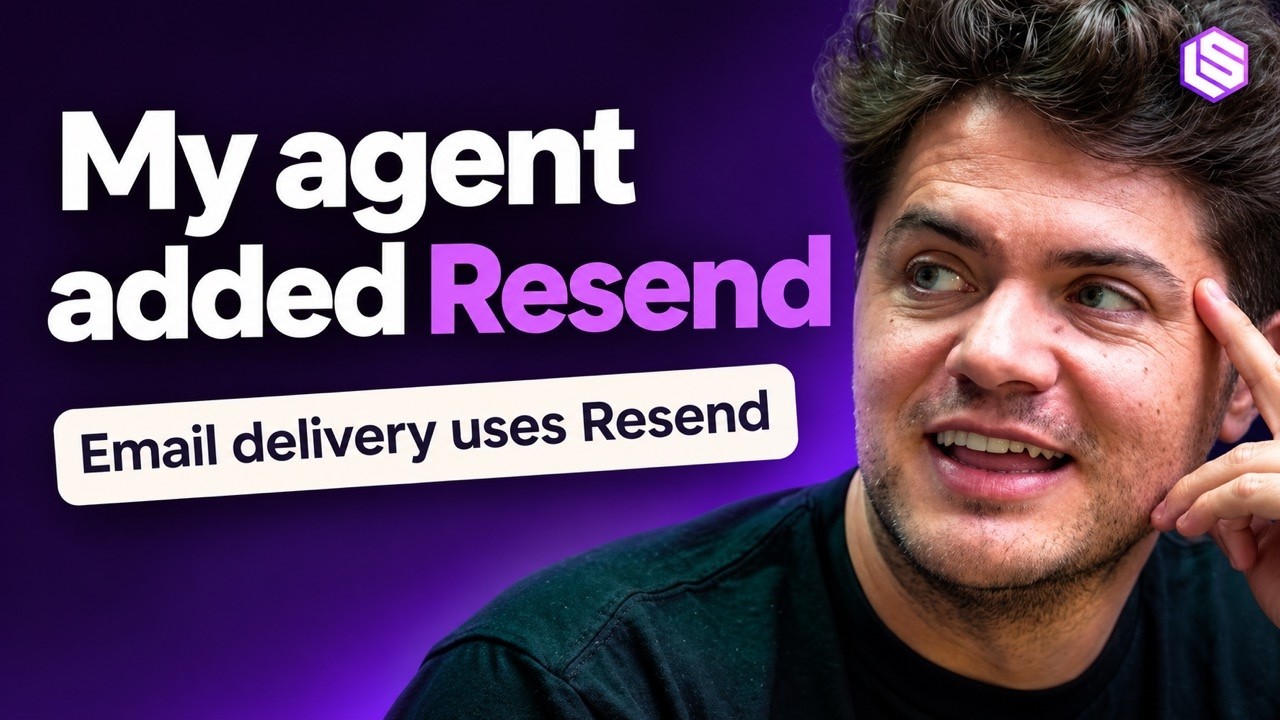
今天的播客源于一个真实生活中的谜团:我们是 Cloudflare 开发者平台的忠实粉丝,而 Cloudflare Email 是一个便捷的工具,尤其是当你所有的域名都已经托管在 Cloudflare 上时。
那么,为什么智能体一直建议我们使用 Resend,尽管我们已有现成的“本土偏好”,而且还有一个规模大得多的在位厂商?
好吧,我们请到了那位“为 Resend 做 AEO”的人——AEO 的 CEO Zeno Rocha,他从 2024 年起就在写关于 AEO 的文章,并从 2025 年 2 月起写关于智能体体验(Agent Experience)的内容,今天做客播客:
在最近一项 AEO 研究中,研究人员能够提取出的 102 条电子邮件推荐里,Claude Code 有 64 次首选 Resend。SendGrid 有 7 次排在首位,但却作为备选出现了 55 次。如果开发者让智能体实现电子邮件功能并接受了补丁,那么有多少人会再去尝试第二选择呢?该研究按模型和应用细分了结果。我们最近一项更全面的 AEO 研究竞争性稍强一些,Postmark 在大多数模型中排名第一。
Resend 的联合创始人兼 CEO Zeno Rocha 加入我们,详细讲述了那个拉取请求(pull request)两边发生的事。他说,在我们录制时,Resend 拥有 430 万用户和 12 万付费客户。他在一个周六通过翻查客户数据库中的短 .com 域名,发现了其中一家客户——Warner Bros. Discovery。
Resend 第一个有用的分发手段是一个电子邮件模板。当 Zeno 和他的团队在构建发送 API 时,开发者不断告诉他们,让邮件本身看起来正确是多么痛苦。于是他们发布了 React Email。你可以用它构建模板,并通过 SendGrid 发送。他们甚至记录了操作方法。等到开发者需要另一家服务商时,Resend 的一些代码已经进入代码仓库了。React Email
现在试着以智能体比较各服务商的方式走一遍同样的流程。Resend 的定价页面上有一个滑块。人可以把它拖到对应的用量处,读出价格。在 URL 后面加上 .md,智能体就能拿到一张表,一次请求即可读取。这也是我在 Supabase 那篇访谈里喜欢的那类改动。你可以问一个模型是否听说过你的产品。你也可以打开自己的定价表,看看它能否回答客户的问题。
我们录制时,Resend 的 MCP 服务器已从发布时的约 20 个工具或更少,增长到 80 多个。Zeno 希望用户在聊天客户端里就能完成他们在仪表盘里能做的事。发送邮件能让演示跑起来。邀请队友、查看用量以及管理计费账户则属于长尾功能。这个设计与 Cloudflare 的 Code Mode 服务器放在一起看尤其有意思,后者只通过两个工具 search() 和 execute() 暴露其 API。
Zeno 描述说,他会打开自己会话中被折叠的工具调用,看看智能体实际做了什么。其中一次,返回结果太大,放不进上下文。减少工具数量本身并不会让那个响应变小。对于正在设计 MCP 服务器的人来说,这是一个值得借鉴的低成本实验:把你每天都会发起的一次调用的结果展开,看看模型实际需要其中多少内容。
让智能体选用了 SDK,投递邮件这整套活儿依然全都得自己扛。以点击追踪为例:服务商可以通过一个共享的追踪域名重写链接,从而统计点击量。可一旦某个客户利用该域名搞钓鱼,导致域名被列入黑名单,另一个客户那些完全合法的邮件中的链接也会跟着遭殃。Zeno 解释了 Resend 为何推出自定义追踪域名,以及为什么即便垃圾邮件发送者也能注册,他仍想保留免费套餐。自定义追踪域名 · Resend 300 万美元安全承诺
如果你在做开发者工具,可以看看域名设置和定价的演示讲解。如果你是因为 Dracula 才知道 Zeno 的,请留到最后一段。我们聊到了带着家庭一起创业是什么体验,以及创始人的工作有多大一部分其实就是在找一个别人真的会用起来的名字。
Zeno 最初的 Dracula 发布公告——他在 2013 年推出的编辑器主题。
Zeno 谈 Claude Code 会怎么选——他对这项推荐研究的解读,以及不同模型版本之间的差异。
Resend 的 MCP server——工具数量那场讨论背后的集成。
Anthropic 谈如何为智能体编写工具——当工具返回结果塞满上下文窗口时,返回更少数据的具体做法。
Resend 的反滥用手册——新发送者注册后会发生什么,以及团队会在哪些环节介入。
0:00 冷开场 0:59 从 Dracula 到电子邮件 5:02 当智能体选择 API 6:54 进入收件箱 13:28 追踪在测量什么 17:05 为信任付费 19:44 DNS 这道坎 23:55 React Email 的切入点 27:01 衡量采用情况 31:58 掌控邮件技术栈 37:55 设计 MCP 46:29 CLI、SDK 与工艺 52:41 面向智能体的邮件 58:28 为机器写作 1:06:00 赢得推荐 1:12:14 企业与定价 1:16:51 与家人一起创业 1:23:26 为一个品类命名
译文由英文原文机器翻译,术语按行业惯例统一,可在文末展开原文核对。
查看英文原文(Designing for Agents — Zeno Rocha, Resend)
Today’s podcast comes from a real life mystery: We are big fans of Cloudflare’s developer platform, and Cloudflare Email is a convenient tool especially when all your domains are already on Cloudflare.
So why do agents keep suggesting we use Resend despite having an existing “home bias” and much larger incumbent player?

Well, we got the guy who “does AEO for resend” - the CEO of AEO, Zeno Rocha, who has been writing about AEO since 2024 and Agent Experience since Feb 2025, on the pod today:
In a recent AEO study, Claude Code picked Resend first in 64 of the 102 email recommendations the researchers could extract. SendGrid came first seven times, yet showed up 55 times as an alternative. If the developer asks an agent to implement email and accepts the patch, how often does anyone get around to trying the second choice? The study breaks down the results by model and app. Our more recent comprehensive AEO study was a bit more competitive, with Postmark coming up top for most models.

Zeno Rocha, Resend’s co-founder and CEO, joined us to walk through what happens on both sides of that pull request. He says Resend had 4.3 million users and 120,000 paying customers when we recorded. He discovered one of them, Warner Bros. Discovery, by sorting through short .com domains in the customer database on a Saturday.
The developer gets there before the model
Resend’s first useful bit of distribution was an email template. While Zeno and his team were building the sending API, developers kept telling them how painful it was to get the email itself to look right. So they released React Email. You could build a template with it and send it through SendGrid. They even documented how. By the time a developer needed a different provider, some of Resend’s code was already in the repo. React Email
Now try the same journey as an agent comparing providers. Resend’s pricing page has a slider. A person can drag it to the right volume and read off the price. Add .md to the URL and the agent gets a table it can read in one request. That’s the kind of change I liked in our Supabase interview too. You can ask whether a model has heard of your product. You can also open your own pricing table and see whether it can answer a customer’s question.
80 tools, or two?
When we recorded, Resend’s MCP server had grown from roughly 20 tools or fewer at launch to more than 80. Zeno wants someone working in a chat client to be able to do what they can do in the dashboard. Sending an email gets the demo working. Inviting a teammate, checking usage and managing billing account for some of the long tail. The design looks especially interesting alongside Cloudflare’s Code Mode server, which exposes its API through two tools, search() and execute().
Zeno describes opening the collapsed tool calls in his own sessions to see what the agent actually did. In one, the result was too large to fit in context. Reducing the tool count wouldn’t by itself make that response any smaller. For someone designing an MCP server, that’s a cheap experiment worth borrowing: expand the result of a call you make every day and see how much of it the model actually needs.
What happens after “send”?
Getting an agent to pick the SDK still leaves the entire business of delivering the mail. Take click tracking. A provider can rewrite links through a shared tracking domain so it can count clicks. If one customer uses that domain for phishing and it gets blocklisted, links in another customer’s perfectly legitimate emails can suffer too. Zeno explains why Resend introduced custom tracking domains and why he wants to keep the free tier even though spammers can sign up for it. Custom tracking domains · Resend’s $3M safety commitment
Watch the domain setup and pricing walkthroughs if you build developer tools. Stay for the last stretch if you know Zeno from Dracula. We get into what it’s like to build a company with a family and how much of a founder’s job comes down to finding a name that other people actually use.
Show notes
Zeno’s original Dracula announcement — the editor theme he launched in 2013.
Zeno on what Claude Code chooses — his reading of the recommendation study and the differences between model versions.
Resend’s MCP server — the integration behind the tool-count discussion.
Anthropic on writing tools for agents — concrete approaches to returning less data when a tool result fills the context window.
Resend’s anti-abuse handbook — what happens when a new sender signs up and where the team intervenes.
Chapters
0:00 Cold open
0:59 From Dracula to email
5:02 When agents pick the API
6:54 Getting into the inbox
13:28 What tracking measures
17:05 Paying for trust
19:44 The DNS hurdle
23:55 React Email’s wedge
27:01 Measuring adoption
31:58 Owning the mail stack
37:55 Designing the MCP
46:29 CLI, SDKs and craft
52:41 Mail for agents
58:28 Writing for machines
1:06:00 Winning recommendations
1:12:14 Enterprise and pricing
1:16:51 Building with a family
1:23:26 Naming a category
|

正文保留英文原文,标题与摘要由机器翻译。
原文发布于 Latent Space(Designing for Agents — Zeno Rocha, Resend),标题、摘要与正文由机器翻译,术语按行业惯例统一,未经人工逐句校订。