llm-gemini 0.37 版本发布
Google 今天发布了 Gemini 4 Hydrogen——Gemini 4 家族中成本最低的成员。
实际上,它的价格与体量大得多的两个同门兄弟 Carbon 和 Argon 相差并不大。我觉得 Gemini 4 的定价实在让人困惑。以下是其定价方案:
Carbon 和 Argon 价格相同,而且两者都定于 12 月 1 日价格翻倍。既然价格一样,为什么还要有两个不同的模型?Google 表示,Argon“相比 Gemini 4 Carbon,能提供 Gemini 4 级别的智能,同时响应更快、每轮 Token 消耗更低”——所以它的定价可能相同,但每个任务会用更少的 Token。
号称廉价型号的 Hydrogen,目前相比能力更强的同门只便宜 25%。12 月 1 日之后 Hydrogen 的定价才更说得通,届时它将相当于便宜 75%。它仍然比 Claude Haiku 5.5 和 GPT-6 Luna 贵得多——后两者都是 $0.10/$0.50,而 Hydrogen 是它们的 15 倍。
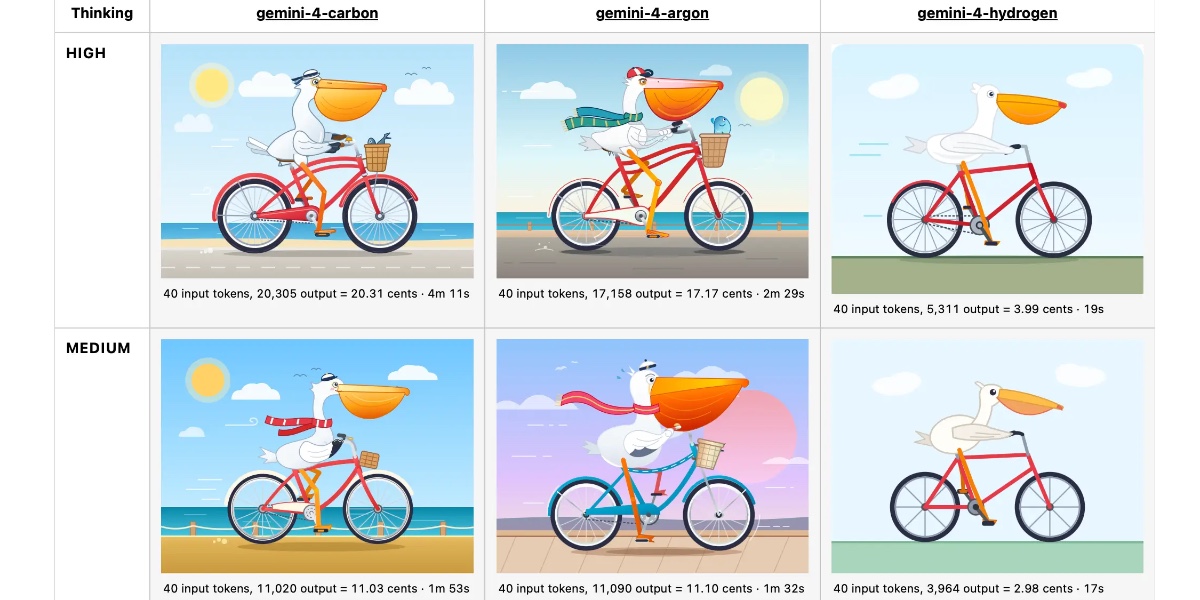
我让 Hydrogen 生成了一些鹈鹕。下面是一张完整的对比图,展示了 Gemini 4 家族全部三款模型在三种支持的 effort 级别下生成的鹈鹕:
考虑到它们在价格上如此接近,Hydrogen 在鹈鹕质量上的差距相当明显。
以下是 Google 对 Hydrogen 在其模型组合中预期定位的描述:
在真实的软件开发中,团队在设计系统或排查细微 bug 时会依靠 Carbon 和 Argon 这类前沿模型做出深入的架构判断,但他们仍然需要一个快速、严谨的执行模型来编写代码、运行测试和验证改动。Hydrogen 被打造为能够独立承担日常工作的模型——也可以与 Carbon 和 Argon 搭配,作为多模型工作流中的高效执行引擎。
最值得注意的是,Hydrogen 是新的免费层级模型,也是将为 Google 搜索中的 AI 功能提供支持的模型。
发布于 2026 年 11 月 12 日晚上 10:55
这是 Simon Willison 的一则短讯,发布于 2026 年 11 月 12 日。
以每月 10 美元赞助我,即可获得本月最重要 LLM 进展的精选邮件摘要。
花钱让我少发点邮件给你!
译文由英文原文机器翻译,术语按行业惯例统一,可在文末展开原文核对。
查看英文原文(llm-gemini 0.37)
Google launched Gemini 4 Hydrogen today - the lowest cost member of the Gemini 4 family.
It's actually not too far off the price of its much bigger siblings, Carbon and Argon. I'm finding Gemini 4's pricing really confusing. Here's the pricing scheme:
Carbon and Argon are the same price, and both are scheduled to double in price on December 1st. If they're the same price, why have two different models? Google says that Argon "delivers Gemini 4 intelligence with faster responses and lower token spend per turn compared to Gemini 4 Carbon" - so it may be priced the same, but it will use less tokens per task.
Hydrogen, supposedly the cheap model, is currently only a 25% discount on its more capable peers. The Hydrogen price will make more sense after December 1st, when it will represent a 75% discount. It's still considerably more expensive than Claude Haiku 5.5 and GPT-6 Luna - they're both $0.10/$0.50, so Hydrogen is 15x that.
I had Hydrogen generate some pelicans. Here's a full comparison grid showing the pelicans for all three members of the Gemini 4 family at their three supported effort levels:
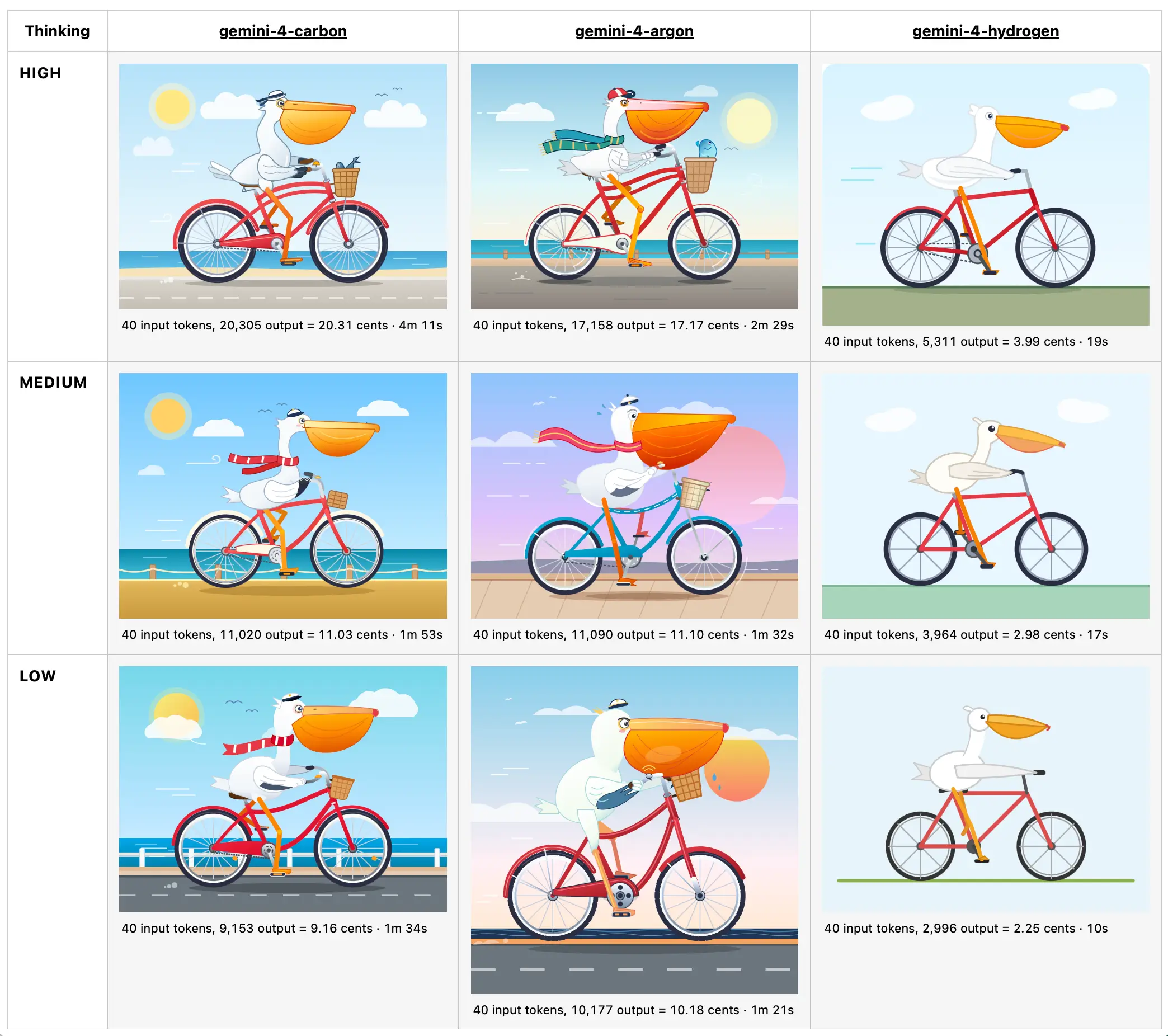
Considering how close they are in price, the difference in pelican quality for Hydrogen is quite stark.
Here's how Google describe Hydrogen's intended position in their mix of models:
In real-world software development, while teams rely on frontier models like Carbon and Argon for deep architectural judgment when designing systems or untangling subtle bugs, they still need a fast, disciplined execution model for writing code, running tests, and verifying changes. Hydrogen is built to stand on its own as a model for everyday work — or to pair with Carbon and Argon as the high-efficiency execution engine in multi-model workflows.
Most notably, Hydrogen is the new free tier model, and is the model that will power AI features in Google Search.
Posted 12th November 2026 at 10:55 pm
This is a beat by Simon Willison, posted on 12th November 2026.
Sponsor me for $10/month and get a curated email digest of the month's most important LLM developments.
Pay me to send you less!
原文为英文,正文由自动抓取并保留原文。
原文发布于 Simon Willison(llm-gemini 0.37),标题、摘要与正文由机器翻译,术语按行业惯例统一,未经人工逐句校订。