如何将 AI 用于企业商业智能
作者:KDnuggets,2026年11月10日,发布于 Partners 栏目
企业仍在为数据碎片化、报表耗时以及难以洞察关键信息而困扰。一些企业依旧依赖电子表格和彼此孤立的系统,另一些企业虽然已投资商业智能(BI)平台,却难以让分析能力为更多员工所用、真正发挥价值。
本文将探讨 AI 在企业分析中的实际应用,以及成功落地时需要重点考虑的问题。
了解美国领先的邮票经销商如何用实时洞察取代人工报表,在提升运营效率的同时减少对 IT 的依赖。欢迎观看与 Mystic Stamp IT 总监的这场网络研讨会,获取有关 BI 现代化以及让实施与企业需求、用户预期相匹配的实用建议。
AI 如何改善商业智能
业务数据的价值,取决于组织能否有效地利用它来理解自身表现并应对不断变化的需求。AI 为改善员工处理信息的方式、获得有价值的成果创造了新的机会。
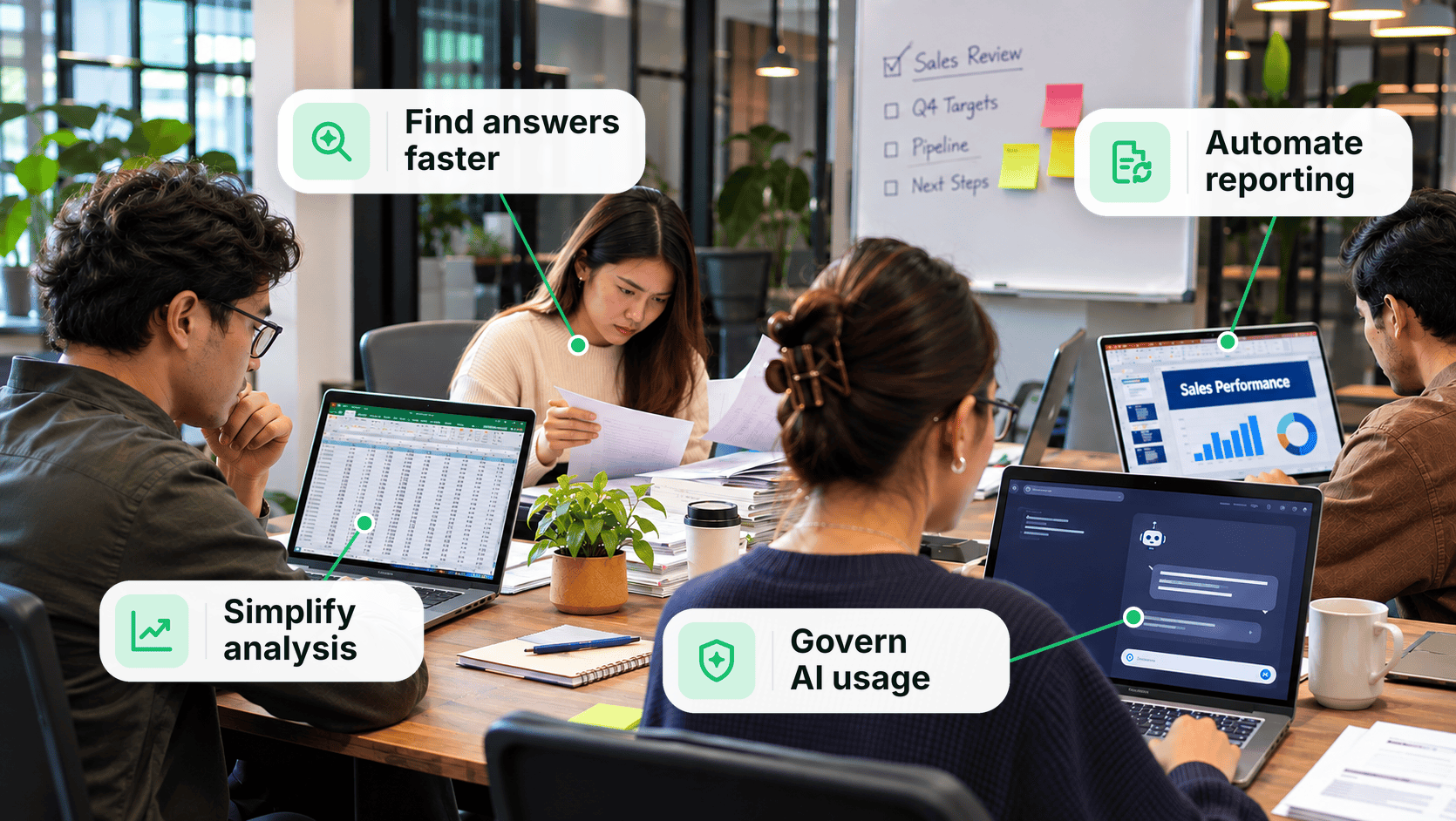
简化业务信息的获取
业务用户常常需要依赖 IT 团队或分析师来回答现有报表未覆盖的问题。即便是自助式工具,也可能要求使用者熟悉数据结构、报表构建器或查询语言。因此,一个简单的业务问题也可能变成一项耗时的报表请求。
AI 驱动的对话式分析提供了一种更直接的信息检索方式。例如,运营经理可以问:“今天有多少订单待履行?”接着追问:“能按仓库拆分一下吗?”系统会解读这些问题并直接呈现数字,无需经理编写 SQL 或再建一份报表。
现代 BI 平台通过连接业务数据集的自然语言界面提供这一能力,让员工能够独立获取日常问题的答案。
改进业务分析
获取业务数据是一回事,从中提炼出可支撑及时决策的洞察又是另一回事。团队可能拥有详尽全面的仪表盘,却仍难以把跨职能的发现串联起来,也难以理解其业务含义。
AI 辅助的洞察可以同时考察多个业务指标,提出可能的原因解释,并帮助用户评估潜在行动。例如,如果一家零售商尽管整体库存充足却反复出现缺货,现代 BI 平台中的 AI 可以分析需求模式、各仓库的库存分布以及供应商交货周期,从而指出可能的瓶颈和补货优先级。
加速业务响应
当团队难以说明某项发现的重要性,或难以通知到需要响应的人员时,时效性强的发现可能会被搁置。
AI 有助于把分析发现转化为团队可以分享、讨论并据以协调后续行动的叙述。它还能标记新出现的问题,并通知需要响应的人员。如今,这些数据叙事和预警可以嵌入 BI 仪表盘,让用户聚焦于当下最紧迫的优先事项。
欢迎收看本期炉边谈话,获取关于规划、构建和管理 AI 驱动的商业智能的可靠建议。了解如何选择合适的解决方案、准备数据,以及挑选测试用例,从而更快实现价值并推动更广泛的采用。
企业 BI 中采用 AI 的防护机制
AI 可以让商业分析更易获取,但其价值取决于答案背后的信息与业务背景。数据不完整、定义不一致或治理薄弱,都会让原本有用的 AI 功能更难被信任。
现代 BI 平台在这方面具备优势:其托管的数据连接、分析模型、安全与报表实践,可为 AI 赋能的分析提供更坚实的基础。以下几点考量展示了企业如何利用这一基础来规避常见陷阱。
1. 让 AI 立足于可信、最新的业务数据
如果答案依赖的是不完整或过时的信息,那么看似精确的答案也帮不上什么忙。例如,若底层抽取数据尚未刷新,用 AI 将今日订单与上月销售额进行对比,可能会产生误导。BI 平台的作用在于连接业务系统、准备数据集并管理刷新计划,使 AI 能够基于更可靠的业务全貌开展工作。
2. 统一业务指标与定义
信息一致还要求业务定义一致。如果一个团队所说的“收入”指总销售额,另一个团队指净销售额,AI 就可能对相似问题给出相互矛盾的答案。BI 平台中受治理的指标与语义模型,有助于让 AI 的回答锚定在官方报表所使用的同一套计算口径和术语上。
3. 落实安全与访问控制
自然语言访问应当让信息更容易被找到,而不是更容易被暴露。例如,销售代表不应仅仅因为换了一种提问措辞,就能获取受限的财务或员工记录。BI 平台已经支持角色和数据级权限,AI 界面在设计上可以遵循这些权限。企业还需要审查哪些数据会被传递给任何外部 AI 服务。
4. 让 AI 生成的结果可验证
当 AI 生成解释的支撑证据能够被核查时,它才最有用。例如,如果 AI 提出某种下滑与某个特定客户群体有关,用户应能够查看相关数字和假设。BI 报告、受治理的计算以及下钻视图提供了参照点,可在据此采取行动之前验证该发现。
5. 保持人工监督与问责
还有一些背景信息是任何报告都无法完整呈现的。例如,AI 可能建议在一次大型促销前下调库存。以共享的 BI 报告作为共同参照,业务团队可以将证据与运营计划放在一起权衡,判断哪些建议合理。平台为讨论提供支持;决策的责任仍然在人。
6. 监测准确性、采用情况与业务价值
AI 价值最有力的证据来自日常使用。员工是否能更快找到答案?转给 IT 的常规请求是否减少?团队能否更早对重要发现作出响应?BI 使用情况和绩效指标有助于建立基线并跟踪这些结果,而针对 AI 的专项监测则可识别准确性问题、集成问题和成本。
将 AI 与企业 BI 融为一体
AI 为企业从数据中获取更多价值开辟了令人兴奋的可能性,但要充分释放其潜力,需要合适的商业智能基础。像 LANSA BI 这样的现代 BI 平台能够汇聚并标准化来自企业各处的数据,让 AI 给出更一致、更相关的结果。
LANSA BI 与领先的 AI 模型提供商集成,为业务用户增强自然语言查询、分析和数据叙事能力。它还让开发者能够将 AI 驱动的 BI 直接嵌入业务应用,从而简化工作流程。这有助于员工获得所需的信息与洞察,在决策上达成一致并更快采取行动,同时减少对 IT 的依赖。企业级安全与治理控制有助于保护敏感信息,并在使用范围扩大时保持监管。
了解 AI 驱动的商业智能能为你的组织带来什么。获取 LANSA BI 演示,并与我们的专家团队合作,使用你的业务数据开发概念验证。请联系 info@lansa.com 开始体验。
译文由英文原文机器翻译,术语按行业惯例统一,可在文末展开原文核对。
查看英文原文(How to Use AI for Enterprise BI)
By KDnuggets on November 10, 2026 in Partners
Businesses continue to face challenges with fragmented data, time-consuming reporting, and poor visibility into critical insights. Some still rely on spreadsheets and disconnected systems, while others have invested in business intelligence (BI) platforms but struggle to make analytics accessible and useful to more employees.
This article explores practical applications of AI in enterprise analytics and key considerations for successful adoption.
Learn how America’s leading stamp dealer is replacing manual reporting with real-time insights to improve operations while reducing IT reliance. Check out this webinar with Mystic Stamp’s IT Director for practical tips on modernizing BI and aligning implementation with enterprise needs and user expectations.
How AI Can Improve Business Intelligence
The value of business data lies in how effectively organizations can use it to understand performance and respond to changing needs. AI creates new opportunities to improve how employees work with information and get meaningful results.
Simplifying Access to Business Information
Business users often depend on IT teams or analysts to answer questions that existing reports do not cover. Even self-service tools may require familiarity with data structures, report builders, or query languages. A straightforward operational question can therefore become a time-consuming reporting request.
AI-powered conversational analytics offers a more direct way to retrieve information. For example, an operations manager could ask, “How many orders are awaiting fulfillment today?” and follow up with, “Can you break that down by warehouse?” The system interprets these questions and presents the figures without requiring the manager to write SQL or build another report.
Modern BI platforms offer this capability through natural language interfaces connected to business datasets, allowing employees to get answers to everyday questions independently.
Improving Business Analysis
Accessing business data is one thing; deriving insights that inform timely decisions is another. Teams may have comprehensive dashboards yet struggle to connect findings across functions and understand their business implications.
AI-assisted insights can examine multiple business metrics together, propose explanations, and help users evaluate potential actions. For example, if a retailer faces recurring stockouts despite adequate overall inventory, AI in modern BI platforms could analyze demand patterns, warehouse stock distribution, and supplier lead times to suggest likely bottlenecks and replenishment priorities.
Accelerating Business Response
Time-sensitive findings can go unaddressed when teams struggle to communicate their significance or notify the people who need to respond.
AI helps turn analytical findings into narratives that teams can share, discuss, and use to coordinate next steps. It can also flag emerging issues and notify the people who need to respond. Nowadays, these data stories and alerts can be embedded in BI dashboards to focus users on immediate priorities.
Tune in to this fireside chat for proven advice on planning, building, and managing AI-powered business intelligence. Get tips on how to select the right solution, prepare your data, and choose test cases to deliver quicker value and encourage broader adoption.
Guardrails for Adopting AI in Enterprise BI
AI can make business analytics more accessible, but its value depends on the information and business context behind the answers. Incomplete data, inconsistent definitions, or weak governance can make otherwise useful AI features harder to trust.
Modern BI platforms offer an advantage here: their managed data connections, analytical models, security, and reporting practices can provide a stronger foundation for AI-enabled analytics. The following considerations show how businesses can use that foundation to avoid common pitfalls.
1. Ground AI in Trusted, Current Business Data
A precise-looking answer is not much help if it relies on incomplete or outdated information. For example, an AI comparison of today's orders with last month's sales could be misleading if the underlying extract has not been refreshed. BI platforms help by connecting operational systems, preparing datasets, and managing refresh schedules so AI can work from a more dependable picture of the business.
2. Standardize Business Metrics and Definitions
Consistent information also requires consistent business definitions. If one team means gross sales by “revenue” and another means net sales, AI could return conflicting answers to similar questions. Governed metrics and semantic models in BI platforms help anchor AI responses to the same calculations and terminology used in official reports.
3. Enforce Security and Access Controls
Natural-language access should make information easier to find, not easier to expose. A sales representative, for instance, should not gain access to restricted financial or employee records simply by phrasing a question differently. BI platforms already support roles and data-level permissions that AI interfaces can be designed to respect. Organizations also need to review what data is passed to any external AI service.
4. Make AI-Generated Results Verifiable
An AI-generated explanation is most useful when its supporting evidence can be checked. If AI suggests a decline is related to a particular customer segment, for instance, users should be able to examine the relevant figures and assumptions. BI reports, governed calculations, and drill-down views provide reference points for validating the finding before acting on it.
5. Maintain Human Oversight and Accountability
There is also context that no report captures completely. AI might suggest lowering inventory just before a major promotion, for example. With shared BI reports as a common reference, business teams can weigh the evidence alongside operational plans and decide which recommendations make sense. The platform supports the discussion; people remain accountable for the decision.
6. Monitor Accuracy, Adoption, and Business Value
The strongest evidence of AI's value comes from daily use. Are employees finding answers faster? Are fewer routine requests reaching IT? Are teams responding sooner to important findings? BI usage and performance measures can help establish a baseline and track these outcomes, while AI-specific monitoring identifies accuracy issues, integration problems, and costs.
Bringing AI and Enterprise BI Together
AI opens up exciting possibilities for businesses to get more value from their data, but realizing its full potential requires the right business intelligence foundation. Modern BI platforms like LANSA BI bring together and standardize data from across the enterprise, allowing AI to deliver more consistent and relevant results.
LANSA BI integrates with leading AI model providers to enhance natural-language querying, analysis, and data storytelling for business users. It also enables developers to embed AI-powered BI directly into business applications to streamline workflows. This helps employees get the information and insights they need to align on decisions and act faster, with less reliance on IT. Enterprise-grade security and governance controls help protect sensitive information and maintain oversight as usage expands.
Discover what AI-powered business intelligence could do for your organization. Get a demo of LANSA BI and work with our expert team to develop a proof of concept using your business data. Contact info@lansa.com to get started.
原文为英文,正文由自动抓取并保留原文。
原文发布于 KDnuggets(How to Use AI for Enterprise BI),标题、摘要与正文由机器翻译,术语按行业惯例统一,未经人工逐句校订。