Virtusa CEO 承认 AI 亏损,仍押注芯片
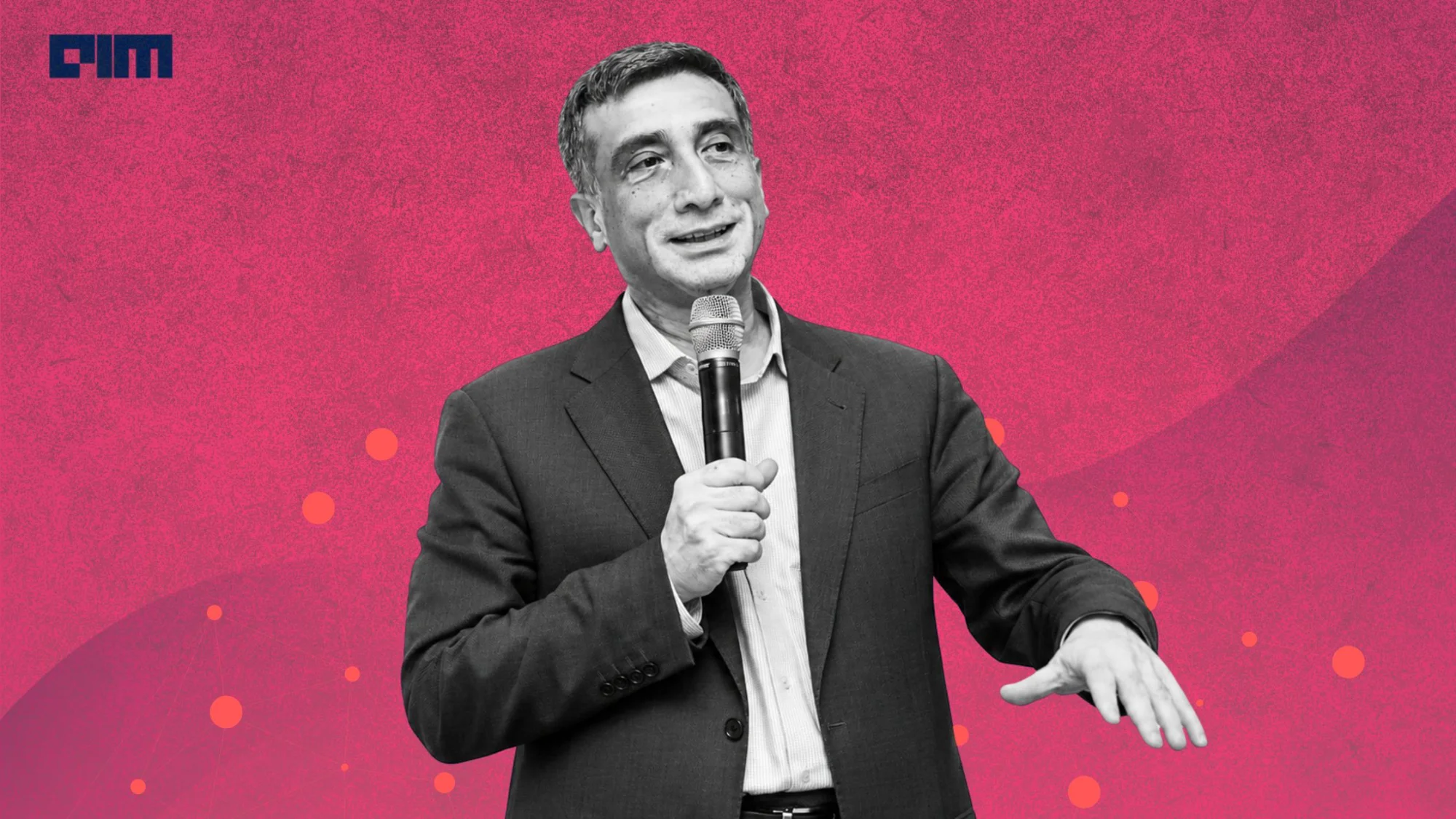
当 IT 服务业的大部分企业都在忙于研究 AI 将如何改变软件开发时,Virtusa CEO Nitesh Banga 心里想的却是另一个有趣的行业:半导体。
该公司去年通过收购 SmartSoC 进军半导体领域,Banga 认为这一举措有望让 Virtusa 抓住传统软件服务之外的机遇。他的目标是在整个技术栈上构建能力,从芯片设计与网络,一直延伸到云基础设施与应用。
但时机颇为微妙。Virtusa 在押注半导体的同时,还要应对另一场重大技术变革,而这场变革已经在改变其现有业务的经济性。
Banga 坦承,公司部分由 AI 主导的项目正在亏钱,不过其中的经济账要更复杂一些。
“我们也在亏钱,”他在接受 AIM 采访时表示,并解释公司仍在学习如何估算使用 AI 交付项目的成本与复杂度。昂贵的前沿模型、Token 消耗,以及将已有数十年历史的企业系统进行现代化改造的难度,使得这一转型远比“用智能体替代工程师”要复杂。
对 Virtusa 而言,这两个押注是相互关联的。随着 AI 从软件走向物理设备、专用芯片、数据中心和互联系统,Banga 认为技术服务公司的机会将远远超出写代码。
Virtusa 的半导体雄心正在填补公司现有能力的空白。“在我看来,你必须打造一条从芯片到网络、到云、再到应用的全链条服务能力,”他说。
该公司已经拥有强大的从云到应用的业务,但 Banga 认为,随着 AI 应用日益向物理世界延伸,它需要更靠近硬件层。
他以除颤器和睡眠呼吸暂停治疗设备等医疗器械为例。打造这类产品需要横跨芯片设计、嵌入式软件、云基础设施和应用的专业能力。
这正是 Virtusa 看到的机遇所在。
SmartSoC 带来了硅前设计和硅后验证方面的能力——Banga 认为,无论是成熟的半导体公司还是初创企业,对这些领域的需求都在不断增长。
后者尤其值得关注。随着芯片开发日益专业化,规模较小的公司正在为特定工作负载打造处理器,包括推理和汽车应用。
Banga 认为,这为能够在整个半导体开发周期中提供工程专业能力的公司创造了机会。他还看到,围绕半导体—数据中心—能源这一生态正在浮现更大的机遇。
Virtusa 押注半导体的同时,也在重新思考如何构建和交付软件。该公司正从传统的软件开发生命周期(SDLC)转向他所说的智能体式开发生命周期(ADLC)。
这一转变不只是部署编码助手。Virtusa 一直在构建自己的工程框架,以在这一生命周期中协调各个智能体。但该公司已经认识到,仅仅要求智能体更快地写代码,反而可能制造更多问题。
该公司最初尝试了 vibe coding,结果发现,当开发者试图在先前生成的代码之上构建更多功能时,智能体难以保持上下文。
此外还存在代码库无谓臃肿和技术债的问题。
此后,该公司转向基于规范和基于脚手架的工程方法,对智能体生成和维护代码的方式施加更严格的控制。
潜在的生产力提升十分可观。Banga 表示,一个传统的 11 人或 12 人 Scrum 团队,有可能被重组为四名人类编排者与七到八个智能体协同工作。
但工程师人数减少并不一定意味着项目成本更低。“你要如何配置和调度,才能不至于时时刻刻都在调用 LLM?”Banga 思索道。
Token 经济性已成为这一等式中的重要一环。Virtusa 正越来越多地判断哪些任务需要前沿模型,哪些可以由更小的开源模型处理。在某些情况下,甚至已弃用的模型也足够用。
目标是:当一个 80 亿参数的模型就能胜任时,避免使用 800 亿参数的模型。
这一转变也在改变 Virtusa 的商业模式。
Banga 表示,公司约 21% 的收入来自 AI 驱动的业务。Virtusa 将其划分为 AI 驱动、AI 影响和 AI 辅助三类收入。
该公司也在从传统的按时间和材料计费的合同,转向基于成果和固定价格的合作模式。
当 AI 承诺更快地完成工作时,这听起来很有吸引力。但固定价格合同也意味着,当项目耗时更长或成本超出预期时,服务公司要承担更多风险。
Banga 举了一个遗留系统现代化项目的例子,该项目涉及一个已有 50 年历史、基于多种技术构建的平台,包括 AS400 和 PL SQL。
尽管 Virtusa 在两个技术领域取得了预期成果,但在 AS400 上却遇到了困难。一些模型无法完全应对这种复杂性,迫使公司投入更多资源,并与专业化的初创公司合作。
随着 Anthropic、OpenAI 等基础模型开发商日益转向企业级部署,人们越来越担心传统 IT 服务公司最终是否会被淘汰。
Banga 并不这么认为。
他将其与云革命相类比:当时人们预期 Salesforce、Workday、Oracle 等平台会减少对技术服务的需求。但服务企业反而在实施、集成和企业转型中找到了新机会。
他认为,构建一个能力强大的 AI 模型,与让它在大型企业内部真正发挥作用,是两码事。
以 KYC 开户审核为例。零售银行与托管银行的需求差异极大。零售银行的 KYC 或许一天之内就能完成,而托管银行的开户流程可能长达 43 天。要把它压缩到 15 天,就必须理解其背后的业务流程、数据和监管要求。
Banga 认为,模型厂商最终将需要服务公司来规模化落地这类部署。他还认为,中型服务公司可能比 TCS、Infosys、Wipro 等规模更大的竞争对手更具优势。大公司有更多传统业务需要保护,随着它们走向自主交付模式,业务被自我蚕食的风险也更大。
他打趣道:“公司越大,这艘船就越难掉头。”
尽管 AI 和半导体领域机会众多,Banga 表示他最担心的是,Virtusa 能否足够快地完成员工队伍的转型。
该公司约有 30,000 名员工,传统技术岗位已经在发生变化。全栈 Java 工程师可能需要转型为智能体工程师,数据库程序员可能需要转型为 AI 辅助工程师,业务分析师则可能必须演变为 Banga 所称的流程“重新构想师”(reimagineers)。
过去 12 个月,该公司一直在推进这项员工队伍转型。
Banga 说,甚至连与客户的对话方式也变了。
“你在 AI 领域做什么?你能怎么帮我?”——他如此描述这个新的开场问题。“我们的转型速度够快吗,还能保持相关性吗?”
Virtusa 正力争在 2030-31 年实现 50 亿美元的规模,AI、企业转型和半导体是其增长战略的重要组成部分。
Banga 认为,服务业仍将保持相关性,正如互联网和云计算革命时期那样。目前,Virtusa 正试图弄清楚如何从 AI 中赚钱,同时为这样一个世界布局:在那里,最大的机会或许不止于软件。
译文由英文原文机器翻译,术语按行业惯例统一,可在文末展开原文核对。
查看英文原文(Virtusa CEO Admits Losing Money on AI, But is Betting the House on Chips)
While much of the IT services industry is busy figuring out how AI will change software development, Virtusa CEO Nitesh Banga has another interesting industry on his mind: semiconductors.
The company expanded into the semiconductor space last year through the SmartSoC acquisition, a move that Banga believes could position Virtusa for opportunities beyond traditional software services. His ambition is to build capabilities spanning the entire technology stack, from chip design and networks to cloud infrastructure and applications.
But the timing is interesting. Virtusa is making this bet while navigating another major technological shift that is already changing the economics of its existing business.
Banga openly admits some of the company’s AI-led projects are losing money, though the economics are a bit more nuanced.
“We are also losing money,” he tells AIM, explaining how the company is still learning to estimate the cost and complexity of delivering projects using AI. Expensive frontier models, token consumption, and the difficulty of modernising decades-old enterprise systems are making the transition more complicated than simply replacing engineers with agents.
For Virtusa, the two bets are connected. As AI moves from software into physical devices, specialised chips, data centres, and connected systems, Banga believes the opportunity for technology services companies will expand well beyond writing code.
From Chips to Cloud to Applications
Virtusa’s semiconductor ambitions are filling a gap in the company’s existing capabilities. “To me, you got to create a service offering all the way from chip to network to cloud to app,” he says.
The company already has a strong cloud-to-application business, but Banga believes it needs to move closer to the hardware layer as AI applications increasingly extend into the physical world.
He points to medical devices such as defibrillators and sleep apnea machines. Building these products requires expertise across chip design, embedded software, cloud infrastructure, and applications.
This is where Virtusa sees an opportunity.
SmartSoC brings capabilities in pre-silicon design and post-silicon verification—areas that Banga believes are seeing growing demand from established semiconductor companies as well as startups.
The latter are particularly interesting. As chip development becomes increasingly specialised, smaller companies are building processors for specific workloads, including inference and automotive applications.
Banga believes this creates opportunities for companies that can provide engineering expertise across the semiconductor development cycle. He also sees a larger opportunity emerging around the semiconductor-to-data-centre-to-energy ecosystem.
The Changing Economics of Software
The semiconductor bet comes at a time when Virtusa is also rethinking how it builds and delivers software. The company is moving from the traditional software development lifecycle (SDLC) towards what he calls an agentic development lifecycle (ADLC).
The shift goes beyond deploying coding assistants. Virtusa has been building its own engineering harness to coordinate agents across this lifecycle. But the company has learned that simply asking agents to write code faster can create more problems.
The company initially experimented with vibe coding, only to realise that agents struggled to retain context when developers tried to build additional features on top of previously generated code.
There was also the problem of unnecessarily large codebases and technical debt.
The company has since moved towards specification-based and scaffold-based engineering, with tighter controls over how agents generate and maintain code.
The potential productivity gains are significant. Banga says a traditional Scrum team of 11 or 12 people could potentially be reconfigured into four human orchestrators working alongside seven or eight agents.
But fewer engineers do not necessarily mean cheaper projects. “How do you configure and harness in such a way that you’re not hitting the LLM all the time?” Banga ponders.
Token economics has become an important part of the equation. Virtusa is increasingly deciding which tasks need frontier models and which can be handled by smaller open-source models. In some cases, even deprecated models could be sufficient.
The objective is to avoid using an 80-billion-parameter model when an 8-billion-parameter model can do the job.
The Uncomfortable Economics of AI
This transition is also changing Virtusa’s commercial model.
Banga says around 21% of the company’s revenue comes from AI-driven activities. Virtusa separates this into AI-driven, AI-influenced, and AI-assisted revenue.
The company is also moving away from traditional time-and-material contracts towards outcome-based and fixed-price engagements.
That sounds attractive when AI promises to deliver work faster. But fixed-price contracts also mean services companies bear more risk when projects take longer or cost more than expected.
Banga shares the example of a legacy modernisation project involving a 50-year-old platform built across multiple technologies, including AS400 and PL SQL.
While Virtusa achieved the expected outcomes in two technology areas, it struggled with AS400. Some models couldn't fully address the complexity, forcing the company to invest more and partner with specialised startups.
Why AI Companies Still Need IT Services
With Anthropic, OpenAI, and other foundational model developers increasingly moving towards enterprise deployment, there is a growing concern about whether traditional IT services companies will eventually become redundant.
Banga does not think so.
He draws a parallel with the cloud revolution, when platforms such as Salesforce, Workday, and Oracle were expected to reduce the need for technology services. Instead, services businesses found new opportunities in implementation, integration, and enterprise transformation.
He argues that building a capable AI model is different from making it work inside a large enterprise.
Take KYC onboarding. A retail bank and a custodial bank have very different requirements. While retail KYC might be completed within a day, onboarding for a custodial bank can take 43 days. Bringing that down to 15 days requires an understanding of the underlying business processes, data, and regulatory requirements.
Banga believes model makers will eventually need services companies to scale such deployments. He also believes mid-sized services companies could have an advantage over larger competitors such as TCS, Infosys, and Wipro. Larger companies have more legacy business to protect, creating a greater risk of cannibalisation as they move towards autonomous delivery models.
“The bigger the company is, the more difficult it is to kind of turn the wheel,” he quips.
The Changing Workforce
For all the opportunities across AI and semiconductors, Banga says his biggest concern is whether Virtusa can transform its workforce quickly enough.
The company has around 30,000 employees, and traditional technology roles are already changing. Full-stack Java engineers may need to become agentic engineers, database programmers may need to become AI-assisted engineers, and business analysts may have to evolve into what Banga calls process “reimagineers”.
The company has spent the past 12 months working on this workforce transformation.
Banga says even client conversations have changed.
"What are you doing in AI? How can you help me?" is how he describes the new opening question. "Are we transforming fast enough to be relevant?"
Virtusa is pursuing a $5 billion ambition by 2030-31, with AI, enterprise transformation, and semiconductors forming important parts of its growth strategy.
Banga believes the services industry will remain relevant, just as it did during the internet and cloud revolutions. For now, Virtusa is trying to figure out how to make money from AI while positioning itself for a world where the biggest opportunities may not stop at software.
正文保留英文原文,标题与摘要由机器翻译。
原文发布于 Analytics India Magazine(Virtusa CEO Admits Losing Money on AI, But is Betting the House on Chips),标题、摘要与正文由机器翻译,术语按行业惯例统一,未经人工逐句校订。